
The Western Balkans
In May 2026, the Western Balkans experienced a complex dynamic where progress in Euro-Atlantic integration, marked by the first NATO-Serbia joint military exercise and gas corridor expansions, was consistently countered by deepening domestic volatility. While Albania emerged as a meritocratic frontrunner following its positive Interim Benchmark Assessment Report (IBAR), the broader region faced significant institutional and fiscal instability. Over 700 million Euros in EU Growth Plan funding remains at risk due to reform delays, with Serbia’s access currently suspended following judicial regressions and Bosnia and Herzegovina (BiH) facing fiscal threats from intense political gridlock. This regional instability was further compounded by the resignation of High Representative Christian Schmidt, which polarised BiH and allowed the Republika Srpska leadership to amplify secessionist narratives during high-level meetings in Moscow. Escalating public discontent, exemplified by Albania’s “Flamingo Revolution” and persistent institutional deadlocks in Kosovo and Montenegro, added to the region’s woes. As the region moves into the summer, its security equilibrium remains precariously balanced between Western-backed infrastructure initiatives and mounting domestic political resistance.
1. Military and security shifts
From May 12 to 23, 2026, the NATO-Serbia Exercise 2026 (NSE26) marked the first joint military exercise on Serbian soil. Co-led by JFC Naples and the Serbian Armed Forces, the two-week event involved 600 personnel from various NATO and partner nations. The training focused on non-live ammunition peace support, urban combat, and crowd control, enhancing tactical interoperability beyond previous civil-only cooperation.[1] This represents a pragmatic balancing act rather than a structural pivot toward Euro-Atlantic integration, allowing Belgrade to demonstrate utility to the West while strictly preserving its independent defence posture.
The Council of the EU adopted a 15 million Euro measure under the European Peace Facility to anchor the region within the Euro-Atlantic security architecture. This package delivers non-lethal hardware, including protective gear, night vision devices, CBRN equipment, and tactical vehicles, to improve the operational readiness and interoperability of the Armed Forces of Bosnia and Herzegovina.[2] While the measure ostensibly strengthens Sarajevo’s capability to contribute to the EU Common Security and Defence Policy (CSDP) missions, its primary strategic function is to counter localised destabilisation. By bypassing state-level legislative gridlock to directly supply the multi-ethnic AFBiH, Brussels is signalling an enduring commitment to the country’s institutional integrity and defence resilience against persistent pro-Russian and secessionist pressure on federal structures.
American support for a regional gas pipeline between Bosnia and Herzegovina and Croatia reinforces Western Balkans integration into transatlantic security frameworks. At the Three Seas Initiative Summit, US Secretary of Energy Chris Wright introduced a framework for expanding gas, nuclear, and digital infrastructure. This project increases the regional capacity to import U.S. liquefied natural gas, offering an alternative to Russian energy monopolies.[3] This high-level support underscores how external energy security initiatives are being leveraged to stabilise the southern flank of the Alliance and bypass persistent legislative stagnation within Sarajevo.
2. Energy diversification
The Western Balkans energy integration progressed despite commercial uncertainty. During an Athens ministerial meeting, Greece, Bulgaria, Serbia, and North Macedonia agreed to extend the Vertical Corridor gas route. This framework establishes Serbia and North Macedonia as the primary partners for linking Greek liquefied natural gas terminals to central European markets. However, this momentum faced immediate commercial headwinds.[4] The wider corridor expansion faces weak demand before the July capacity auction. Regional buyers are hesitant to sign long-term agreements while cheaper Russian gas remains available and future regulatory rules are unclear.[5] This duality highlights a structural vulnerability across the Western Balkans, where political alignment on Western backstopped energy diversification is continuously undermined by localised economic reliance on existing Russian supply lines.
3. EU Integration and the growth plan friction
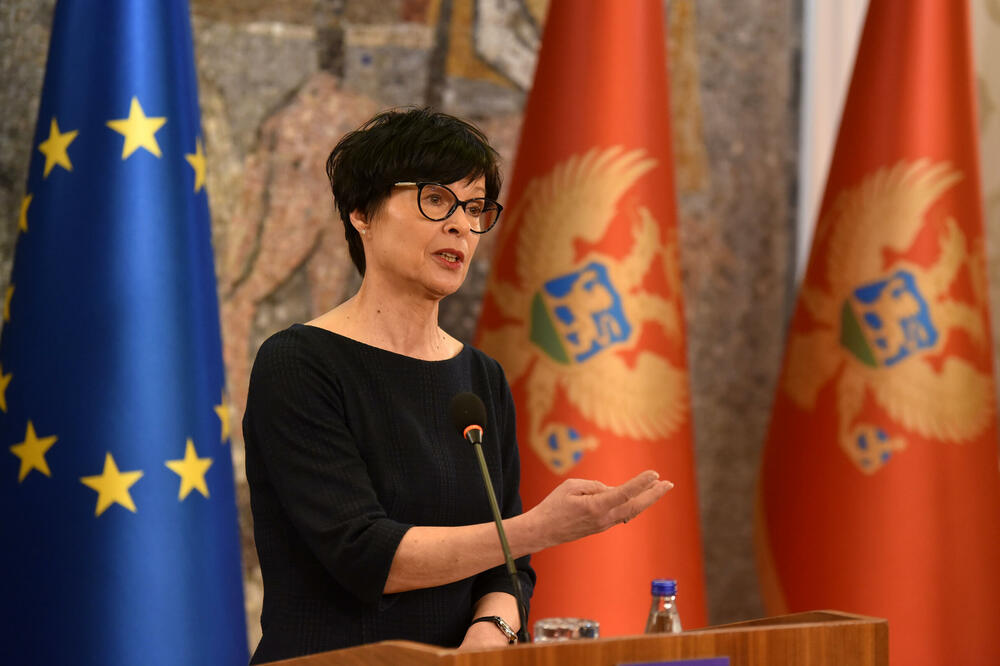
In mid-May 2026, the implementation of the six billion Euro EU Growth Plan for the Western Balkans encountered sharp structural friction as rising reform delays placed significant financial assistance at risk.[6] The European Commissioner for Enlargement, Marta Kos, warned regional governments that failing to execute agreed socio-economic and fundamental reforms could result in a permanent loss of over 700 million Euros by the end of June 2026.[7] This penalty equals nearly twelve per cent of the total package. While the European Commission approved 158.9 million Euros for Albania, Montenegro, and North Macedonia, other nations lag significantly. Bosnia and Herzegovina faces the greatest threat, with up to 373.9 million Euros at risk due to persistent political gridlock regarding its national reform agenda.[8] This strict conditionality highlights a growing enforcement friction within Brussels where the geostrategic urgency of rapid Euro Atlantic enlargement is increasingly colliding with rigid institutional insistence on rule of law and public administration benchmarks.
The European Union suspended payments to Serbia under the Growth Plan due to regression in the national justice system. Commissioner Marta Kos confirmed that funding remains frozen until Belgrade reverses legislative amendments that weaken judicial independence. This suspension affects 1.5 billion Euros in potential support. Brussels specifically objected to a new judicial package that increased the power of court presidents while removing protections for prosecutors. This financial conditionality created domestic pressure for President Aleksandar Vučić as he must manage relations between Europe and his strategic partners in Moscow and Beijing.[9] By withholding these critical funds, the European Commission is transforming the financial instrument into a strict governance test, signalling that formal alignment is insufficient if domestic implementation actively undermines democratic institutions.
At a United Nations Security Council session, outgoing High Representative Christian Schmidt warned that Bosnia and Herzegovina is paralysed between stability and institutional stagnation.[10] The briefing noted a deliberate erosion of state structures caused by persistent political blockages and secessionist rhetoric from the leadership of Republika Srpska. This gridlock prevents the state from resolving public property issues or implementing new election technology. Consequently, European Union Delegation Head Luigi Soreca confirmed that stalled reforms place 373.9 million Euros of Growth Plan funds at risk of cancellation.[11]
3.1 EU accession milestones
Albania achieved a historic milestone in its European integration by becoming the second candidate country, following Montenegro, to secure a positive Interim Benchmark Assessment Report.[12] After approval by the EU Working Group on Enlargement, the milestone was confirmed at the Eighth Intergovernmental Conference. European Commissioner Marta Kos and member state representatives verified that Tirana fulfilled its interim rule of law requirements under Cluster 1, covering Chapter 23 and Chapter 24.[13] This success unblocks a bottleneck, allowing Albania to begin provisionally closing individual negotiating chapters. Prime Minister Edi Rama welcomed the decision, noting that Tirana aims to conclude structural negotiations by 2027 or 2028. This advancement creates a meritocratic divergence in the Western Balkans, separating reform-aligned states like Albania from neighbours experiencing governance gridlock or funding suspensions.
Montenegro marked the twentieth anniversary of its independence, celebrating two decades since its peaceful separation from Serbia via the 2006 referendum.[14] While the achievement drew praise from the United Nations, it also increased regional diplomatic friction. Serbian President Vučić criticised the events, leading to tense exchanges between Belgrade and Podgorica regarding bilateral relations and historical narratives.[15] While Montenegro’s international standing as a NATO member and frontrunner for EU accession remains firm, the anniversary highlighted the enduring friction between Montenegrin and Serbian nationalisms that continue to influence political alignments across the central Balkans.
In mid-May 2026, the European Union finalised preparations to extend the Roam Like at Home regime to the Western Balkans. Brussels authorised the European Commission to start negotiating agreements that eliminate mobile roaming surcharges between the EU and the six regional partners WB6 (Albania, Bosnia and Herzegovina, Kosovo, Montenegro, Macedonia and Serbia). To finalise this integration, these nations must align their domestic telecommunications laws with European standards.[16] Beyond consumer cost reductions, this telecommunications integration serves as a strategic “digital shield,” lowering financial barriers to credible European information networks and mitigating vulnerability to external hybrid or informational influence across the region.
4. Domestic politics and regional tensions
High Representative Christian Schmidt’s sudden resignation triggered political polarisation across the Western Balkans. In Bosnia and Herzegovina, the former president of Republika Srpska, Milorad Dodik, used the vacuum to demand the end of international oversight and greater autonomy. Conversely, pro-European factions in Sarajevo fear institutional gridlock will weaken the Dayton Peace Agreement. This friction has led regional leaders to worry that a destabilised Bosnia could spark broader security challenges.[17]
A delegation from Republika Srpska, including Milorad Dodik, President Siniša Karan, and Speaker Nenad Stevandić, visited Moscow for the Victory Day celebrations to strengthen ties with Russia. The group met with President Vladimir Putin and Foreign Minister Sergei Lavrov, with Putin reaffirming the partnership and historical connection between Russia and the Serb entity. The visit, which included attendance at the Red Square military parade, drew scrutiny from Western security analysts.[18] This public display of solidarity demonstrates Moscow’s enduring diplomatic leverage in the Western Balkans while emboldening secessionist narratives that challenge the fragile federal infrastructure of Bosnia and Herzegovina.
Albania is experiencing the “Flamingo Revolution,” a grassroots movement opposing a luxury tourism project in the Vjosa-Narta wetland and on Sazan Island. Developed by Jared Kushner’s Affinity Partners, the project has triggered public outrage over environmental damage, opacity, and alleged government corruption. Following clashes between protesters and security near Zvërnec, the movement has grown into widespread anti-government demonstrations in Tirana.[19] The protests represent a significant challenge to the government, signalling growing public intolerance for development projects perceived as opaque or ecologically destructive.
Kosovo remains in institutional paralysis following the April dissolution of its Assembly. As the nation prepares for the snap elections on 7 June, former President Vjosa Osmani has rejoined the Democratic League of Kosovo (LDK) to lead their campaign.[20] Meanwhile, Prime Minister Albin Kurti’s Vetëvendosje movement framed the upcoming vote as a critical referendum on governance.[21] The period was defined by intense political mobilisation, as both sides prioritised electoral strategy over the constitutional necessity of forming a stable executive.
The Zeta Municipal Assembly passed a symbolic declaration seeking to revoke its recognition of Kosovo’s independence. Although framed by local officials as a moral correction, analysts emphasise that the act has no legal standing, as foreign policy is exclusively under the jurisdiction of the national government.[22] The move intensified internal polarisation, reflecting broader tensions surrounding the 20th anniversary of Montenegrin independence, which prompted critical assessments of the country’s fragile regional relations.[23] The defiance is seen as a high-visibility, symbolic manoeuvre intended to mobilise the Serbian-majority electorate and pressure the ruling coalition to address long-standing identity issues, including the status of the Serbian language and national symbols.
* Views and opinions of the authors of this paper do not necessarily correspond to the views of the Euro-Atlantic Council of Slovenia.
Sources
[1] JFC Naples. NATO-Serbia Exercise 2026 Commences (12. 5. 2026).https://jfcnaples.nato.int/newsroom/news/news-archive/2026/jfc-naples-participates-in-natoserbia-exercise-2026
[2] Council of the European Union. (12. 5. 2026). European Peace Facility: Council adopts the third bilateral assistance measure in support of the Armed Forces of Bosnia and Herzegovina. https://www.consilium.europa.eu/en/press/press-releases/2026/05/12/european-peace-facility-council-adopts-the-third-bilateral-assistance-measure-in-support-of-the-armed-forces-of-bosnia-and-herzegovina/pdf/
[3] The Presidential Prayer Team. (7. 5. 2026). U.S. Announces Energy and Infrastructure Agreements at Three Seas Initiative Summit. https://www.presidentialprayerteam.org/2026/05/07/u-s-announces-energy-and-infrastructure-agreements-at-three-seas-initiative-summit/
[4] Energypress. (11.5.2026). Vertical Corridor faces weak market demand ahead of July auction. https://energypress.eu/vertical-corridor-faces-weak-market-demand-ahead-of-july-auction/
[5] Energypress. (15. 5. 2026). Regional cooperation agreed to expand Vertical Corridor. https://energypress.eu/regional-cooperation-agreed-to-expand-vertical-corridor/
[6] Balkan Civil Society Development Network. (13.5.2026). Western Balkans Risk 700 Million EUR Loss from EU Growth Plan Amid Reform Delays. https://balkancsd.net/western-balkans-risk-700-million-eur-loss-from-eu-growth-plan-amid-reform-delays/
[7] European Western Balkans. (20. 4. 2026). Western Balkans risk losing over 700 million euros from Growth Plan due to delayed reforms. https://europeanwesternbalkans.com/2026/04/20/western-balkans-risk-losing-over-700-million-euros-from-growth-plan-due-to-delayed-reforms/
[8] New Union Post. (20. 5. 2026). EU Growth Plan Funds Albania Montenegro. https://newunionpost.eu/2026/05/20/eu-growth-plan-funds-albania-montenegro/
[9] Sarajevo Times. (10. 5. 2026). Putin met with the Delegation of the Bosnian Entity RS in Moscow. https://sarajevotimes.com/putin-met-with-the-delegation-of-the-bosnian-entity-rs-in-moscow/
[10] United Nations. (12. 5. 2026). Bosnia and Herzegovina Must Choose between Strong Institutions, Stagnation, High Representative Says as Security Council Delegates Urge Respect for Dayton Accord. https://press.un.org/en/2026/sc16357.doc.htm
[11] bne IntelliNews. (9. 5. 2026). EU ambassador warns Bosnia risks losing funds without reforms. https://new.intellinews.com/articles/eu-ambassador-warns-bosnia-risks-losing-funds-without-reforms-441848
[12] European Western Balkans. (1. 6. 2026). EU membership in sight for Albania, but ending negotiations by 2027 remains a challenge. https://europeanwesternbalkans.com/2026/06/01/eu-membership-in-sight-for-albania-but-ending-negotiations-by-2027-remains-a-challenge/
[13] Department of Foreign Affairs (Ireland). (26. 5. 2026). Albania makes further progress on EU accession. https://www.gov.ie/en/department-of-foreign-affairs/press-releases/albania-makes-further-progress-on-eu-accession/
[14] Osservatorio Balcani Caucaso. (27. 5. 2026). After independence: Montenegro’s troubled present. https://www.balcanicaucaso.org/en/cp_article/after-independence-montenegros-troubled-present/
[15] European Western Balkans. (15. 5. 2026). Tensions between Belgrade and Podgorica flare over the 20th anniversary of Montenegro’s independence restoration. https://europeanwesternbalkans.com/2026/05/15/tensions-between-belgrade-and-podgorica-flare-over-the-20th-anniversary-of-montenegros-independence-restoration/
[16] Council of the European Union. (7. 5. 2026). ‘Roam Like at Home’ for the Western Balkans – Draft Council Decision Authorising the Opening of Negotiations (CM 2782/26). https://data.consilium.europa.eu/doc/document/CM-2782-2026-INIT/en/pdf
[17] Radio Free Europe. (11. 5. 2026). Resignation Of UN Envoy Christian Schmidt Highlights International Divide Over Bosnia’s Future. https://www.rferl.org/a/bosnia-eufor-un-christian-schmidt-/33756125.html
[18] European Western Balkans. (8. 5. 2026). Delegation from Republika Srpska to meet Putin on 9 May. https://europeanwesternbalkans.com/2026/05/08/delegation-from-republika-srpska-to-meet-putin-on-9-may/
[19] Associated Press. (30. 5. 2026). Protest in Albania against work on luxury development linked to Ivanka Trump and Jared Kushner. https://newsroom.ap.org/detail/ProtestinAlbaniaagainstworkonluxurydevelopmentlinkedtoIvankaTrumpandJaredKushner/3db831806f8e485594a16d4c7d75cfce/video
[20] European Western Balkans. (7. 5. 2026). Who will benefit from the upcoming snap election in Kosovo? https://europeanwesternbalkans.com/2026/05/07/who-will-benefit-from-the-upcoming-snap-election-in-kosovo/
[21] Prishtina Insight. (12. 5. 2026). Kosovo opposition parties consolidate ahead of June elections. https://prishtinainsight.com/kosovo-opposition-parties-consolidate-ahead-of-june-elections/
[22] Kosovo Online. (21.5.2026). Gulić: Montenegro’s policy toward the region has failed. https://www.kosovo-online.com/en/news/region/gulic-montenegros-policy-toward-region-has-failed-21-5-2026
[23] Kosovo Online. (21.5.2026). Two decades of Montenegro’s independence: What kind of relations has it built with the region? https://www.kosovo-online.com/en/news/analysis/two-decades-montenegros-independence-what-kind-relations-has-it-built-region-21-5