
Sudan, the Sahel, and Somalia
May 2026 confirmed the pattern that defines Africa’s crisis zones: diplomatic efforts continued but produced no breakthrough on the ground. In Sudan, the war between the army (SAF) and the Rapid Support Forces (RSF) is shifting into a phase of attrition in which the drone is becoming the central weapon – on 4 May, the RSF struck even the capital, Khartoum, with drones. In the Sahel, a coalition of al-Qaeda-linked fighters (JNIM) and Tuareg separatists (FLA) declared a blockade of Bamako following large-scale attacks at the end of April and seized bases in northern Mali. In Somalia, a resurgent al-Shabaab is exploiting the overlap between a political crisis and a funding crisis for the international peacekeeping mission, retaking lost territory. The common denominator of the month is protracted conflicts without clear front lines, the growing role of drones, economic warfare in the form of blockades of supply routes, and international efforts that deliver no turnaround on the ground.
1. Sudan: a war of attrition and the rise of drone warfare
The war between the Sudanese army (SAF) and the paramilitary Rapid Support Forces (RSF) has, in its fourth year, settled into a military stalemate that has effectively divided the country: the army controls the east and centre, while the RSF holds the west, that is, Darfur and parts of Kordofan. Two parallel governments have formed – one in Port Sudan (SAF) and the other in Nyala (RSF) – further complicating the search for a single political solution.1
In May, the centre of gravity of the fighting remained in Kordofan. Mid-month, the army broke the siege of the town of Dilling in South Kordofan, which had been maintained by the TASIS forces (an alliance of the RSF and SPLM-N rebels), thereby enabling the resupply of its units and humanitarian deliveries. At the same time, both sides massed troops ahead of an expected major confrontation in North Darfur.2
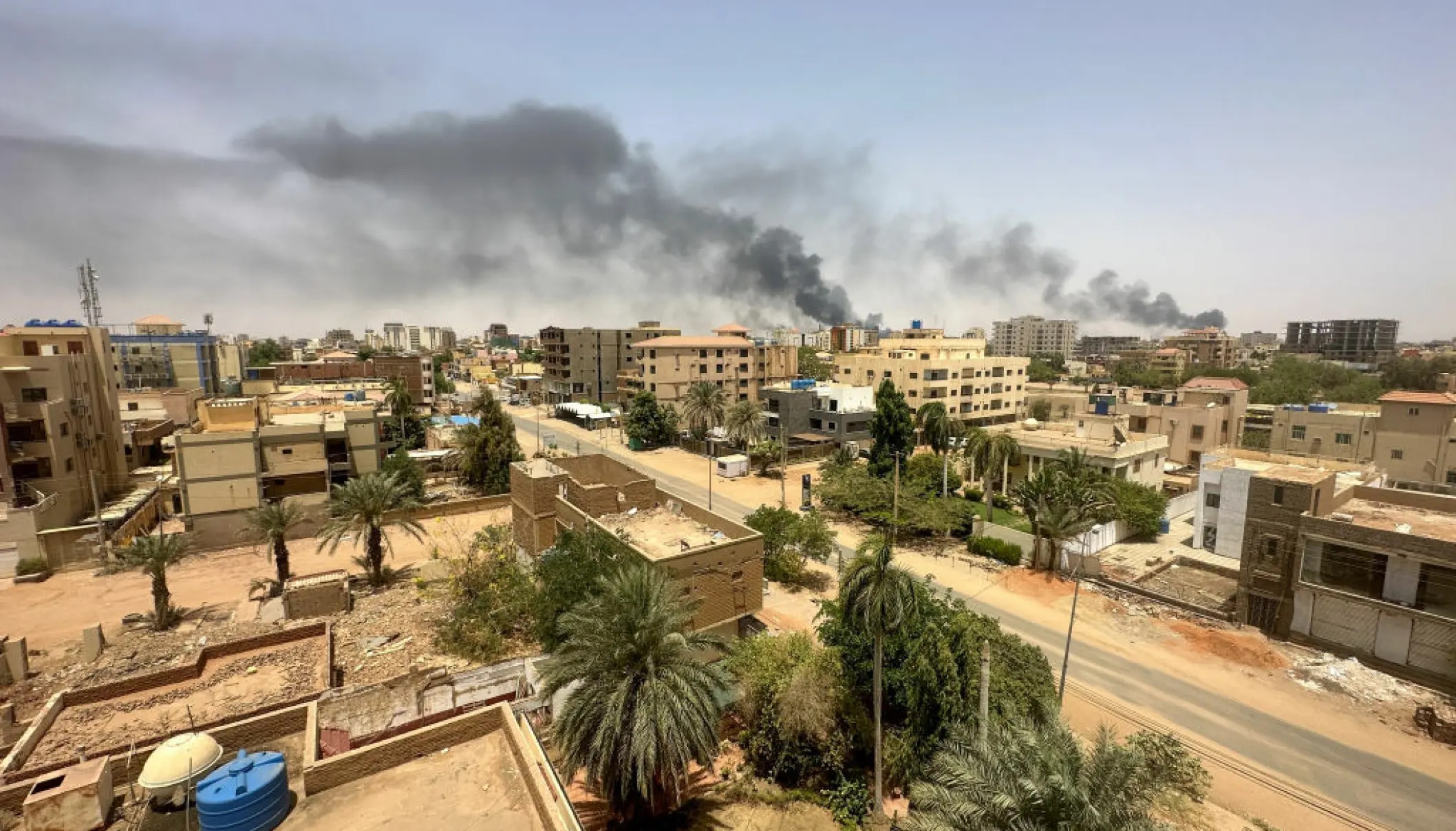
The most telling sign of the war’s changed character is the pervasive use of drones. On 4 May, the RSF struck Khartoum airport and nearby military installations with drones. This points to a significant escalation of aerial attacks on the capital, which had been returning to a fragile normalcy after the army retook it last year. The army blamed foreign actors, among them Ethiopia, for enabling the attacks; Addis Ababa rejected the accusations and responded with its own, underscoring the conflict’s dangerous regional dimension.1
Behind the military deadlock lies one of the world’s gravest humanitarian crises. After the capture of El Fasher last October, independent UN investigators identified indicators of genocide against non-Arab communities,3 and famine has been formally declared in El Fasher and Kadugli, with around twenty further areas at risk.4 The Sudanese case shows how a cheap and psychologically effective weapon, combined with economic attrition, prolongs a war that is losing its geographic limits.
2. The Sahel: a jihadist–separatist alliance and a besieged Bamako
In Mali, May was marked by the continuation of the shock of late April, when al-Qaeda-linked JNIM fighters and the Tuareg separatists of the Azawad Liberation Front (FLA) carried out coordinated attacks on several towns at once – Bamako, Gao, Kidal, Mopti and Sévaré. The cooperation of ideologically distinct groups reveals a pragmatic alliance in which a shared aim, weakening the military junta, outweighs their differences.5
On 28 April, JNIM declared a full blockade of the capital, Bamako. This is a continuation of economic warfare: since September 2025, the group has been attacking fuel tankers, plunging the country into severe shortages and exposing the limited reach of the authorities beyond the capital. On 1 May, following the withdrawal of Malian and Russian forces (the Africa Corps), the FLA and JNIM seized the Tessalit base in the far north, while at the end of the month, on 27 May, the army began bombing the area around Kidal with drones and Su-24 aircraft, in the course of which a mosque was reportedly hit.6
Mali is increasingly reliant on Russian military support, since after the departure of France’s Operation Barkhane and the UN mission, Western forces left no effective replacement, while the Russian Africa Corps failed to hold Kidal.6 The violence is also spreading across borders: in Niger’s Tillabéri region, JNIM and a local Islamic State affiliate carried out several ambushes on military units, while in eastern Burkina Faso, attacks on villages and security positions remained frequent. West Africa thus remains the region with the highest share of terrorism deaths in the world.7 The situation confirms that a purely military response, without addressing economic and social causes, is not enough.
3. Somalia: a resurgent al-Shabaab and a peacekeeping funding crisis
In Somalia, a security crisis and a political crisis are intertwined. The term of President Hassan Sheikh Mohamud expires in May 2026, and before then the country is supposed to shift from its current indirect electoral system to universal suffrage – a plan firmly opposed by the federal states of Puntland and Jubaland.10 The dispute over the electoral model has diverted Mogadishu’s attention from the war against the Islamist group al-Shabaab, which has meanwhile retaken much of the territory the government captured in its 2022 and 2023 offensive.9
In May, the government kept up pressure on al-Shabaab with special forces and air strikes, including drones; attacks were reported on 13 May in the Middle Shabelle region, on 16, 21 and 24 May in the Hiraan region, and on 22 May in Lower Shabelle. In parallel, in the north, in the mountains of the Bari region (Puntland), an Islamic State affiliate (IS-Somalia) carried out attacks between 3 and 14 May in which at least six soldiers were killed. Somalia thus remains one of the few African hotspots facing two separate jihadist threats at once.8
Behind the military operations, the question of funding for the African Union Support and Stabilization Mission in Somalia (AUSSOM), which assists Somali forces in their fight against al-Shabaab, is becoming more acute. The mission is severely underfunded, and assured resources for 2026 have not been secured.11 Because the European Union is among the mission’s key donors and also supports Somali forces through its Common Security and Defence Policy (CSDP) missions, this is a story with concrete European implications: a reduction in Western funding would directly weaken the country’s defences against the Islamists.10
The uncertainty has also spread to the sea. Between 21 April and 2 May, three ships were hijacked off the coasts of Somalia and Yemen – a renewed rise in piracy, facilitated by a reduced naval presence owing to the war in the Middle East and by increased shipping traffic.8 The Somali case shows how a security transition – that is, the announced withdrawal of international forces – without a political settlement and sustainable funding creates a vacuum that armed actors fill; and the burden increasingly falls on external partners, including European ones.
* Views and opinions of the authors of this paper do not necessarily correspond to the views of the Euro-Atlantic Council of Slovenia.
Sources
- International Crisis Group. “Sudan.” CrisisWatch. (May 2026) https://www.crisisgroup.org/africa/horn-africa/sudan
- Al Jazeera. “After three years of war, Sudan army and RSF locked in military impasse.” Al Jazeera. (16.4.2026) https://www.aljazeera.com/news/2026/4/16/after-three-years-of-war-sudan-army-and-rsf-locked-in-military-impasse
- Al Jazeera. “UN accuses paramilitary RSF of committing war crimes in Sudan’s el-Fasher.” Al Jazeera. (13.2.2026) https://www.aljazeera.com/news/2026/2/13/un-accuses-paramilitary-rsf-of-committing-war-crimes-in-sudans-el-fasher
- “Sudan’s deadly divide: The RSF and SAF’s reign of terror.” Brookings. (24.11.2026) https://www.brookings.edu/articles/sudans-deadly-divide-the-rsf-and-safs-reign-of-terror/
- Obadare, E. “What’s at Stake in Mali – and What Comes Next.” Council on Foreign Relations. (5.5.2026) https://www.cfr.org/articles/whats-at-stake-in-mali-and-what-comes-next
- Foreign Policy. “Mali Strikes Rebel-Held Kidal as Insurgency Worsens.” Foreign Policy. (20.5.2026) https://foreignpolicy.com/2026/05/20/mali-rebels-kidal-fla-jnim-sahel-violence/
- Center for Preventive Action. “Violent Extremism in the Sahel.” CFR Global Conflict Tracker. (May 2026) https://www.cfr.org/global-conflict-tracker/conflict/violent-extremism-sahel
- International Crisis Group. “Somalia.” CrisisWatch. (May 2026) https://www.crisisgroup.org/africa/horn-africa/somalia
- Africa Center for Strategic Studies. “Somalia at Risk of Becoming a Jihadist State.” Africa Center for Strategic Studies. (5.2.2026) https://africacenter.org/publication/asb45en-somalia-risk-jihadist-state/
- International Crisis Group. “Helping Somalia Move Beyond a Shaky Status Quo.” International Crisis Group. (16.10.2025) https://www.crisisgroup.org/cmt/africa/somalia/helping-somalia-move-beyond-shaky-status-quo
- The Global Observatory (IPI). “With AUSSOM’s Funding Challenges Here to Stay, What Are the Options for the Mission’s Future in Somalia?” IPI Global Observatory. (22.1.2026) https://theglobalobservatory.org/2026/01/with-aussoms-funding-challenges-here-to-stay-what-are-the-options-for-the-missions-future-in-somalia/