
Eastern Europe
The activation of the EU’s SAFE program has begun. Eastern European countries are warning of secondary migration flows and the extensive reach of Russian propaganda and disinformation campaigns. Relations between Ukraine and Poland have become strained. Romania has been shaken by two drone explosions. Moldova has taken a significant step toward EU integration. The Baltic states are expanding their military industries and strategic partnerships.
1. Ukraine-Russia Conflict
On 15 June, during attacks on Kyiv, the Kyiv-Pechersk Lavra monastery—a UNESCO World Heritage site—was struck. The attack drew strong criticism from the Ukrainian government.[1] Three days later, Ukraine launched its largest attack to date on Moscow. The strikes hit and damaged an oil refinery in Kapotnya, which supplied 40% of all fuel for the city.[2] Throughout the year, the use of medium- and long-range Ukrainian UAVs inside Russia forced a major redeployment of air defence systems to protect Moscow; Ukraine exploited this shift to launch sustained attacks on the Russian logistics infrastructure. This caused fuel shortages in occupied Crimea, leading to the implementation of a 20 litres per week limit for individual fuel purchases. Beyond the pressure placed on the civilian population, the attacks also severely hampered logistics routes through Crimea due to increasingly frequent strikes near the Kerch Bridge, which supplies the southern front around Kherson.[3] [4]
2. Eastern Europe
On 27 May, Poland signed a new defence and security agreement with Great Britain, intended to bring the two nations closer and enhance their cooperation. The agreement aims to support defence services, improve responses to cyberattacks, strengthen border control, and assist in uncovering criminal groups.[5] On 9 June, the Polish Foreign Minister Radoslav Sykorsky emphasised that Russia is waging a “cognitive war” against Poland, characterised by a high prevalence of disinformation, pro-Russian propaganda, and the activities of Russian intelligence services.[6] On 30 May, Poland joined the EU’s SAFE (Security Action for Europe) program. SAFE is an EU initiative worth €150 billion that provides loans to member states for the procurement and modernisation of defence capabilities.[7] Through this program, Poland secured €16.5 billion to purchase new infantry fighting vehicles, self-propelled howitzers, and other military vehicles designed to bolster the country’s defences.[8] Relations between Poland and Ukraine deteriorated in June after Ukrainian presiden Volodymyr Zelensky, officially named a Ukrainian military unit after a World War II-era Ukrainian resistance unit that had collaborated with Nazi Germany. In response, Poland revoked the his Order of the White Eagle—the country’s highest state honour, which Zelensky had received in 2023. Tensions also escalated after Poland was left off the guest list for key talks held on 8 June between Ukraine, France, Great Britain, and Germany in London, where they addressed key issues related to the war in Ukraine.[9] Polish Prime Minister Donald Tusk described the development as a strategic mistake.[10] On 16 June Semyon Skrepetsky—a Russian artist and critic of the Putin regime—was shot in Poland. Skrepetsky was shot five times in a parking lot in the city of Biała Podlaska.[11]
On the night of 29 May, a Russian Geran-2 UAV crashed into a residential building in the Romanian city of Galați. The UAV reportedly veered off course during a night-time attack on the Ukrainian port of Reni. Two people sustained minor injuries in the resulting explosion.[12] Another explosion occurred on 4 June, this time at the Romanian port of Constanța, involving the suspected detonation of a maritime USV. Romanian intelligence and the coast guard reported that the USV did not belong to them and was of a type used by Russia in the war in Ukraine. Romania responded to these events by expelling the Russian Consul General and shutting down the facility in Constanța.[13] In light of these incidents, the EU emphasised the importance of enhancing security measures and strengthening air defences. On 29 May, Romania signed a €5.7 billion contract with the German company Rheinmetall under the European SAFE program. The contract will aid in the modernisation of the Romanian armed forces and the expansion of its military industry, as 50% of the procurement is set to be manufactured in Romania in cooperation with local companies. By the end of 2030, the contract is expected to deliver 298 new Lynx vehicles, the Skyranger air defense system, medium-calibre air defence ammunition production, and new maritime protection systems.[14]
Furthermore, on 22 June in Bucharest, members of parliament rejected the new Romanian government; the vote saw 189 in favour and 23 against, while more than half of all MPs abstained. Confirmation required 233 votes. The parliamentary crisis began in May, when the previous government was ousted following a vote of no confidence. Meanwhile, the country is grappling with the highest fiscal deficit and the highest inflation rate in the EU.[15]
Hungary has reached an agreement with the EU to unfreeze €16.4 billion in funds that had been withheld due to alleged corruption within Viktor Orbán’s government. Under the leadership of Péter Magyar, Hungary now has until 31 August to fulfil promises made to the EU regarding the implementation of anti-corruption and structural reforms and the improvement of academic freedom.[16] As part of this process, the Hungarian parliament amended the constitution on 15 June, limiting the prime minister’s tenure to a maximum of two terms (for a total of eight years). This measure is intended to prevent the return of Orbán, who had served continuously for 16 years.[17] Talks regarding the accession of Ukraine and Moldova to the EU began on 15 June 15.However, negotiations stalled the next day, when Hungary became the only country to oppose sending an official letter to the European Council and the European Commission regarding the continuation of the accession processes for Ukraine and Moldova.[18] At the end of may, Hungary had already announced that it would not send military equipment or aid to Ukraine, only humanitarian assistance—a stance described by a Russian government spokesperson as one that, if adopted by more countries, would help bring about peace in Ukraine more quickly.[19]
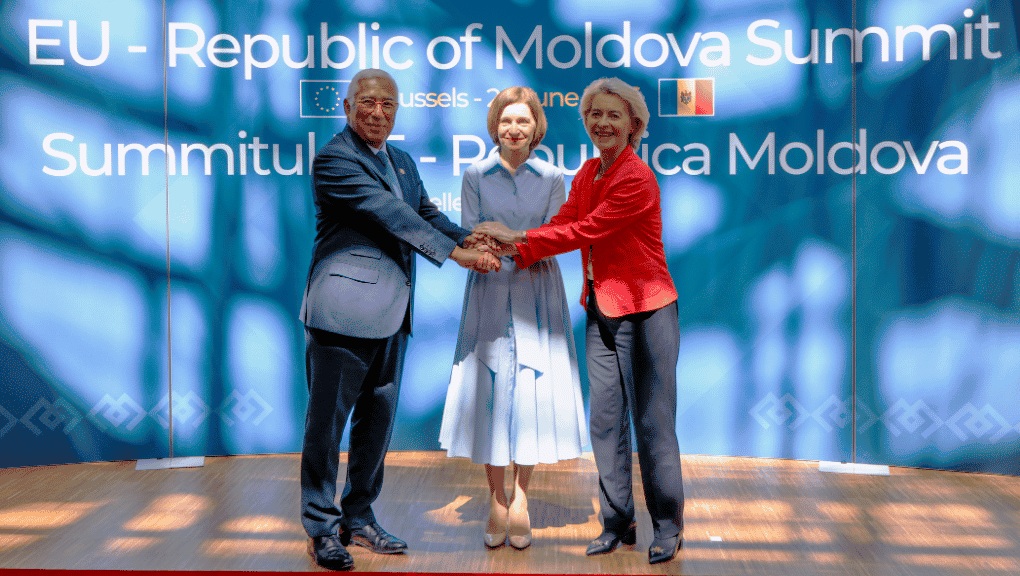
An EU-Moldova meeting took place on 22 June, during which the EC President Ursula von der Leyen praised and highlighted Moldova’s solid progress toward EU integration. The meeting marked a significant step forward for Moldova as it strives to join the EU. Key topics included a €1.9 billion development plan (agreed upon in March 2025), trade, and the current security situation, given that Moldova is frequently targeted by Russian cyberattacks.[20] NATO Special Representative for the Caucasus and Central Asia, Kevin Hamilton, visited Moldova on 17-18. The visit aimed to enhance cooperation between the Alliance and Moldova regarding cybersecurity and to improve the country’s defence capabilities, as well as to express gratitude for Moldova’s cooperation and assistance in NATO missions such as KFOR.[21]
Earlier in June, Latvian President, Edgar Rinkevičs, warned of a deteriorating security situation within Latvia and its surrounding region. He highlighted the country’s increasing exposure to Russian propaganda and disinformation, as well as UAV overflights affecting both Latvia and other NATO member states and announced the introduction of a new two-level warning system: yellow and orange alerts. A yellow alert indicates no immediate danger and that normal activities may continue, whereas an orange alert signals that residents should seek shelter.[22] On 20 June, Latvia became the eighth EU country to join the SAFE project, securing a €3.5 billion agreement to assist in modernising equipment and enhancing security on the Alliance’s eastern flank. As part of this program, Latvia announced the deployment of drone-interception units along its borders to enhance regional security.[23] On 9 June, Latvia signed an agreement with Ukraine regarding the development and production of unmanned systems and air defence systems. This initiative involves mutual cooperation: Ukraine would provide experience gained during the war, while Latvia will contribute additional material support to Ukraine from the newly openend Frankenburg Technologies factory in Riga. [24] The facility will produce Mark I anti-drone missiles, boosting the defence capabilities of both Latvia and the EU. The factory is expected to produce approximately 1,500 missiles this year, with output projected to increase next year.[25]In a situation reminiscent of that in Poland, on 19 June, Grigory Nekhoroshev, a Russian journalist and critic of Putin, died in Riga. He had moved to Riga following Russia’s occupation of Crimea in 2014. Reports indicate that he died of poisoning.[26]
On the same day, Lithuanian Foreign Minister Vladislav Kondratovič announced that the country would tighten controls at internal border crossings—particularly those with Latvia and Belarus—due to a reported rise in secondary migration. Migration numbers increased 2.5-fold between 2024 and 2025. Belarus is also reportedly redirecting migration flows toward its neighbouring countries. In the first half of 2026, the recorded number of migration incidents had already matched the total for the entire 2025. Enhanced controls will entail the deployment of additional surveillance systems, increased patrols, and stricter monitoring of transport routes.[27] On 1 June, the NATO Parliamentary Assembly took place in Vilnius; participants expressed support for Romania following a Russian drone explosion and established priorities for the upcoming NATO meeting in Ankara.[28]
The Estonian and Latvian militaries, along with the armed forces of other NATO allies, were placed under a new NATO command structure. On 30 June, the 1st German-Netherlands Corps assumed operational command, taking over this role from the Multinational Corps Northeast (MNC NE). This move is intended to accelerate the Allied response and strengthen the eastern flank bordering Russia. The corps will be responsible for defence preparations, exercises, and the integration of Allied forces in the region, while the MNC NE will focus on Poland and Lithuania.[29] Estonia is considering enacting new legislation that would allow citizens of NATO member states to serve in its armed forces. The law would also facilitate the acceptance of foreign volunteers in the event of war. If the law is passed, it will enter into force on 1January, 2027.[30]
* Views and opinions of the authors of this paper do not necessarily correspond to the views of the Euro-Atlantic Council of Slovenia.
Sources
[1] AFP, AP in Reuters (15. 6. 2026). Kyiv cathedral burns as heavy Russian air raids hit Ukraine. ALJAZEERA. https://www.aljazeera.com/gallery/2026/6/15/kyiv-cathedral-burns-as-heavy-russian-air-raids-hit-ukraine
[2] Hatton B. (18. 6. 2026). Ukrainian drones set a Moscow refinery ablaze in a major attack on the Russian capital. APNNEWS. https://apnews.com/article/russia-ukraine-war-moscow-refinery-attack-oil-0ee97c720e770c392067418f9cabcbba
[3] Psaropoulos T. J. (26. 6. 2026). Ukraine decimates Russian logistics, bringing chaos to Crimea. ALJAZEERA. https://www.aljazeera.com/news/2026/6/26/ukraine-decimates-russian-logistics-bringing-chaos-to-crimea
[4]Army infrom (16. 6. 2026). Ukrainian drones visited Moscow’s largest refinery, hitting core processing unit that supplies 40% of capital’s fuel. ARMYINFORM https://armyinform.com.ua/en/2026/06/16/ukrainian-drones-visited-moscows-largest-refinery-hitting-core-processing-unit-that-supplies-40-of-capitals-fuel/
[5] Wheeler R. ( 27. 5. 2026). Starmer warns of Russian aggression as UK agrees new treaty with Poland. BBC.https://www.bbc.com/news/articles/c4g9y82ed4xo
[6] Tilles D. (9. 6. 2026). Russia waging “full-scale cognitive war against us”, warns Poland’s foreign minister. Notes from Poland. https://notesfrompoland.com/2026/06/09/russia-waging-full-scale-cognitive-war-against-us-warns-polands-foreign-minister/
[7] European Commission (30. 6. 2026). Security Action for Europe (SAFE). Euripean commission. https://defence-industry-space.ec.europa.eu/eu-defence-industry/safe-security-action-europe_en
[8] Adamowski J. (1. 6. 2026). Poland spends $16.5 billion in EU-backed loans on heavy army weapons. DefensNews. https://www.defensenews.com/global/europe/2026/06/01/poland-spends-165-billion-in-eu-backed-loans-on-heavy-army-weapons/
[9] Zdanowski M. M. (8. 6. 2026) Poland sidelined from Europe’s key talks on Ukraine. TVP WORLD. https://tvpworld.com/93703864/poland-risks-losing-influence-in-ukraine-diplomacy
[10] Konstina I., Tyshchenko K. (21. 6. 2026).Polish PM calls escalation of Ukraine-Poland conflict a strategic mistake that will cost both sides. Ukrainska Pravda. https://www.pravda.com.ua/eng/news/2026/06/21/8040429/
[11] Eastin A., Zatari A. (16. 6. 2026). Russian artist and Putin critic shot dead in Poland. BBC. https://www.bbc.com/news/articles/clyrzd5g6k2o
[12] Reform news (29. 5. 2026) Geran-2 Drone Crashed Into Residential Building in Romania. REFORMNEWS. https://reform.news/en/geran-2-drone-crashed-into-residential-building-in-romania
[13] Guastamacchia P. (5. 6. 2026). Naval drone explosion rocks Romania’s Port of Constanța. EURACTIV. https://www.euractiv.com/news/naval-drone-explosion-rocks-romanias-port-of-constanta/?__cf_chl_f_tk=F.uf5155sfDGaNsayBlRQukpuICOjgMlHCIemZ79fmw-1782986223-1.0.1.1-sOVwQDF8CvOtsqxMuTdysfDeAcH2KSzpcUcuZxF8WI8
[14] Hoffmann O. (30. 6. 2026). Major historic international contract for Rhenimetall: Romania orders Lynx combat vehicles, vessels and air defence systems worth total of €5.7 billion. RHEINMETALL. https://www.rheinmetall.com/en/media/news-watch/news/2026/06/2026-06-02-major-historic-contract-in-romania-worth-5-7-billion
[15] Mcgrath S. (22. 6. 2026). Political crisis deepens as Romanian lawmakers reject new government. ABCNEWS. https://abcnews.com/International/wireStory/political-crisis-deepens-romanian-lawmakers-reject-new-government-134113292
[16] Gaal F. (30. 5. 2026). What Hungary must do to receive EU funds frozen under Orban. DW. https://www.dw.com/en/what-hungary-must-do-to-receive-eu-funds-frozen-under-orban/a-77354206
[17] Kirby P. (16. 6. 2026). Hungary’s MPs block return of Orbán, limiting rule of PM to eight years. BBC. https://www.bbc.com/news/articles/c621zplqrrno
[18] Vinocur N. (23. 6. 2026). Hungary hits pause on EU membership bids of Ukraine, Moldova. POLITICO. https://www.politico.eu/article/hungary-delay-eu-membership-ukraine-moldova/
[19] Teslova E. (29. 5. 2026). Moscow welcomes Hungary’s refusal to provide military aid to Ukraine. AA. https://www.aa.com.tr/en/eurasia/moscow-welcomes-hungarys-refusal-to-provide-military-aid-to-ukraine/3951123
[20] European Commission (22. 6. 2026). Opening remarks by President von der Leyen at the EU-Moldova Summit. European Commission. https://ec.europa.eu/commission/presscorner/detail/en/statement_26_1403
[21] NATO (22. 6. 2026). NATO’s Deputy Assistant Secretary General for Partnerships visits Moldova. NATO. https://www.nato.int/en/news-and-events/articles/news/2026/06/22/natos-deputy-assistant-secretary-general-for-partnerships-visits-moldova
[22] LETA (4. 6. 2026). “Today I do not have reassuring news” – President warns about Latvia’s security situation. BNN. https://bnn-news.com/today-i-do-not-have-reassuring-news-president-warns-about-latvias-security-situation-280945
[23] Guastmacchia P. (20. 6. 2026). Latvia secures €3.5bn SAFE defence loan. EURACTIV. https://www.euractiv.com/news/latvia-secures-e3-5bn-safe-defence-loan/
[24] Mykhailenko D. (9. 6. 2026). Ukraine and Latvia Deepen Defense Partnership with Landmark Drone Deal in Tallinn. United24media. https://united24media.com/defense-tech/ukraine-and-latvia-deepen-defense-partnership-with-landmark-drone-deal-in-tallinn-19665
[25] Safronov T. (23. 6. 2026). Factory for Manufacturing Mark I Air Defense Missiles Built in Latvia in One Year. MILITANYI. https://militarnyi.com/en/news/factory-mark-i-missiles-latvia-in-one-year/
[26] Beszłej J. F. (23. 6. 2026). Journalist who exposed Putin’s relationship with gymnast dies from ‘mushroom poisoning’. TVPWORLD. https://tvpworld.com/93963468/russian-journalist-who-reported-putins-alleged-affair-with-gymnast-dies-in-latvia
[27] Reform news (19. 6. 2026.) Lithuania Tightens Monitoring on Border With Latvia Over Secondary Migration. Reform news. https://reform.news/en/lithuania-tightens-monitoring-on-border-with-latvia-over-secondary-migration
[28] NATO (1. 7. 2026). Deputy Secretary General addresses the NATO Parliamentary Assembly in Lithuania. NATO. https://www.nato.int/en/news-and-events/articles/news/2026/06/01/deputy-secretary-general-addresses-the-nato-parliamentary-assembly-in-lithuania
[29] Kozatskyi S. (1. 7. 2026). Latvia’s and Estonia’s Land Forces Placed Under New NATO Command. MILITANYI. https://militarnyi.com/en/news/latvia-s-and-estonia-s-land-forces-placed-under-new-nato-command/
[30] Kozatskyi S. (2. 7. 2026). Estonia Plans to Allow NATO Citizens to Serve in Its Defence Forces. MILITANYI. https://militarnyi.com/en/news/estonia-to-allow-nato-citizens-serve-army/