

Democratic Republic of Congo, Sudan, Mozambique, and Niger
In June 2026, the deepening security crises on the continent continue, with diplomatic processes remaining markedly out of step with events on the ground. Sudan is sliding into the most dangerous phase of the war since its outbreak, as drone use spreads to areas long untouched by fighting, and the conflict is for the first time also reflected in a deterioration of relations between Sudan and Ethiopia. In West Africa, the Sahel conflict is intensifying, and terrorist networks continue their territorial and institutional expansion at the expense of weak regional authorities. In Congo, the Washington process has not prevented further clashes between M23 and the Congolese army, but on the legal area, a new lawsuit has been filed against Rwanda before the International Court of Justice.
An increase in activity was observed by the local branch of the Islamic State terrorist group in Mozambique, which continued its operations in the northeastern Mozambican province of Cabo Delgado. There, the group is attempting to establish its own enclave, while simultaneously carrying out additional attacks on civilian and military targets outside of it. Meanwhile, the regional branch of Al-Qaeda in the Sahel carried out a complex attack on Diori Hamani International Airport in Niamey, the capital of Niger, which had already been attacked earlier this year by the regional branch of the Islamic State. The latter carried out a simultaneous attack on several military targets along the Mali-Niger border. Both groups are competing for territory and influence over the local population as they parallelly expand from the central Sahel toward Nigeria and coastal West Africa.
1. Democratic Republic of Congo
Despite the alleged progress of the Washington process, signed in June 2025, fighting in eastern Congo continues. The relevant states again held a meeting of the committee under the Washington process, monitoring implementation of the agreement. The US imposed sanctions on several entities and individuals accused of smuggling minerals from areas under M23 control into Rwanda.[1] Clashes between M23 and government forces in South and North Kivu also continued regularly, and an actual cessation of fighting in Congo has still not been achieved.
Fighting was particularly intense for the town of Minembwe in South Kivu province, where government forces recorded progress in encircling the town in mid-June, while M23 claimed at the end of the month that it had repelled the offensive and retained control of the town. The clashes also involve the use of drones and are occurring primarily over control of local gold deposits in the region.[2]
Also in June, the Democratic Republic of the Congo filed a lawsuit before the International Court of Justice (ICJ) against Rwanda, in which it demands that Rwanda be declared internationally responsible for abuses on Congolese territory in the period from 1996 to the present, that it be ordered to cease its activities in Congo, and that damages be awarded to Congo and the civilian victims. Congo accuses Rwanda of violations of the Convention on the Prevention of Genocide, racial discrimination, discrimination against women, and torture, including killings, forced displacement, and sexual violence in eastern Congo.[3] This is Congo’s third attempt to bring a case before the ICJ. The first case was withdrawn in 2001, and the second was dismissed in 2006 for lack of jurisdiction.[4]
2. Sudan
Fighting continued in June. The Rapid Support Forces (RSF) carried out a series of drone attacks on the town of El Obeid in North Kordofan. The UN High Commissioner for Human Rights Volker Türk reported at the end of June that 15 drone strikes on El Obeid and its surroundings had been documented in just three weeks, killing at least 45 civilians, with the RSF reportedly now controlling all access routes out of the town except the one to the east.[5]
Relations between Sudan and Ethiopia also deteriorated for the first time. The two countries publicly accused each other of supporting opposing armed groups. As a result, Sudan withdrew its ambassador from Ethiopia, and the Sudanese Armed Forces (SAF) mobilized along the Ethiopian border in Gedaref state.[6] The risk of direct conflict between the two states remains low, as both are caught up in their own internal conflicts, but instability in Ethiopia’s Tigray region and in Sudan creates a risk of occasional border clashes.[7] The Sudanese Armed Forces (SAF) continued counteroffensives to retake the town of Kurmuk and Geissan district on the Ethiopian border, which were seized at the end of March by the RSF and some smaller factions. Control over this area is strategically important, as it provides access to cross-border trade with Ethiopia and support from abroad. The RSF carried out a counterattack and seized the Sirkum area north of the town of Sali, bringing them closer to the town of Damazin and threatening the Kurmuk–Damazin corridor, causing further instability for the resupply of forces.[8]
At the end of June and the beginning of July, a report was also published documenting events related to the town of El Fasher. The report calls for an immediate ceasefire and the deployment of an international protection force. It also further increases international pressure regarding the risk of a similar scenario repeating itself in the besieged town of El Obeid.[9]
3. Mozambique
In June 2026, a local branch of the Salafi-jihadist terrorist group Islamic State (IS), Islamic State – Mozambique Province (IS-MP), continued its operations in the Mozambican province of Cabo Delgado, where it is attempting to establish an enclave that would encompass approximately 100 kilometres of coastline and extend about 50 kilometres inland into the northeastern part of the province. Despite the presence of local and foreign armed forces, IS-MP maintains its main stronghold within this enclave, enjoying considerable room for manoeuvre and freedom of movement, while simultaneously seeking support and legitimacy among the local population through non-combat activities.[10]
In the first half of the month, at least 11 incidents linked to IS-MP activities were recorded in Mozambique. During the same period, at least eight people are reported to have died, including four civilians. Among other incidents, on 1 June, the Rwandan Defense Forces (RDF) successfully defused two improvised explosive devices (IEDs) in the districts of Macomia and Mocímboa de Praia, while three days later in the latter district, IS-MP successfully detonated one IED, wounding several Rwandan soldiers. On 2 June, IS-MP fighters landed by boat on Matemo Island, where they purchased food supplies and looted and destroyed a local health centre. The following day, IS-MP members in boats clashed with a military naval patrol at the mouth of the Messalo River, where the Mozambican Armed Forces (FADM) are attempting to establish a special security zone.[11] These maritime attacks are evidence that IS-MP is consolidating its positions along the Cabo Delgado coast as part of its efforts to establish a new enclave.
On 18 June, during a nighttime patrol off the coast of Cabo Delgado, specifically between the islands of Matemo and Ibo, a military patrol boat sank with at least 11 sailors on board. Two sailors survived, while nine are presumed dead.[12] On 23 June IS-MP carried out a nighttime attack on a FADM military base, where, according to local sources and IS propaganda channels, at least five Mozambican soldiers were killed, while the rest fled the base.[13] Similar nighttime attacks by IS fighters have so far been most frequently observed by the regional branch of the Islamic State around Lake Chad, the Islamic State’s West African Province (IS-WAP), but recently other branches have also begun carrying out similar attacks, which could indicate mutual learning and the transfer of information among individual African branches of IS.
According to local sources, IS-MP fighters have been gathering since the beginning of the month in the coastal district of Quissanga in the central part of Cabo Delgado, where they are taking advantage of access to agricultural areas to secure food supplies. IS-MP fighters are believed to have arrived in Quissanga after completing operations in the southern districts of Cabo Delgado, and are expected to move north soon to the Macomia district, where the local branch of the Islamic State has several camps.[14] Upon returning from the southern districts of Cabo Delgado, IS-MP members attacked several illegal gold mines (Nabala, N’naua) and ruby mines (Mpene), as well as villages near these mines, where they abducted several civilians, including children. Particularly concerning is the fact that neither the RDF nor the FADM, each of which has its own military base near the site of the terrorist group’s recent activities, responded to the IS-MP’s movements and attacks.[15]
The province of Cabo Delgado is of exceptional importance to the Mozambican economy, as several foreign investment projects are being carried out within its territory, including the construction of infrastructure for liquefied natural gas production by the French company TotalEnergies. This project has faced difficulties on several occasions; specifically, the investment was suspended between 2021 and 2025 due to unstable security conditions, the company and Mozambican authorities are in dispute over compensation for financial losses resulting from the four-year suspension of the project, and TotalEnergies workers and members of the Mozambican armed forces, who provide security in the project area, have been accused of sexual exploitation and violence.[16] The most economically significant projects, which would bring much-needed economic progress to Mozambique, are thus located in an area of active armed conflict, and critical infrastructure, especially that financed by foreign investors, could become a target of IS-MP.
4. Niger
June 2026 in Niger was marked primarily by two major attacks carried out by regional branches of Al-Qaeda and the Islamic State. On 17 June, the regional branch of the Islamic State, Islamic State – Sahel Province (IS-SP), carried out one of the most complex and deadly attacks on Nigerien territory, simultaneously attacking Nigerien military bases in Inates and Banibangou in the Tillabéri region. Both military bases are located right on the Mali-Niger border and have, until now, limited the spread of IS-SP from Mali into Niger. According to various local and international sources, at least 51 members of the Nigerien military were killed in the attack in Inates and 34 in Banibangou. Pro-Nigerian opposition sources report 101 casualties in Inates and 107 in Banibangou, while IS-SP reports at least 70 soldiers killed in the former and at least 10 in the latter. IS-SP propaganda channels announced that the attackers destroyed 22 and seized 24 military vehicles, seized a large number of weapons, and, after looting both military bases, set them on fire.[17]
The most attention regarding this attack was drawn to a video posted online showing massive quantities of military weapons, including rockets for artillery systems, heavy machine guns, and anti-aircraft guns, that IS-SP seized during the attack. The authenticity of the video and the actual quantity and contents of the seized weapons have not yet been independently verified. Security experts warn that such quantities of seized weapons, when obtained during similar attacks, often significantly bolster the offensive capabilities of Salafi-jihadist terrorist groups and enable the further spread of instability in the affected regions.[18]
This simultaneous attack is consistent with the recently changed tactics of IS-SP in Niger, which is increasingly focusing on military targets in the country rather than civilians, most likely with the aim of driving military units out of already captured support areas.[19] Prior to these attacks, Niger was considered a sort of buffer zone that prevented Salafi-jihadist terrorist groups from spreading further from Burkina Faso and Mali into northwestern Nigeria and the coastal countries of West Africa; however, due to the increasing number of attacks and the spread of Salafi -jihadist activities in Niger, this is no longer the case.[20]
Just one day later, on 18 June, the regional branch of Al-Qaeda, Jama’at Nusrat al-Islam wal-Muslimin (JNIM, lit. Group for the Support of Islam and Muslims), carried out a complex attack on Diori Hamani International Airport in Niger’s capital, Niamey. Nigerien authorities reported that 11 Nigerien soldiers and two civilians were killed in the attack, while the military killed 22 and captured 20 attackers, seizing several weapons and ammunition.[21] Other sources report that JNIM fighters killed at least 35 people.[22] JNIM propaganda channels also reported that their fighters destroyed two unidentified aircraft and killed 17 Nigerien soldiers who were guarding the airport.[23]
The airport is important to the military junta that seized power in 2023, as it serves as a strategic hub that hosts the 101st Air Force Base, where most of the military aircraft and drones are stationed. At the same time, part of the airport is dedicated to the headquarters of a regional alliance known as the Alliance of Sahel States (AES), comprising Burkina Faso, Mali, and Niger. The JNIM attack on Diori Hamani International Airport is not the first attack on this important transportation infrastructure this year, as IS-SP attacked the same airport on January 29, 2026.[24] The airport also houses a large shipment of uranium ore, which has remained there due to a dispute between the authorities in Niamey and the French company Orano.[25]
Due to heightened security measures implemented by the Nigerien authorities following the January IS-SP attack, the attackers, dressed in civilian clothing, covertly made their way past security checkpoints into the airport using taxis and minibuses. Suicide bombers are believed to have been among them. JNIM most likely monitored the target for several weeks or months prior to the attack.[26] Infiltrating enemy territory with the intent of carrying out an attack with no return or retreat is characteristic of so-called inghimasi fighters. These are specialized suicide shock troops used by most Salafi-jihadist terrorist groups around the world. They were most likely deployed in this attack.
Héni Nsaibia, a senior analyst for West Africa at ACLED, warns that the two attacks on the international airport in Niamey represent a dangerous escalation of the situation in the Sahel, as the improved capabilities and growing ambitions of both terrorist groups indicate that they will increasingly focus on urban centres and critical infrastructure in Sahelian countries rather than rural areas. The more ambitious and complex attacks by both JNIM and IS-SP are the result of mutual rivalry between the two groups, which is intensifying again after several years.[27]
JNIM and IS-SP are expanding in parallel from the central Sahel toward the south and southeast, and in April they clashed for the first time on Nigerien territory. In recent years, both groups have skilfully exploited the withdrawal of French forces in 2023 and the withdrawal of US forces in 2024 from Niger, which created a security vacuum in the country. The purpose of the attacks on local critical infrastructure and other important targets is to weaken the military junta in Niger, establish a rear base to support the expansion of operations into Nigeria and coastal West Africa, and at the same time relieve the burden on their fighters tasked with operations in Burkina Faso and Mali.[28]
5. West Africa
The Sahel conflict continues, primarily through cross-border spillover and the ongoing fight for dominance over the region. Russian-backed Africa Corps forces remain actively engaged in fighting in the region but have failed to make territorial gains against JNIM and IS-Sahel, instead focusing mainly on defending the Malian capital due to growing pressure on it. The April offensive by the JNIM and Azawad Liberation Front (FLA) alliance, in which Mali’s defence minister was killed, gave the FLA faction control of the town of Kidal, exposing the weakness of the security system that the transitional authorities built around Africa Corps as a substitute for a coherent counterinsurgency strategy.
The most direct evidence of escalation is the blockade of Bamako, which JNIM has been carrying out since September 2025 through attacks on trucks that supply approximately 95% of the fuel to the landlocked country. Since then, the group has systematically targeted several resupply attempts, and the blockade has caused lines at gas stations, electricity supply problems, and school closures in the capital. The Malian army, supported by Africa Corps and Turkish-made drones, has so far failed to break the blockade, and several foreign embassies have advised their citizens to leave the country.[29] The instability of the region therefore increases the likelihood of spillover into neighbouring Burkina Faso and Niger, with which Mali forms the three-member Alliance of Sahel States (AES).
Nevertheless, the regional security architecture is actively involved in addressing conflicts in the area. Nevertheless, the regional security architecture is actively engaged in and involved in addressing conflicts in the area.
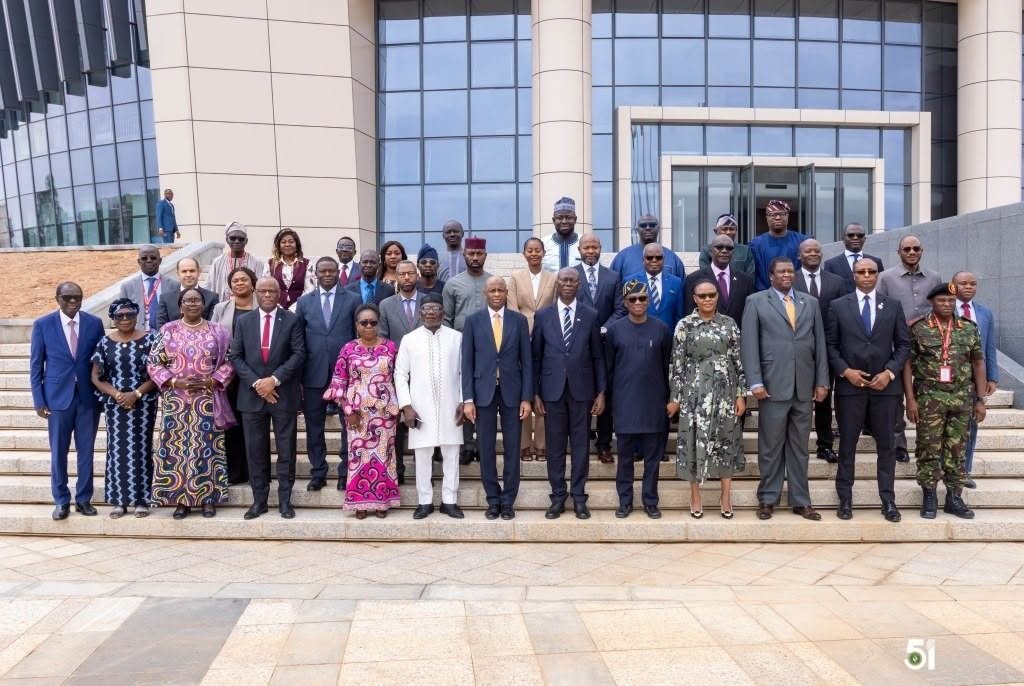
This month a joint meeting of the African Union Peace and Security Council and the ECOWAS Mediation and Security Council was held, at which it was emphasized that threats in the region are growing faster than institutional responses to them.[30] Nigeria, which is fighting with insurgents in the north of the country, recorded significant losses in Borno and Zamfara states, while the Lake Chad area continues to remain the most active terrorist hotspot on the continent.[31] In the middle of the month, there was also an attack on an airport in Niger, confirming the expansion of activity beyond traditional hotspots. On the diplomatic level, a visit by the Beninese prime minister opened talks on reopening the border between Niger and Benin, which has been closed for the past three years since the military takeover.[32] Overall, June’s events confirm that the Sahel conflict is increasingly moving away from classic territorial warfare and shifting toward a form of economic coercion and institutional exhaustion of states, while regional structures remain unable to cooperate in addressing the shared situation in the area.
* Views and opinions of the authors of this paper do not necessarily correspond to the views of the Euro-Atlantic Council of Slovenia.
Sources
[1] U.S. Department of State, Office of the Spokesperson. “Joint Statement on the Sixth Joint Oversight Committee for the Peace Agreement between the Democratic Republic of the Congo and the Republic of Rwanda.” U.S. Department of State. (junij 2026) https://www.state.gov/releases/office-of-the-spokesperson/2026/06/joint-statement-on-the-sixth-joint-oversight-committee-for-the-peace-agreement-between-the-democratic-republic-of-the-congo-and-the-republic-of-rwanda
[2] Critical Threats Project. “Congo War Security Review, June 19, 2026.” Critical Threats. (19. 6. 2026) https://www.criticalthreats.org/briefs/congo-war-security-review/june-19-2026
[3] Al Jazeera Staff. “DR Congo files case against Rwanda at ICJ over decades of alleged ‘abuses’.” Al Jazeera. (26. 6. 2026) https://www.aljazeera.com/news/2026/6/26/dr-congo-files-case-against-rwanda-at-icj-over-decades-of-alleged-abuses
[4] Reuters. “Congo files ICJ case against Rwanda over role in conflict.” CNBC Africa. (26. 6. 2026) https://www.cnbcafrica.com/2026/congo-files-icj-case-against-rwanda-over-role-in-conflict
[5] UN News. “Sudan’s people subject to ‘relentless’ drone strikes in El Obeid.” UN News. (3. 7. 2026) https://news.un.org/en/story/2026/07/1167871
[6] ACLED. “Africa Overview: June 2026.” ACLED. (junij 2026) https://reliefweb.int/report/democratic-republic-congo/acled-regional-overview-africa-june-2026
[7] Ibid.
[8] Sudan’s Post. “Territorial Control Map – Sudan Conflict (as of June 21, 2026).” Sudan’s Post. (21. 6. 2026) https://www.sudanspost.com/territorial-control-map-sudan-conflict-as-of-june-21-2026/
[9] Al Jazeera Staff. “Amnesty says RSF committed ethnic cleansing in Sudan’s el-Fasher.” Al Jazeera. (1. 7. 2026) https://www.aljazeera.com/news/2026/7/1/amnesty-says-rsf-committed-ethnic-cleansing-in-sudans-el-fasher
[10] Peter Bofin, ”Preaching, coercion, and sectarianism: How the Islamic State is building a stronghold in Mozambique,” Armed Conflict Location & Event Data, (26.6.2026), https://acleddata.com/report/preaching-coercion-and-sectarianism-how-islamic-state-building-stronghold-mozambique
[11] ”Mozambique Conflict Monitor Update: 17 June 2026,” Armed Conflict Location & Event Data, (17.6.2026), https://acleddata.com/update/mozambique-conflict-monitor-update-17-june-2026
[12] ”Nine feared dead after Mozambican navy boat sinks off Cabo Delgado,” Zitamar News, (24.6.2026), https://www.zitamar.com/nine-feared-dead-after-mozambican-navy-boat-sinks-off-cabo-delgado/
[13] ”Insurgents attack Namabo military position in Macomia,” Zitamar News, (26.6.2026), https://www.zitamar.com/insurgents-attack-namabo-military-position-in-macomia/
[14] ”Insurgents regroup in Quissanga after southern incursion,” Zitamar News, (19.6.2026), https://www.zitamar.com/insurgents-regroup-in-quissanga-after-southern-incursion/
[15] ”Mozambique Conflict Monitor Update: 17 June 2026,” Armed Conflict Location & Event Data.
[16] ”Cabo Delgado needs watching as LNG machinery restarts,” Zitamar News, (19.6.2026), https://www.zitamar.com/cabo-delgado-needs-watching-as-lng-machinery-restarts/; ”Mozambique Conflict Monitor Update: 17 June 2026,” Armed Conflict Location & Event Data.
[17] Alexandre Colas de Francs and Liam Karr, ”Al Qaeda and IS Run Rampant in Niger: Africa File, June 25, 2026,” Critical Threats, (25.6.2026), https://www.criticalthreats.org/analysis/jnim-alqaeda-issp-isis-niger
[18] Francis Ugwu, ”Security alert as ISIS releases footage of military-grade weapons captured in Niger,” Daily Post, (28.6.2026), https://dailypost.ng/2026/06/28/security-alert-as-isis-releases-footage-of-military-grade-weapons-captured-in-niger/
[19] Alexandre Colas de Francs and Liam Karr, ”Al Qaeda and IS Run Rampant in Niger: Africa File, June 25, 2026,” Critical Threats.
[20] Defense News Nigeria (@DefenseNigeria), ”The footage captures the Islamic State’s assault on the Nigerien military base in Inatès on June 17, 2026. Niger’s once served as a crucial buffer against…,” X, (28.6.2026, 7:30 a.m.), https://x.com/DefenseNigeria/status/2071134171255263444
[21] Wilson McMakin, ”Gunmen attack Niger airport, killing 11 soldiers and 2 civilians, officials say,” AP News, (18.6.2026), https://apnews.com/article/niger-airport-attack-militants-003a2a17abee25dfa748cb339554d40a; Chinedu Asadu and Wilson McMakin, ”Brazen attack on Niger’s airport shows jihadis are expanding to cities in Africa’s Sahel,” AP News, (19.6.2026), https://apnews.com/article/niger-jihadi-attacks-sahel-c92e70d0148bf54f08c3e46b7de52b22
[22] Héni Nsaibia, ”What does the Niamey airport attack mean for Niger’s security?,” Armed Conflict Location & Event Data, (19.6.2026), https://acleddata.com/expert-comment/what-does-niamey-airport-attack-mean-nigers-security
[23] Alexandre Colas de Francs and Liam Karr, ”Al Qaeda and IS Run Rampant in Niger: Africa File, June 25, 2026,” Critical Threats.
[24] ”Al-Qaeda-linked JNIM militants claim deadly attack on Niger airport,” RFI, (19.6.2026), https://www.rfi.fr/en/africa/20260619-al-qaeda-linked-militants-claim-deadly-attack-on-niamey-airport-niger; Chinedu Asadu and Wilson McMakin, ”Brazen attack on Niger’s airport shows jihadis are expanding to cities in Africa’s Sahel,” AP News.
[25] ”Al-Qaeda-linked JNIM militants claim deadly attack on Niger airport,” RFI.
[26] ”Latest Niamey airport attack tests Niger junta as terror groups ‘adapt’,” RFI, (24.6.2026), https://www.rfi.fr/en/africa/20260624-latest-niamey-airport-attack-tests-niger-junta-as-terror-groups-adapt; Alexandre Colas de Francs and Liam Karr, ”Al Qaeda and IS Run Rampant in Niger: Africa File, June 25, 2026,” Critical Threats.
[27] Héni Nsaibia, ”What does the Niamey airport attack mean for Niger’s security?,” Armed Conflict Location & Event Data.
[28] ”Latest Niamey airport attack tests Niger junta as terror groups ‘adapt’,” RFI; Alexandre Colas de Francs and Liam Karr, ”Al Qaeda and IS Run Rampant in Niger: Africa File, June 25, 2026,” Critical Threats; Héni Nsaibia, ”What does the Niamey airport attack mean for Niger’s security?,” Armed Conflict Location & Event Data; ”Al-Qaeda-linked JNIM militants claim deadly attack on Niger airport,” RFI.
[29] The Ops Con Intelligence. “Threat Level — Mali: JNIM’s fuel blockade is strangling Bamako, and the capital is now exposed.” The Ops Con. (16. 6. 2026) https://theopscon.com/intelligence/mali-bamako-fuel-blockade-siege-16-jun-2026
[30] Amani Africa. »Third Annual Joint Consultative Meeting between the AU PSC and ECOWAS MSC«. Amani Africa. (29. 6. 2026)https://amaniafrica-et.org/third-annual-joint-consultative-meeting-between-the-au-psc-and-ecowas-msc/
[31] Chahali, Everist. “Terrorism in Africa: Latest mid-Year intelligence Monitoring.” The Tanzania Times. (29. 6. 2026) https://tanzaniatimes.net/terrorism-in-africa-latest-mid-year-intelligence-monitoring/
[32] International Crisis Group. “Unexpected Visit Signals Potential Détente between Niger and Benin.” International Crisis Group. (4. 6. 2026) https://www.crisisgroup.org/anb/africa/niger-benin/unexpected-visit-signals-potential-detente-between-niger-and-benin