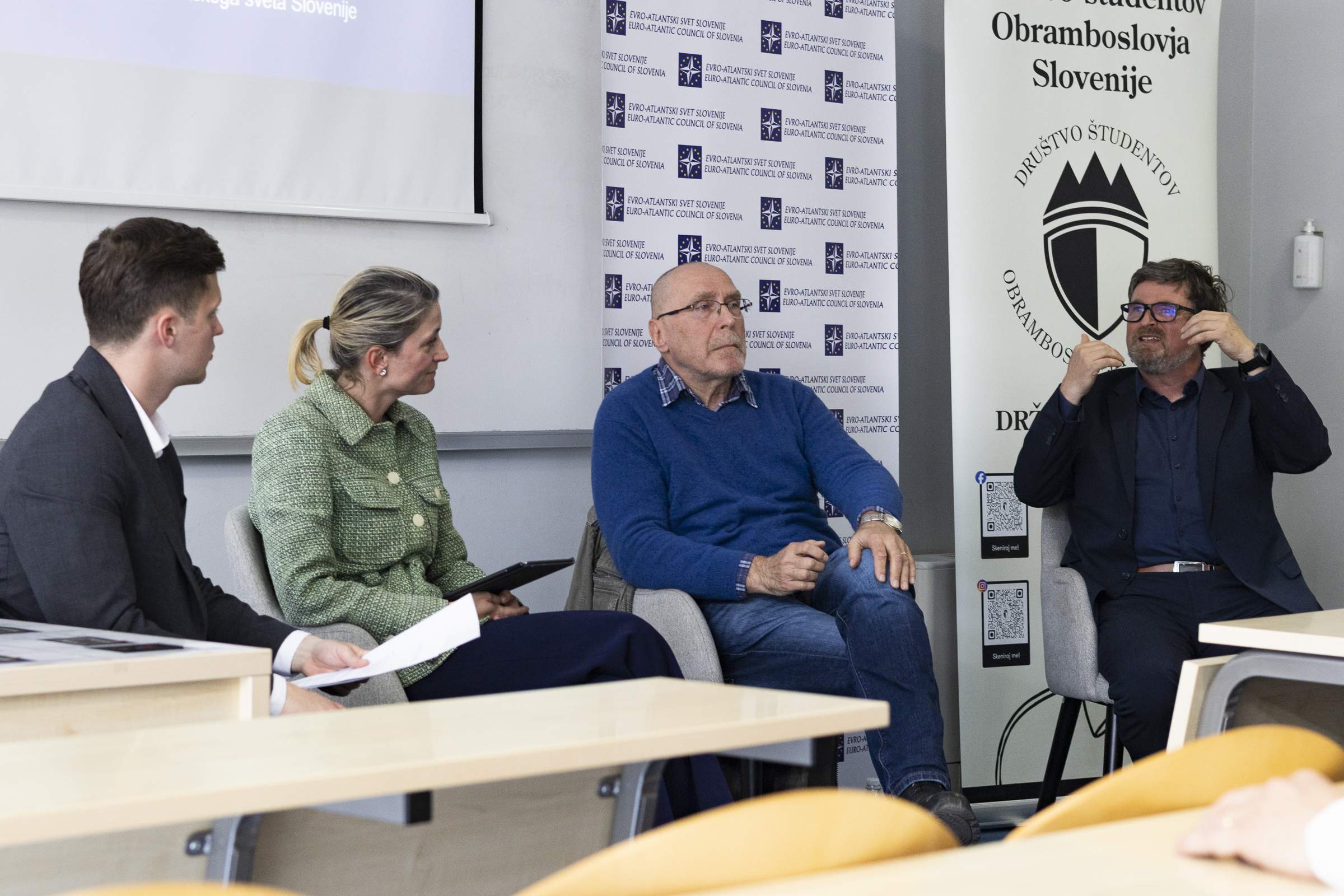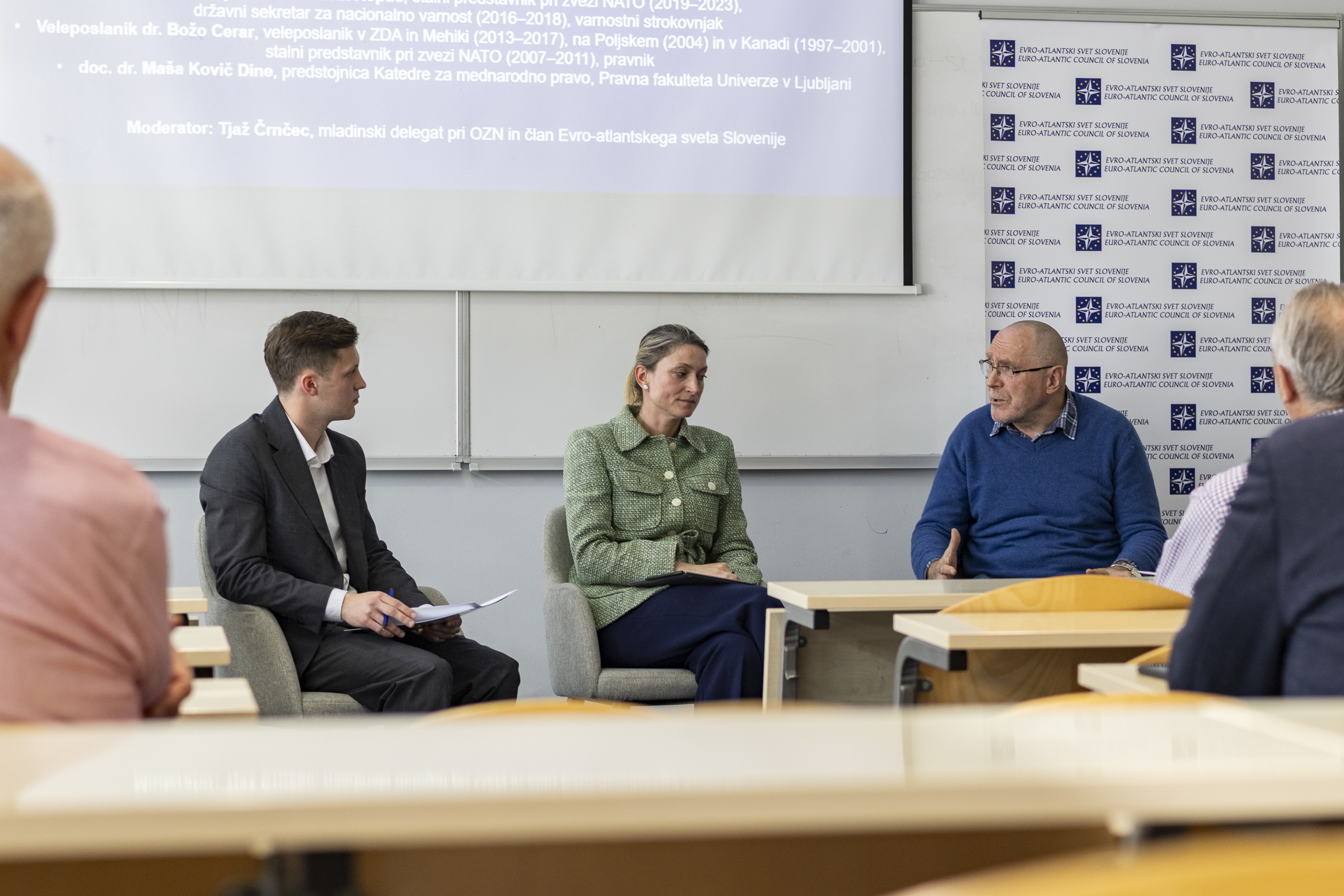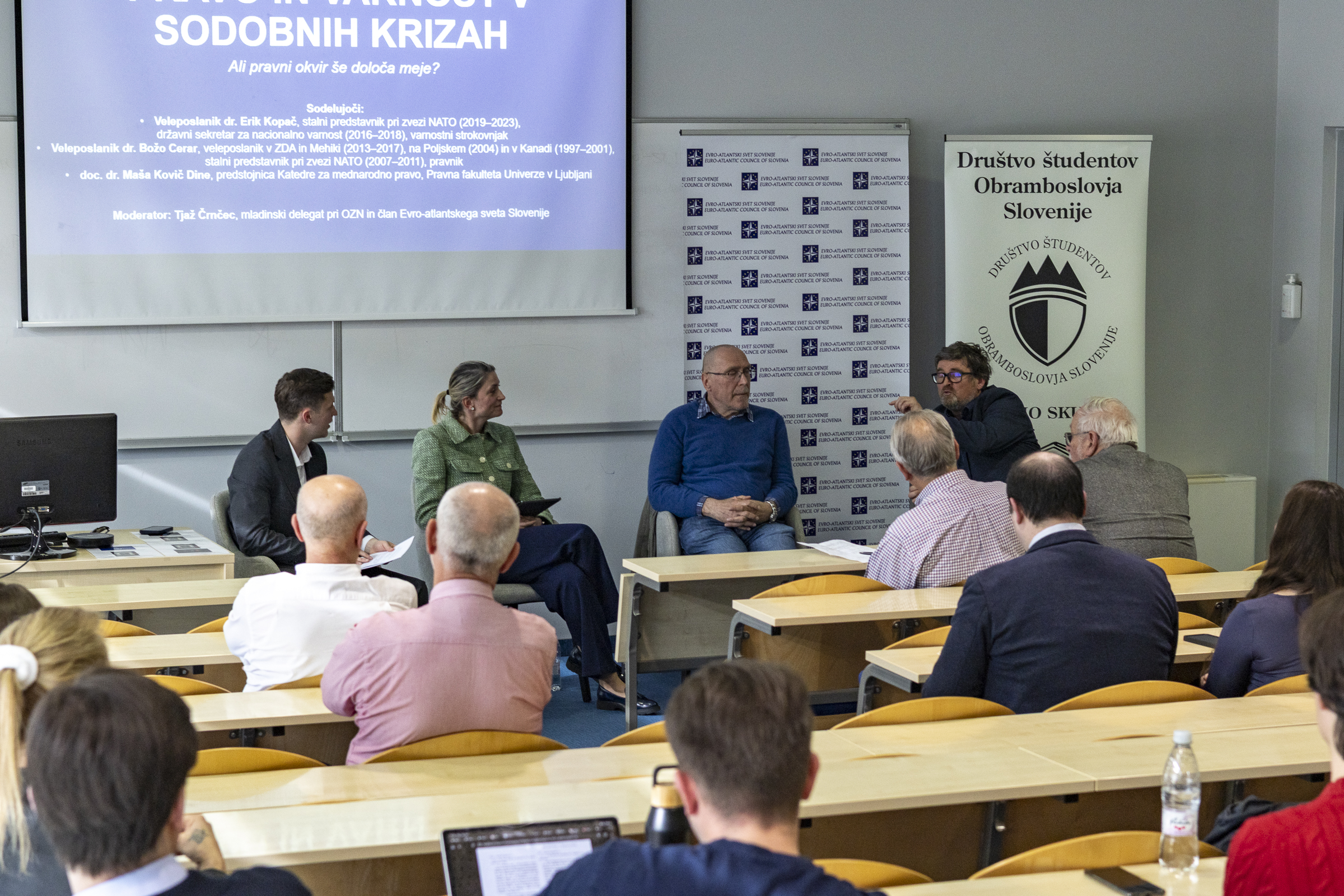

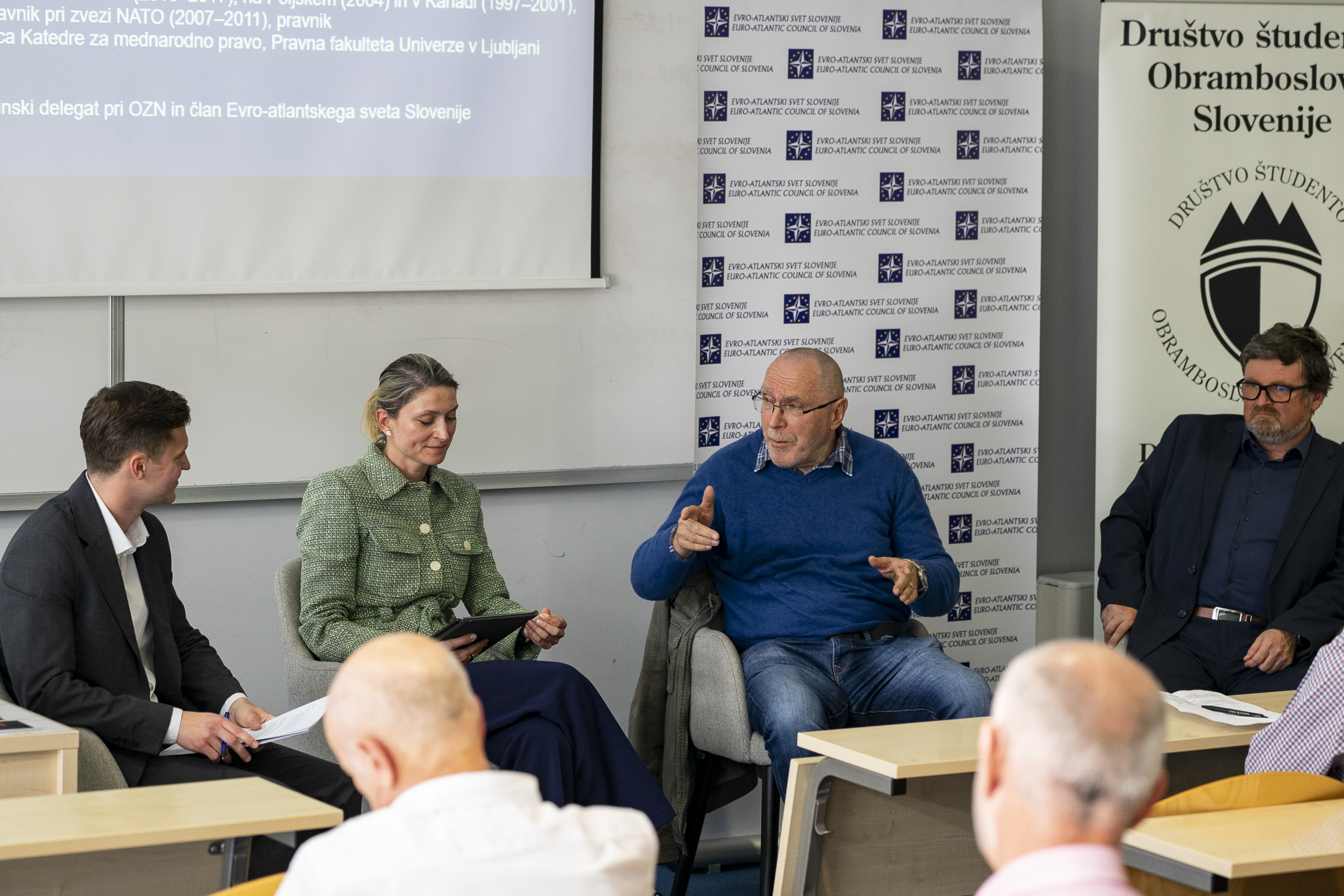
On 23 April 2026, the Youth Section of the Euro-Atlantic Council of Slovenia (YATA Slovenia), in cooperation with the Slovenian Student Association for Defence Studies (DŠOS) and the Slovenian Youth Delegate to the United Nations, organised a roundtable titled “Law and Security in Contemporary Crises: Does the Legal Framework Still Set the Limits?” The discussion took place at the Faculty of Social Sciences in Ljubljana and offered a critical, in-depth reflection on the role of international law in an increasingly unpredictable and fragmented international environment.
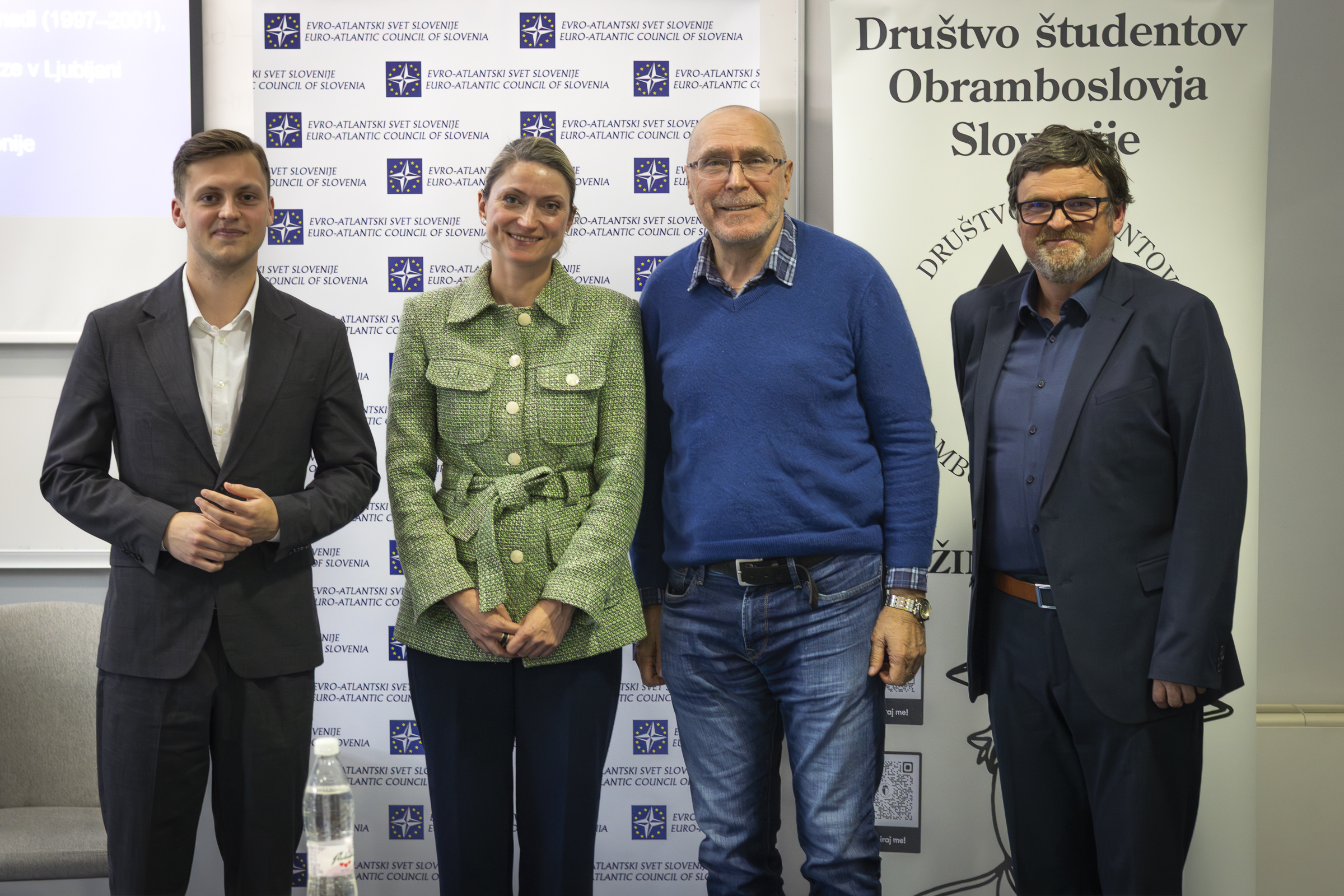
The panel featured Ambassador Dr Erik Kopač, Ambassador Dr Božo Cerar, and Assistant Professor Dr Maša Kovič Dine. The discussion was moderated by Tjaž Črnčec, Slovenia’s Youth Delegate to the United Nations and a member of the Euro-Atlantic Council of Slovenia. Opening remarks were delivered by Brin Najžer, PhD, Vice President of the Euro-Atlantic Council of Slovenia.
The discussion focused on a fundamental question: to what extent does international law still effectively constrain state behaviour amid growing geopolitical tensions and the resurgence of power politics? Speakers highlighted the increasing fragmentation of the international legal order and a gradual shift away from multilateralism and dialogue. As a result, international legal norms are more frequently applied selectively, while diplomacy is increasingly losing its traditional role as the primary mechanism for peaceful dispute resolution. It was notably emphasised that the very great powers that established the post-World War II international order are today among those contributing to its erosion.
A significant part of the discussion focused on the application of international law in cyberspace and the broader “grey zone.” While international law undoubtedly applies in the digital domain, its interpretation raises a number of complex challenges. Key issues included determining the threshold at which a cyber operation constitutes the use of force, as well as the problem of attribution, which complicates both identifying perpetrators and formulating appropriate responses. Speakers also underlined the importance of the principle of due diligence, which obliges states to prevent their territory and infrastructure from being used for harmful cyber activities. In this context, the Tallinn Manual was referenced as an important, albeit non-binding, framework for understanding cyber operations.
From a security and strategic perspective, it was stressed that small states such as Slovenia cannot rely solely on the normative framework of international law to ensure their security. Without the backing of real power, international law alone is often insufficient to protect national interests. Strong alliances, therefore, remain essential—particularly within NATO and the European Union—alongside a balanced approach that combines respect for legal norms with a realistic understanding of international relations.
The discussion also addressed the functioning of the United Nations Security Council, whose effectiveness is increasingly constrained by the frequent use of the veto, often resulting in paralysis in decision-making. In such circumstances, the United Nations risks acting more as an observer than an effective crisis manager, while the international system continues to fragment into regional and interest-based blocs with differing interpretations of international law.
The roundtable concluded that international law remains an indispensable framework for regulating relations between states, but is currently facing a profound crisis of legitimacy and effectiveness. To remain relevant, it will need to adapt to the evolving realities of international politics, increasingly shaped by great power competition. For small states, international law remains a vital tool for safeguarding sovereignty—yet only when combined with a prudent foreign policy, strong alliances, and active engagement in the international arena.