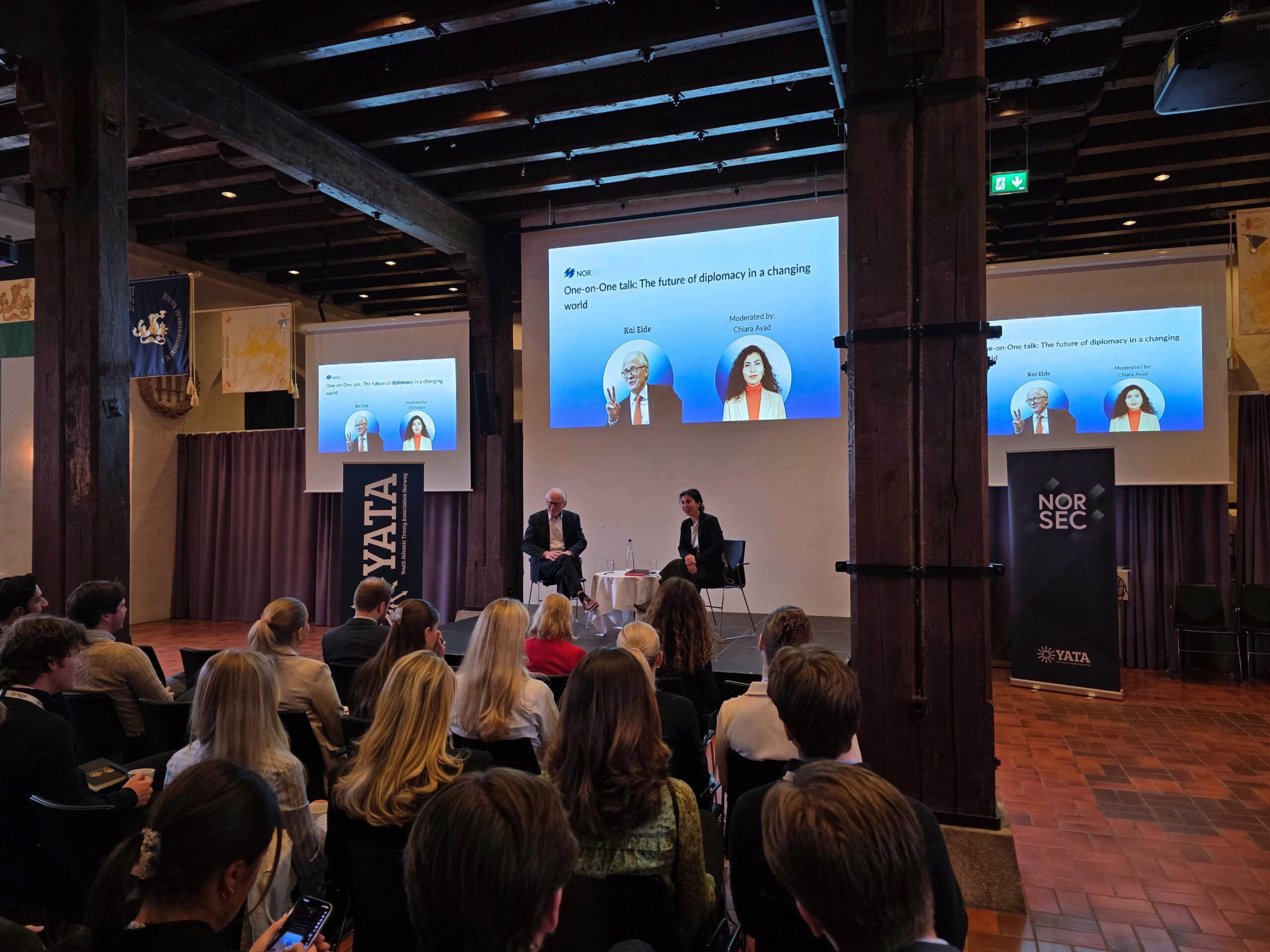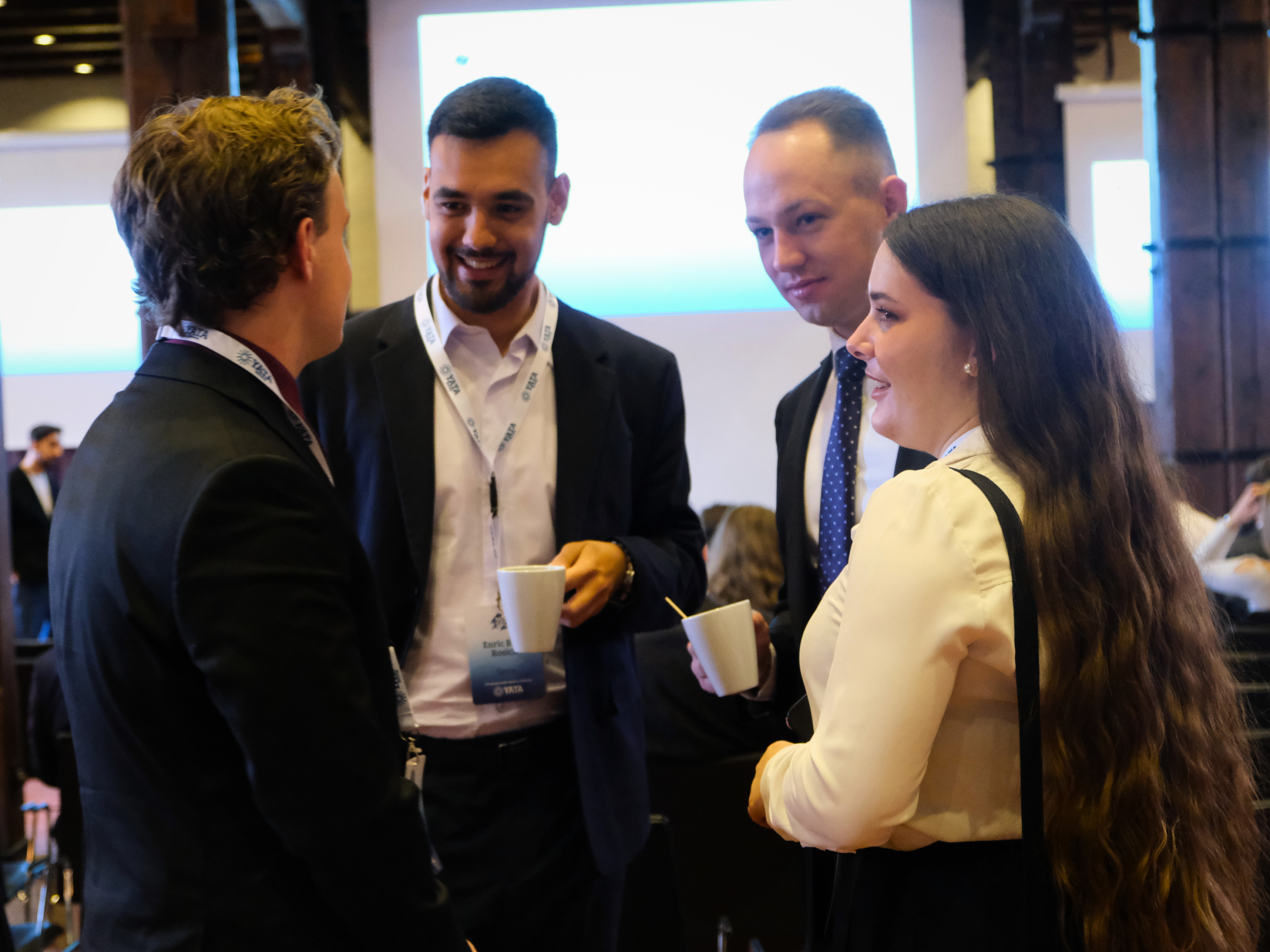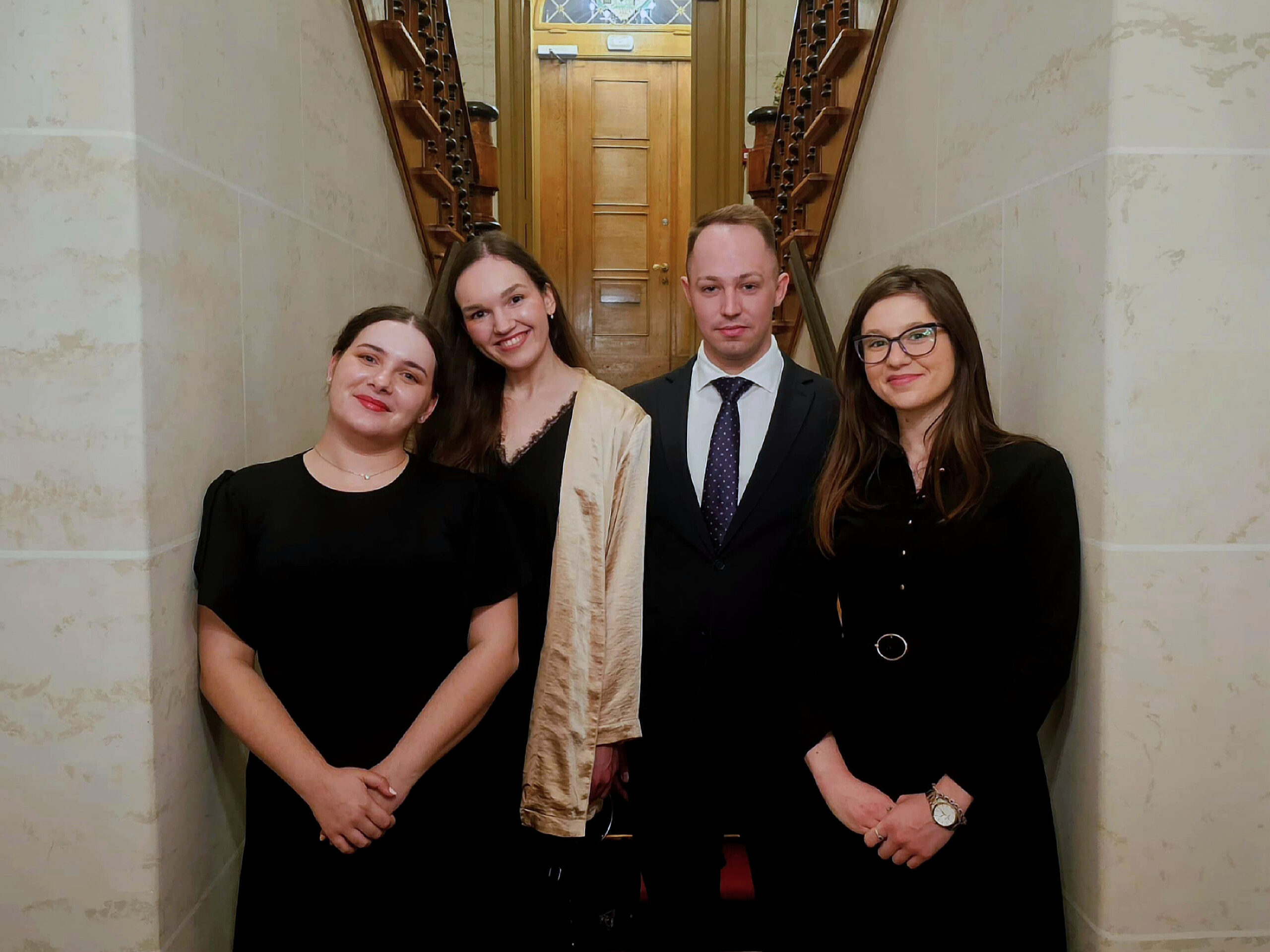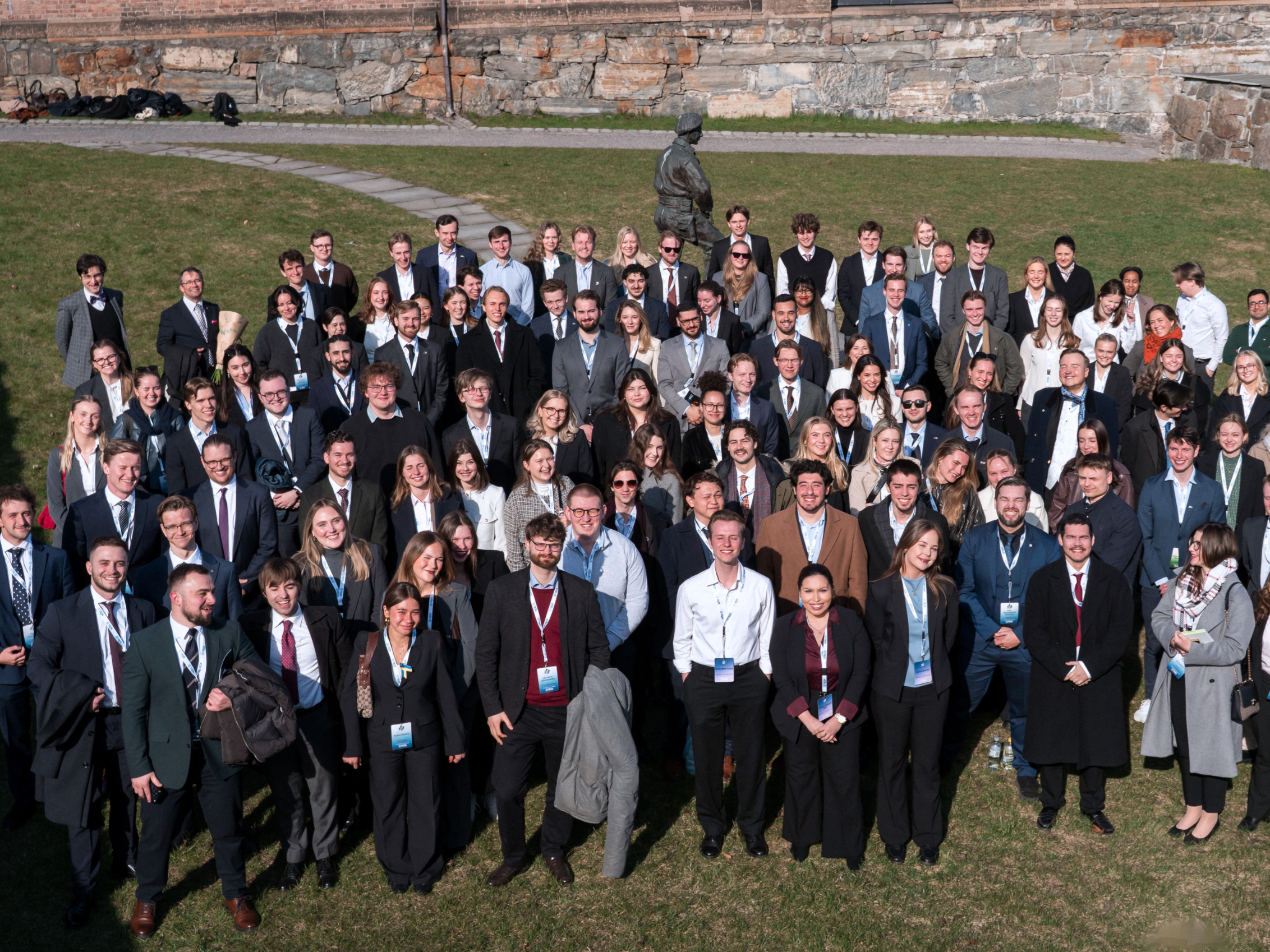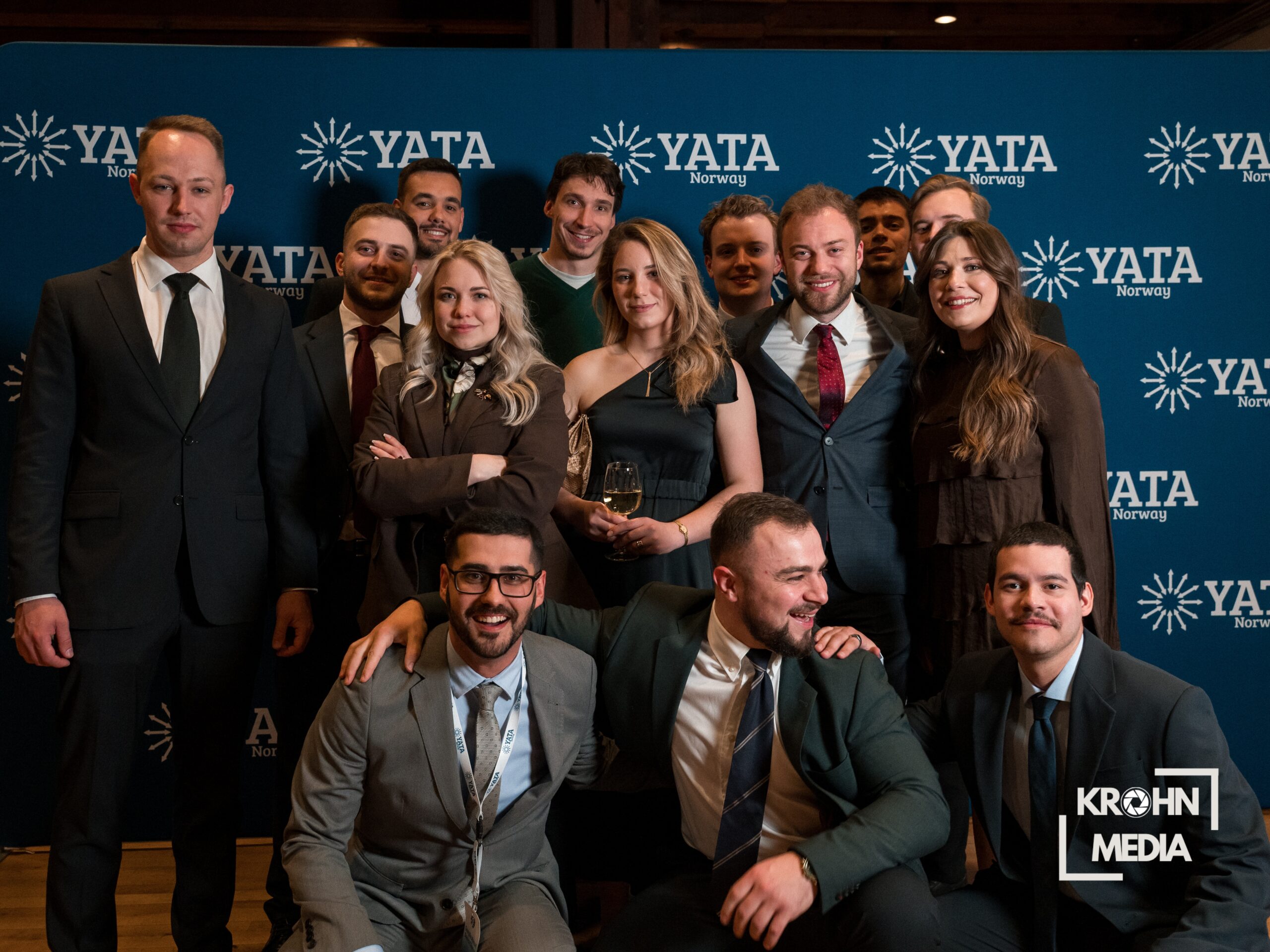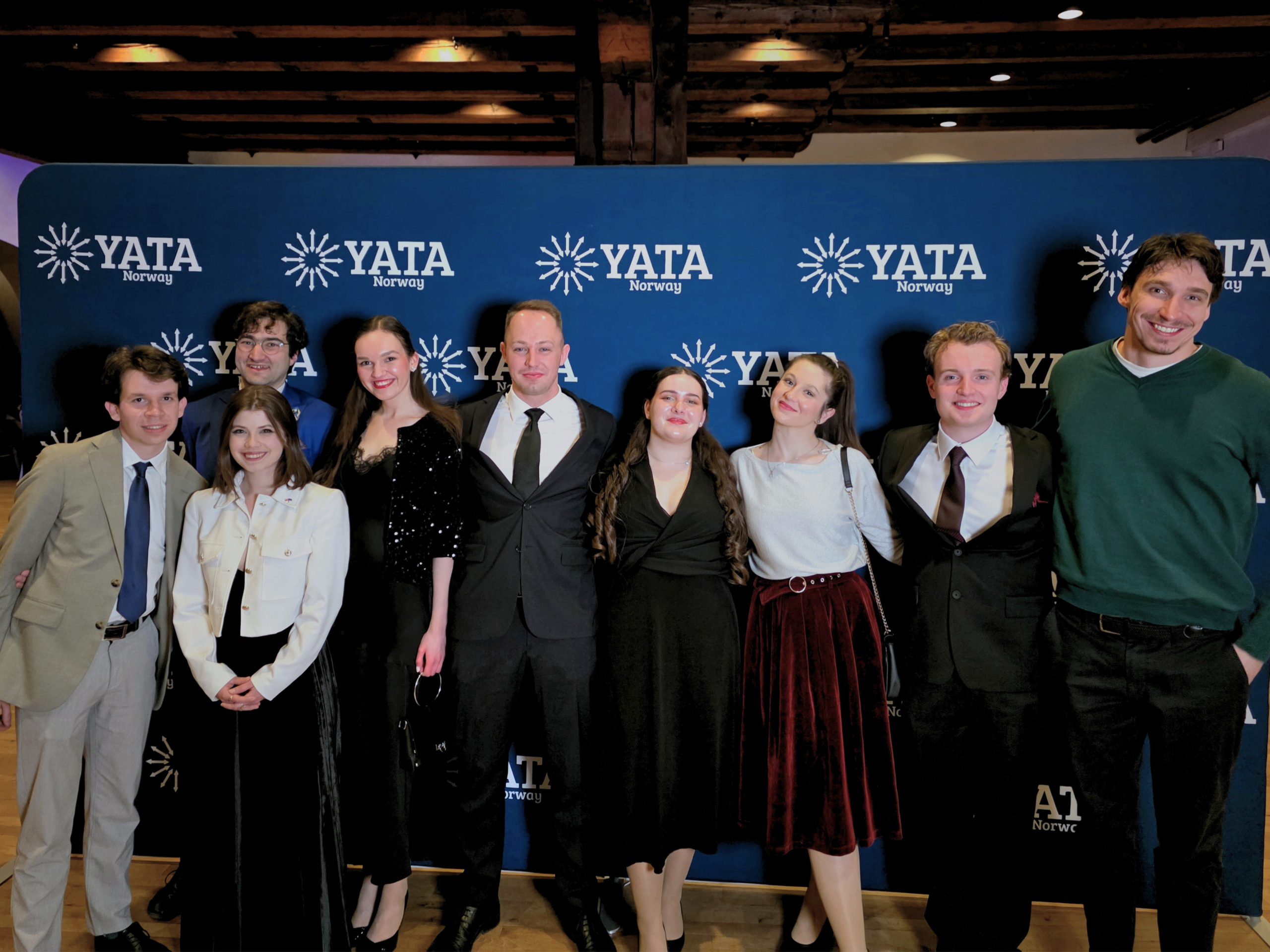

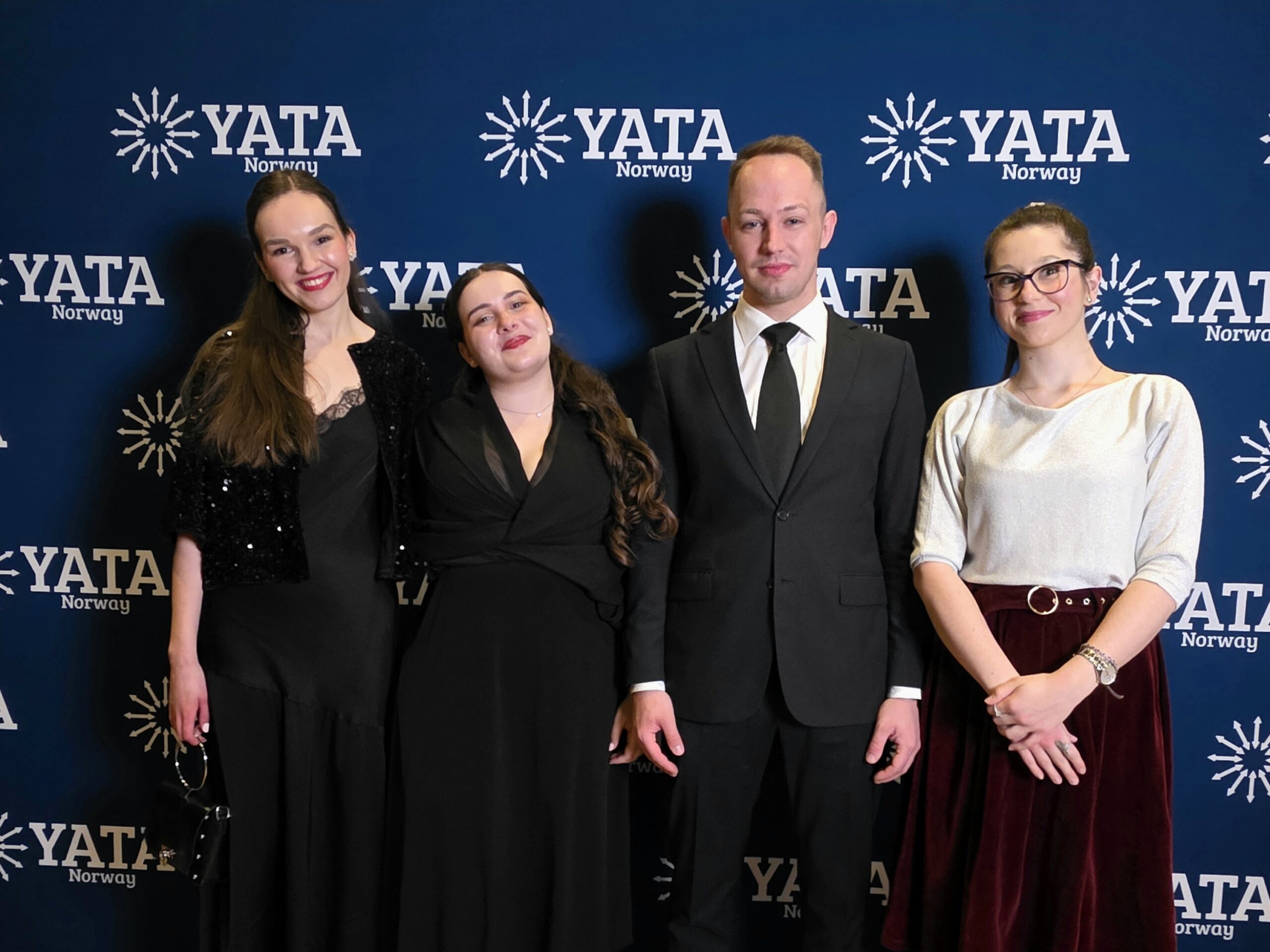
Representatives of YATA Slovenia participated in the 21st annual Nordic Security Conference (NorSec 2026), held on 11–12 April 2026 at the historic Akershus Fortress in Oslo, Norway. The Slovenian delegation included Matic Kosirnik, President of YATA Slovenia, and Vice Presidents Katarina Ahčin, Maša Omahen, and Azra Kerić.
NorSec 2026, organised by YATA Norway, brought together young professionals, experts, and policymakers to address the overarching theme of “Preparing for insecurity in a more fragmented world.” The conference focused on the evolving nature of global security, characterised by shifting power dynamics, increasing geopolitical fragmentation, and the growing role of both state and non-state actors. As emphasised in the conference foreword, Russia’s full-scale invasion of Ukraine, alongside broader systemic shifts, has fundamentally challenged existing security frameworks and underscored the need for more coordinated and forward-looking responses.
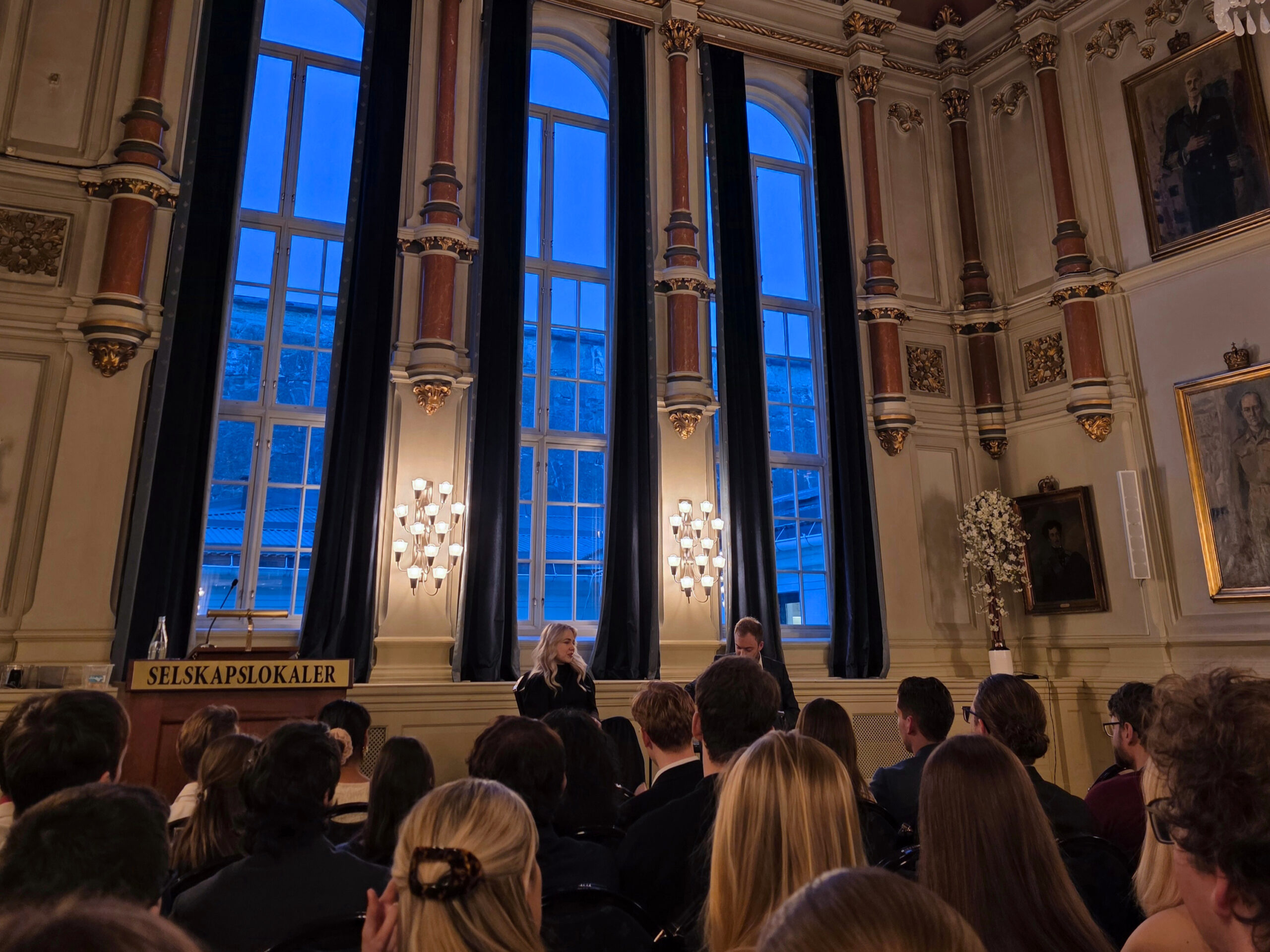
The conference programme began on Friday with a networking event and a fireside discussion featuring Agnieszka Homańska, Head of the Political Cabinet of Poland’s Minister of Foreign Affairs. Her intervention provided an early, high-level policy perspective on the war in Ukraine, its political implications, and the broader strategic environment shaping European security.
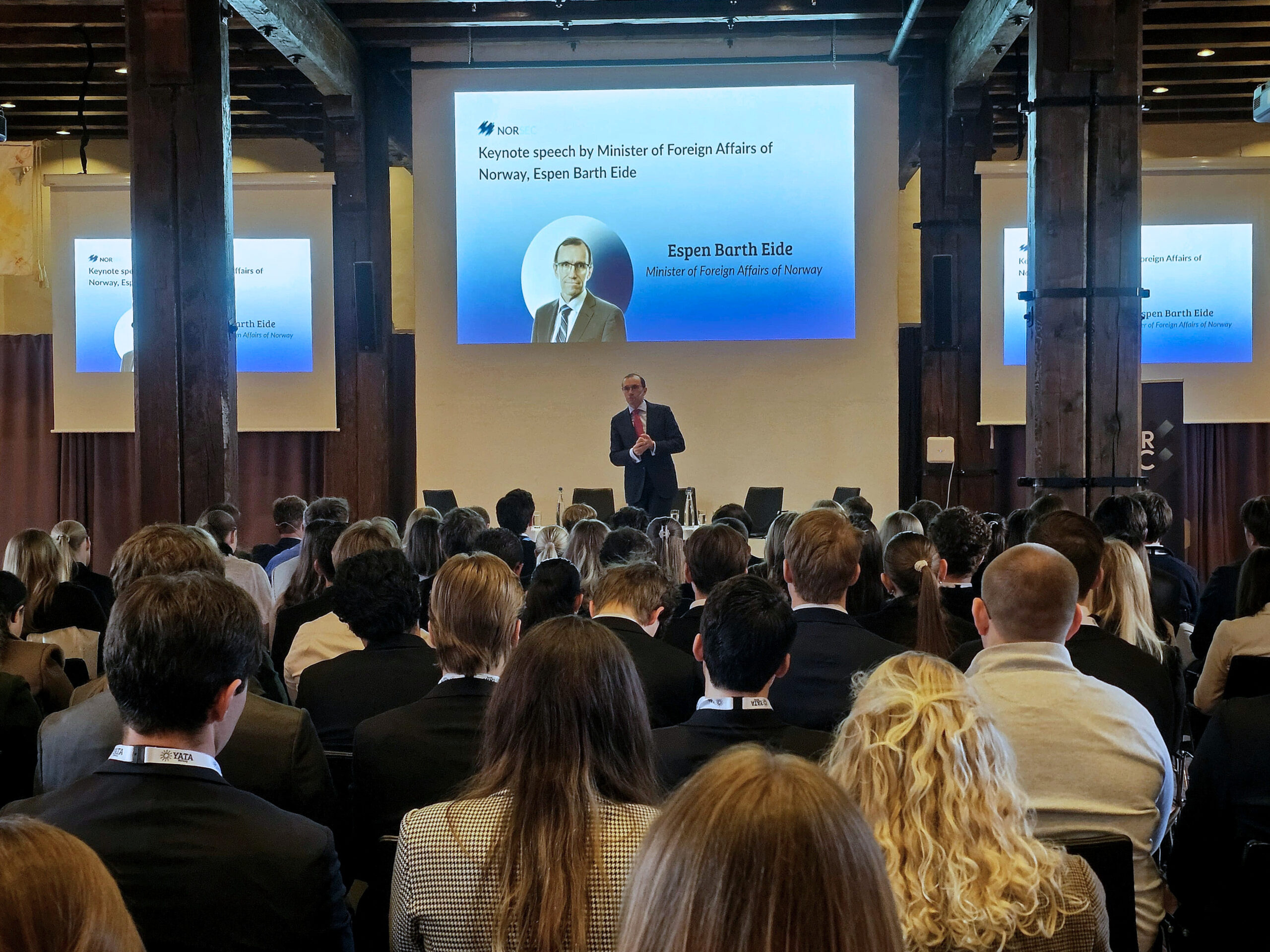
The main conference programme on Saturday opened with a keynote address by Norway’s Minister of Foreign Affairs, Espen Barth Eide, setting the tone for discussions on multipolarity and the transformation of the international order. The opening panel, featuring speakers such as Øystein Tunsjø (Norwegian Institute for Defence Studies) and Nicolas de La Grandville (EU Ambassador to Norway), examined how power is exercised in an increasingly fragmented system, including its implications for alliances, international law, and for smaller states navigating strategic uncertainty.
A central theme throughout the first day was the evolving role of the United States and its impact on transatlantic relations. Discussions highlighted a shift towards a more selective and transactional U.S. foreign policy, raising important questions about burden-sharing, European strategic autonomy, and the future of NATO–EU cooperation. These debates were complemented by a panel on security cooperation frameworks, which explored the growing complexity of overlapping institutional arrangements and the need for more effective coordination across NATO, the EU, and regional formats.
The war in Ukraine remained a focal point of the programme. A dedicated panel on lessons learned from the conflict addressed military adaptation, deterrence, and the evolving character of warfare. Contributions from experts such as Lars Peder Haga, alongside representatives from Poland and Ukraine, provided both operational and strategic insights into Russia’s military behaviour and its implications for European defence planning.
The second day shifted focus towards hybrid threats and long-term resilience. A panel on disinformation, cyber threats, and foreign interference—featuring speakers including Julie Wilhelmsen (NUPI), Paul Buvarp (Norwegian Defence Research Establishment), and Nele Loorents (Estonian Atlantic Council)—highlighted the growing importance of societal resilience and the need to counter malign influence as a core security challenge for liberal democracies.
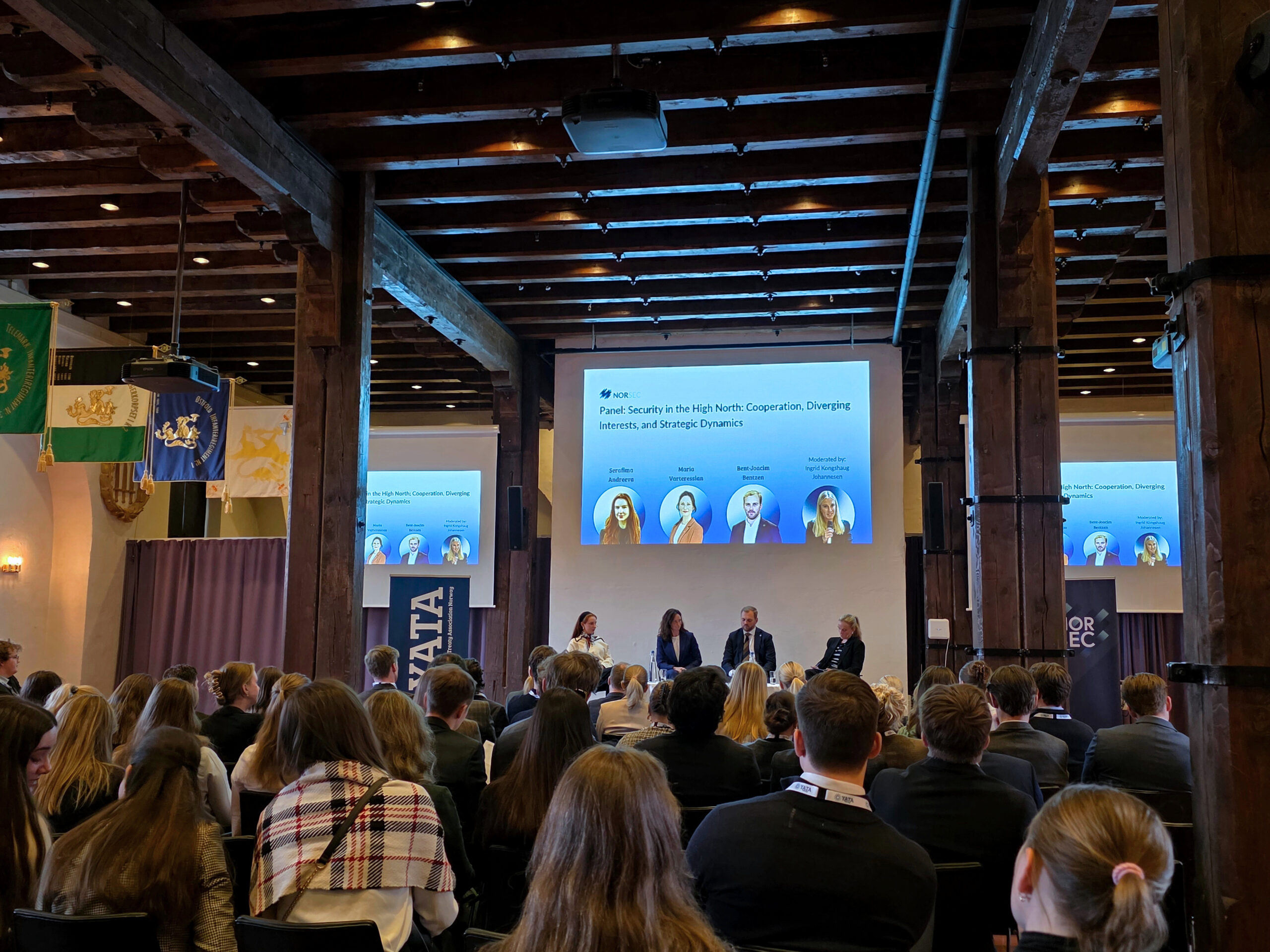
The conference also addressed emerging geopolitical theatres, particularly the High North. A keynote by Serafima Andreeva and a dedicated panel on Arctic security examined how climate change, increased economic activity, and geopolitical competition are reshaping the region. The discussion underscored the strategic importance of the Arctic within a broader 360-degree security approach, as well as the need to manage diverging interests among allies.
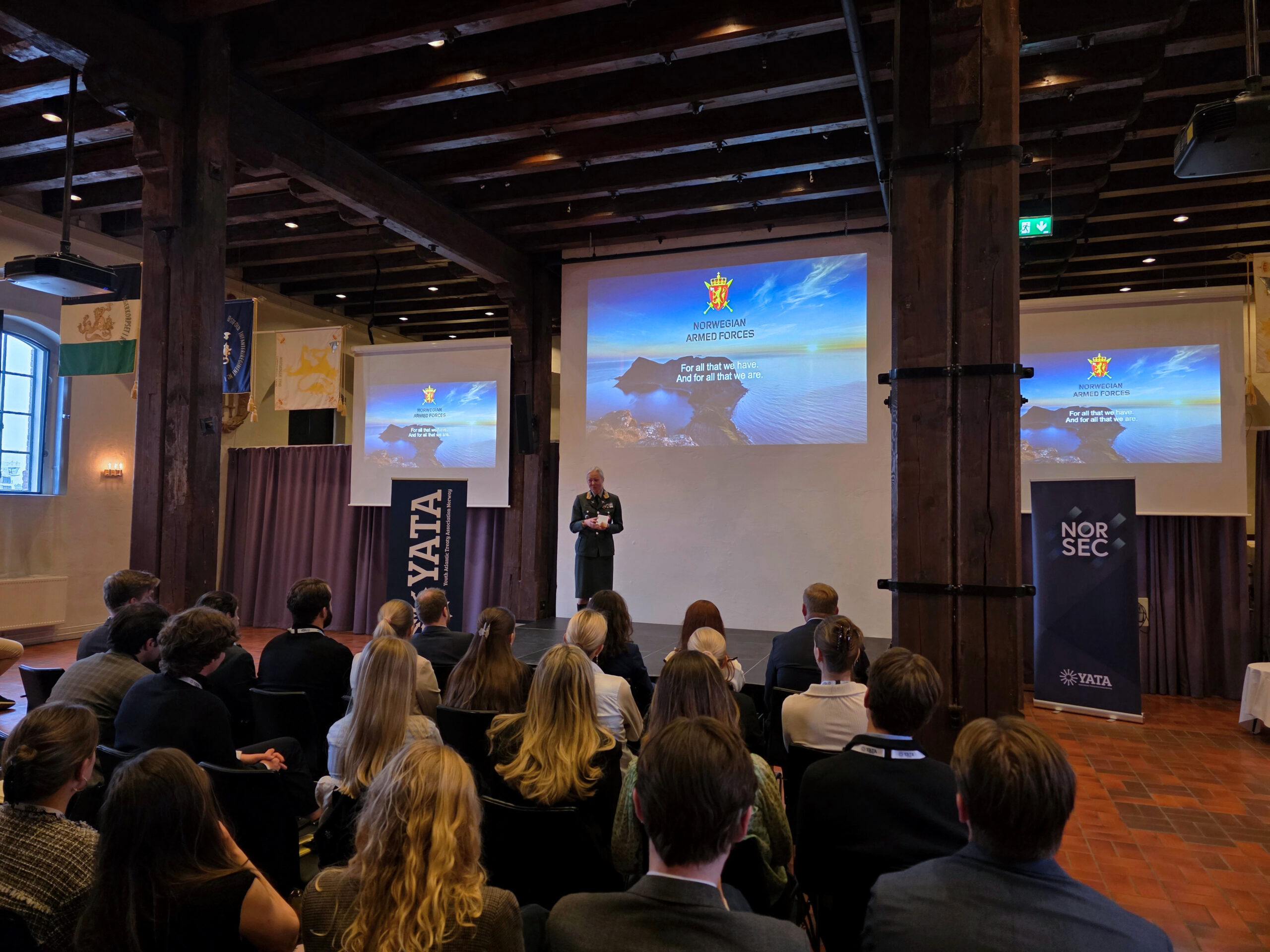
The programme concluded with a keynote address by Lieutenant General Ingrid Gjerde, Chief of the Norwegian Defence Staff, who emphasised the importance of preparedness, adaptability, and leadership in an increasingly complex security environment.
Participation at NorSec 2026 provided YATA Slovenia with an important opportunity to engage with leading experts and peers from across the Euro-Atlantic space, exchange perspectives on key security challenges, and strengthen international cooperation within the YATA network. The conference further reinforced the importance of informed, cross-border dialogue among the youth in addressing the challenges of a rapidly evolving strategic environment.