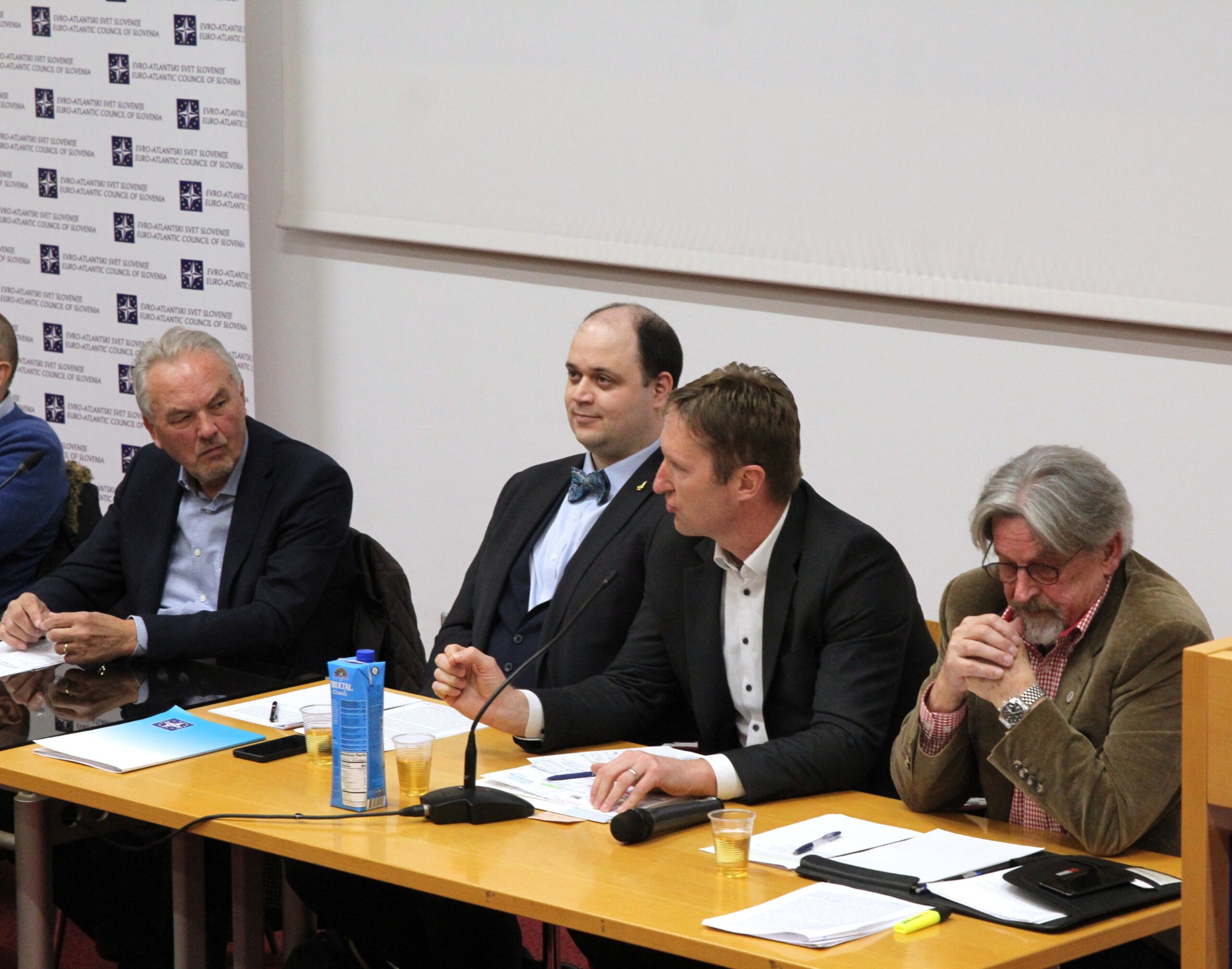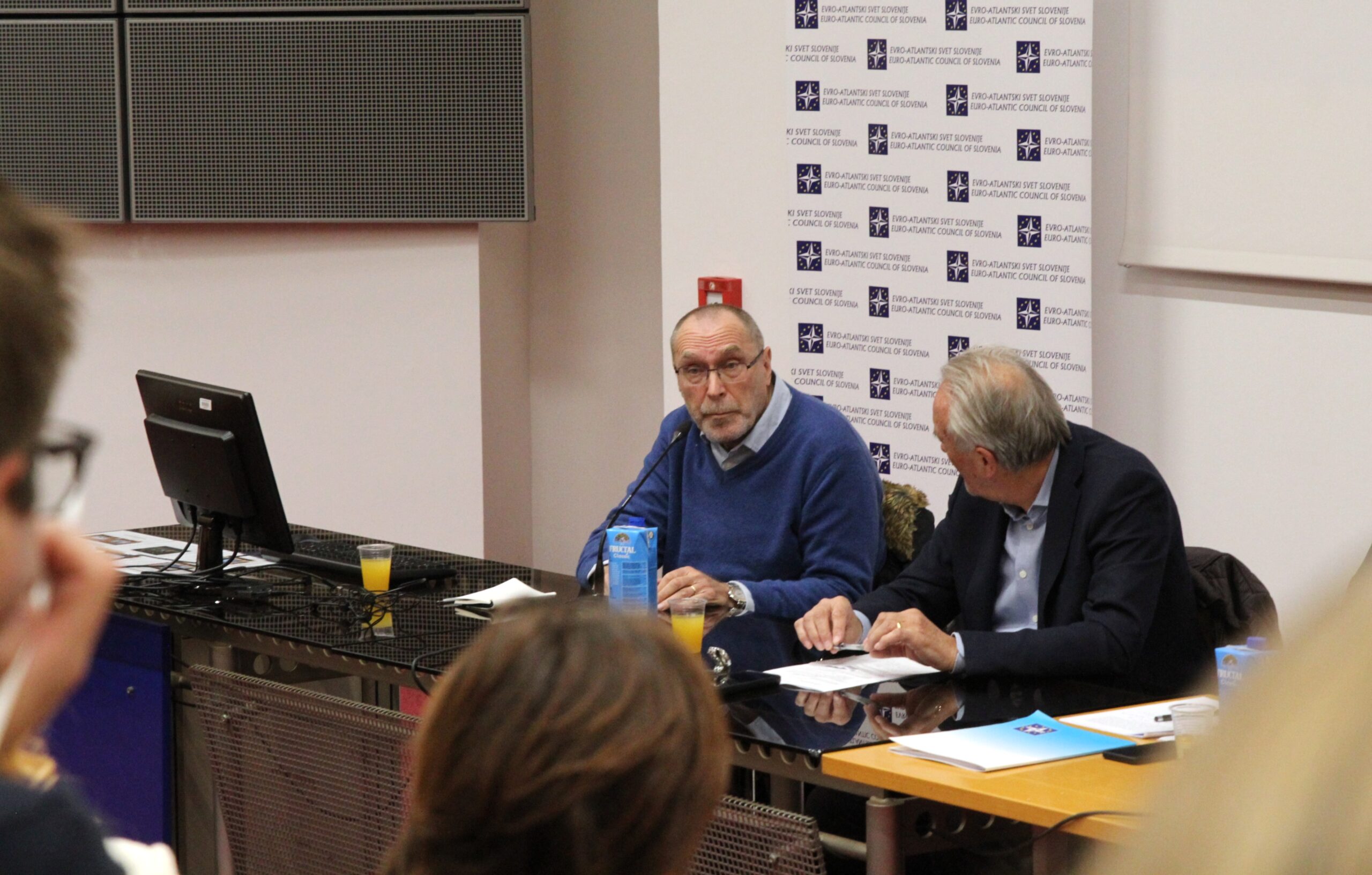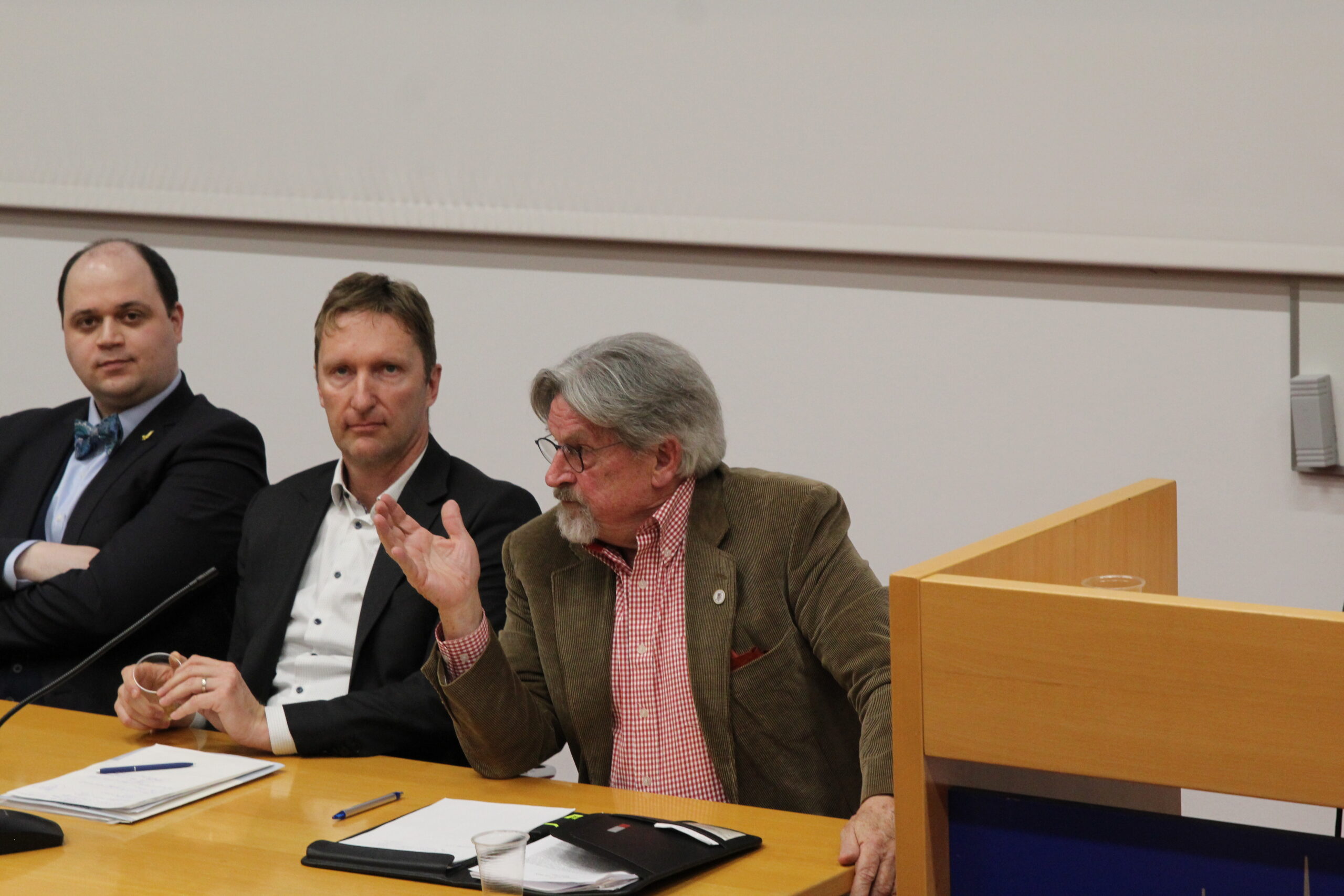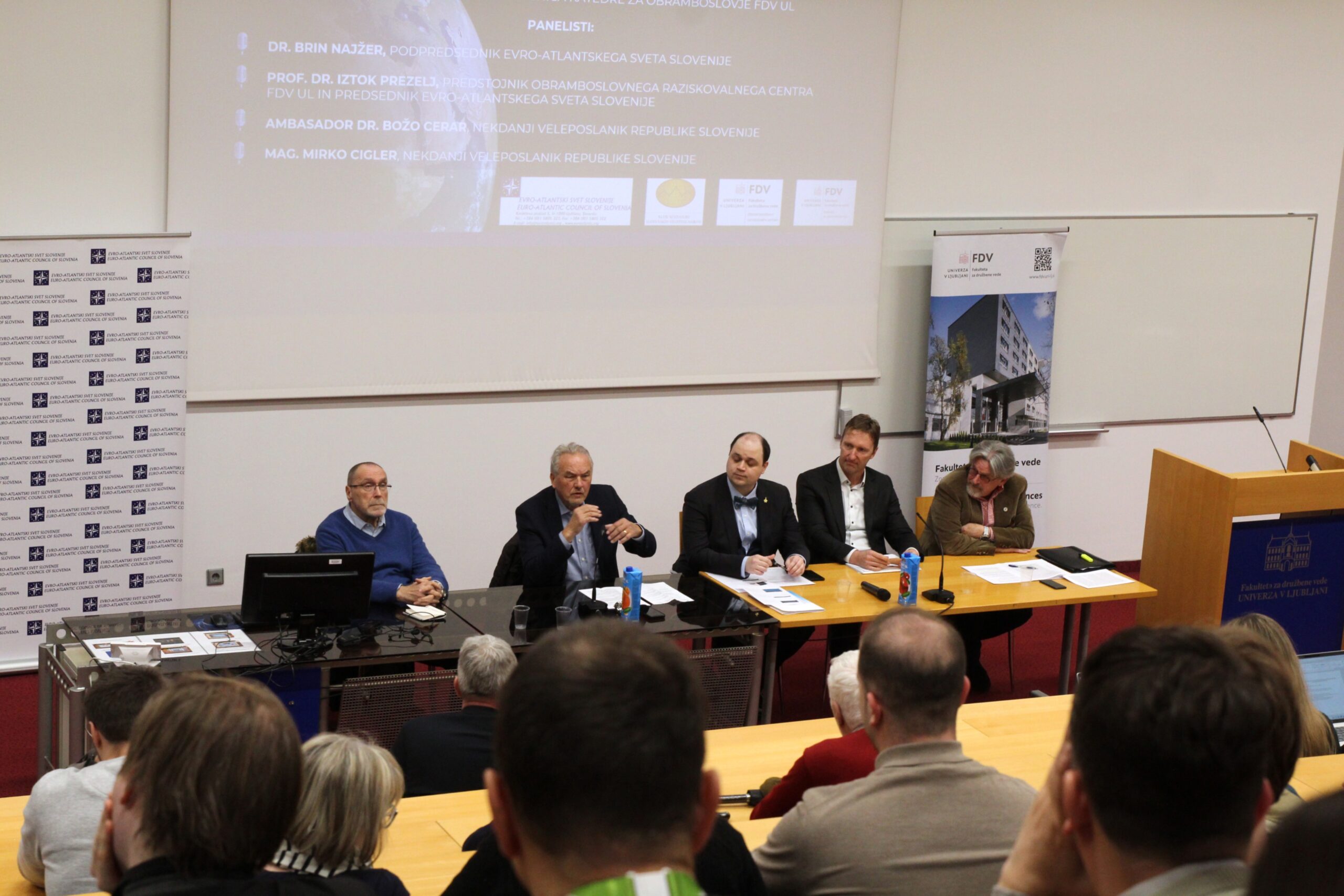

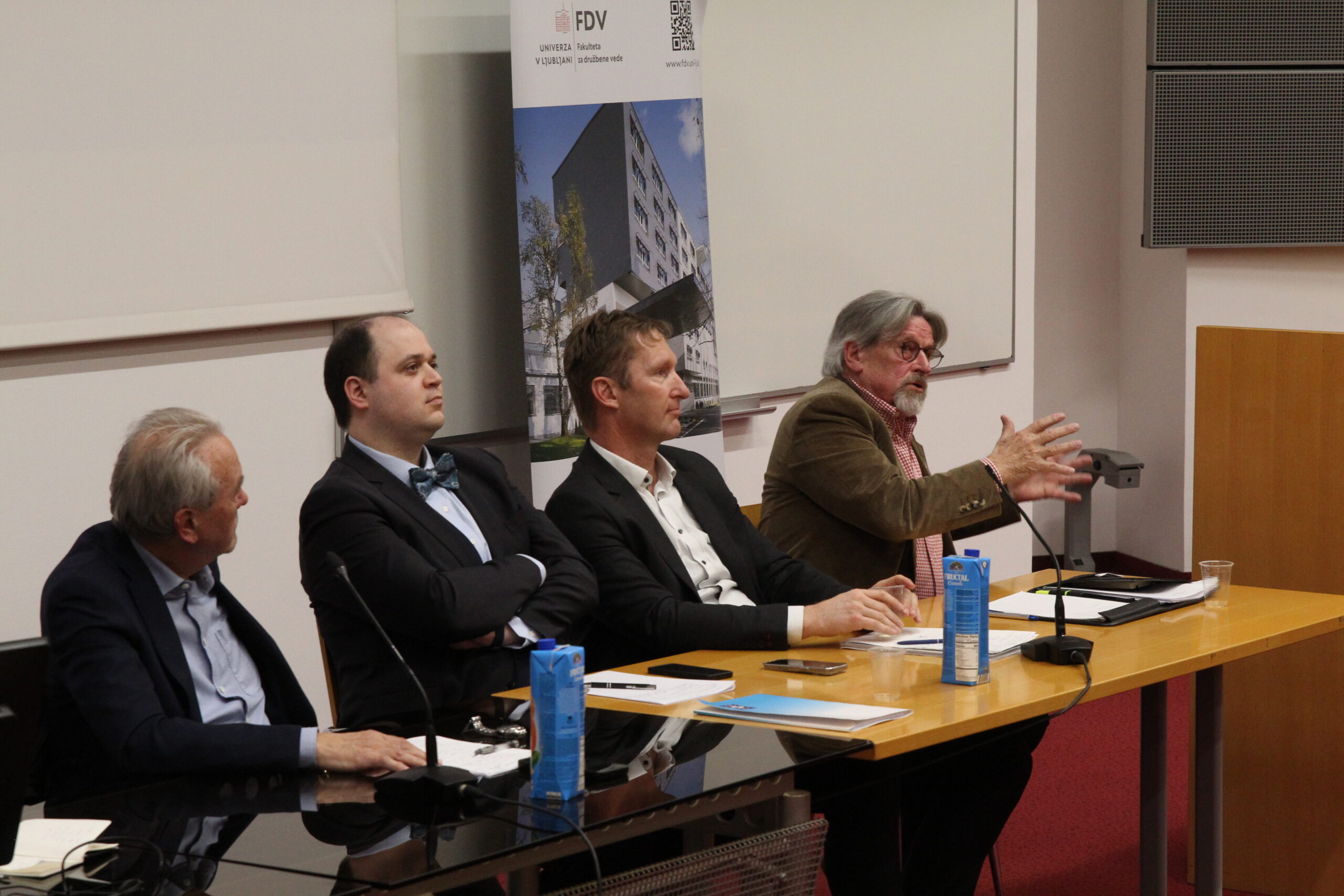
On Tuesday, 17 March 2026, the Faculty of Social Sciences at the University of Ljubljana (FDV UL) hosted a high-level expert discussion on U.S. national security and defence strategy, and their implications for the international order, Europe, and Slovenia. The event was organised in cooperation between the Euro-Atlantic Council of Slovenia, the Chair of Defence Studies at FDV UL, the Defence Research Centre of FDV UL, and the Club of Former Slovenian Ambassadors.
The discussion was moderated by Ambassador Roman Kirn and brought together a distinguished panel of speakers: Prof. Dr Iztok Prezelj, Ambassador Dr Božo Cerar, Mr Mirko Cigler, MA, and Brin Najžer, PhD.
Key Takeaways from the Discussion
The discussion underscored several structural shifts reshaping the contemporary security environment, pointing to a gradual but decisive transformation of the Euro-Atlantic strategic landscape.
- From Global Leadership to Transactional Alliances
The United States is progressively recalibrating its global role, moving away from its traditional function as the “world’s policeman”. Its approach is increasingly shaped by economic considerations, reciprocity, and a reduced willingness to bear disproportionate security burdens. This evolution is often described as signalling the “end of free-riding”, with clear implications for allies. - Transformation of Military and Strategic Thinking
Speakers highlighted an ongoing shift from complex, bureaucratic defence processes towards greater operational effectiveness, efficiency, and effectiveness. Similar dynamics are evident within NATO, where emphasis is increasingly placed on credible capabilities, equitable burden-sharing, and the long-term sustainability of collective defence. - Europe’s Strategic Responsibility
Europe is entering a period in which it must assume significantly greater responsibility for its own security. As one speaker succinctly noted, “nostalgia is not a strategy.” Rather than relying on past transatlantic assumptions, the European Union must adopt a more realistic, capability-driven, and strategically coherent approach to emerging security challenges. - Slovenia in a Changing Strategic Context
Slovenia operates within an international system undergoing rapid and profound transformation. The discussion emphasised the importance of developing a credible “Plan B”, alongside strengthening national resilience—particularly in the cognitive, energy, and food security domains.
Slovenia’s Response: From Adaptation to Active Resilience
In light of these developments, Slovenia’s security and foreign policy posture must evolve from passive adaptation towards a more proactive and capability-oriented approach. Several key priorities emerged:
- Strengthening Cognitive and Operational Resilience
Slovenia must systematically address hybrid threats, including disinformation that undermines public trust and institutional legitimacy. The national exercise Resilience 2026 was highlighted as an important step in testing comprehensive crisis-response mechanisms and enhancing interoperability between civilian and military structures within NATO and the European Union. - Transition to Active Defence
The modernisation of the Slovenian Armed Forces must become a clear strategic priority. In the evolving security environment, Slovenia’s credibility within alliances will increasingly depend on its ability to translate commitments into tangible capabilities. - Developing the Domestic Defence Industry
National security is closely intertwined with economic resilience. Strengthening domestic expertise, technological capacity, and industrial capabilities reduces dependence on external supply chains—often among the most vulnerable elements during times of crisis. - Foreign Policy in a Fragmented International Environment
Slovenia must formulate realistic and forward-looking responses to the evolving nature of the European Union and the broader international system. This includes safeguarding sovereignty, political autonomy, and sufficient strategic manoeuvring space to effectively pursue national interests. - Preserving Values While Strengthening Capabilities
The discussion also underscored that enhancing defence capabilities must remain aligned with a continued commitment to international law, the principles of the United Nations, and the preservation of a stable international order.
Conclusion
The central message of the discussion was unequivocal: security is increasingly becoming the responsibility of individual states. Slovenia must adapt to a reality characterised by rapid, complex, and unpredictable changes in the international environment. This requires a decisive shift from a predominantly reactive posture towards a proactive, strategic, and resilience-driven approach.
In a world of accelerating geopolitical change, timely strategic adaptation—both in mindset and in policy—is essential to ensure Slovenia’s long-term security, stability, and strategic relevance.