
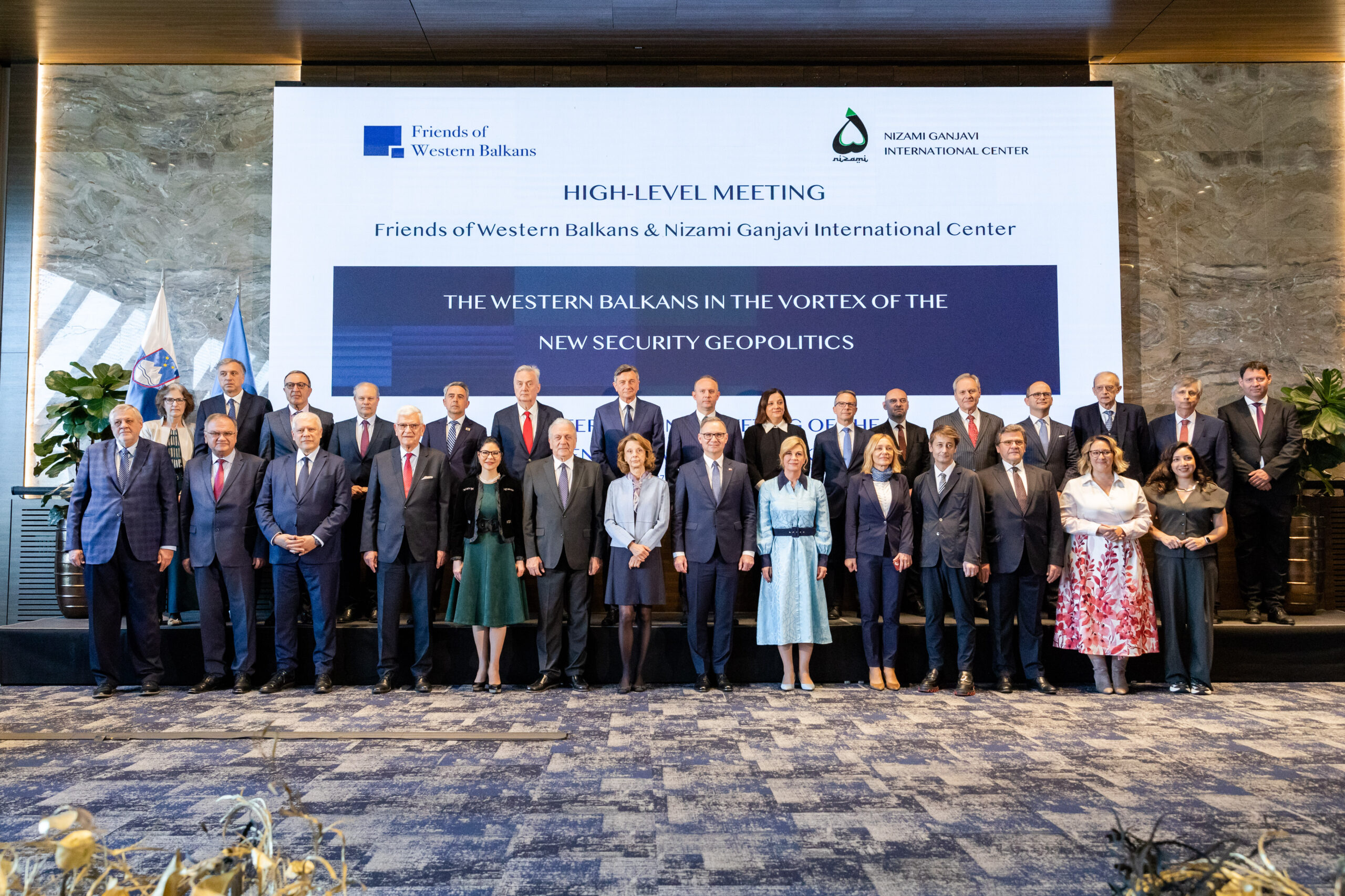
On 27–28 April 2026, Ljubljana hosted the 3rd International Meeting of the Friends of the Western Balkans, organised in cooperation with the Nizami Ganjavi International Centre under the title “The Western Balkans in the Vortex of the New Security Geopolitics.” The high-level event brought together former heads of state and government, senior diplomats, and leading experts to assess the strategic implications of shifting geopolitical dynamics for European security and the future trajectory of the Western Balkans.
The meeting was opened by Mr Borut Pahor, founder of the Friends of the Western Balkans initiative, who emphasised the need for renewed political attention and greater strategic clarity in addressing the region’s evolving challenges.
Representatives of the Euro-Atlantic Council of Slovenia actively contributed to the discussions. Dr Jelena Juvan, Vice-President of the Euro-Atlantic Council, participated in the opening session on the impact of evolving security geopolitics on the European Union and its enlargement policy, where she highlighted the necessity of maintaining strategic coherence within the Union and underlined the increasingly geopolitical nature of enlargement. Dr Iztok Prezelj, President of the Euro-Atlantic Council, contributed as a speaker in the third session, which focused on the role of NATO and European Union enlargement in ensuring the stability, security, and long-term political development of the Western Balkans, emphasising the importance of Euro-Atlantic institutions in strengthening regional resilience. Representatives of YATA Slovenia were also present, reflecting a continued commitment to engaging young professionals in high-level discussions and to strengthening links between the expert community and the next generation of decision-makers.
The discussions underscored how the Western Balkans is increasingly shaped by broader geopolitical competition and how European Union enlargement is evolving from a predominantly technical process into a strategic instrument of influence and stabilisation. Particular attention was given to the status of the six candidate countries and to the role of external actors, including the United States, Russia, China, and Türkiye, whose engagement continues to shape political dynamics and strategic orientation in the region. Participants broadly agreed that sustained progress in both NATO and EU enlargement remains essential to anchor stability, strengthen resilience, and reduce vulnerability to external pressures.
The meeting reaffirmed the continued importance of high-level strategic dialogue on the Western Balkans amid growing geopolitical complexity. It also highlighted Slovenia’s role as a credible convening platform and a bridge between the Western Balkans and the wider Euro-Atlantic space, demonstrating that such initiatives are not only forums for discussion but also instruments for sustaining political momentum and shaping the region’s strategic direction.
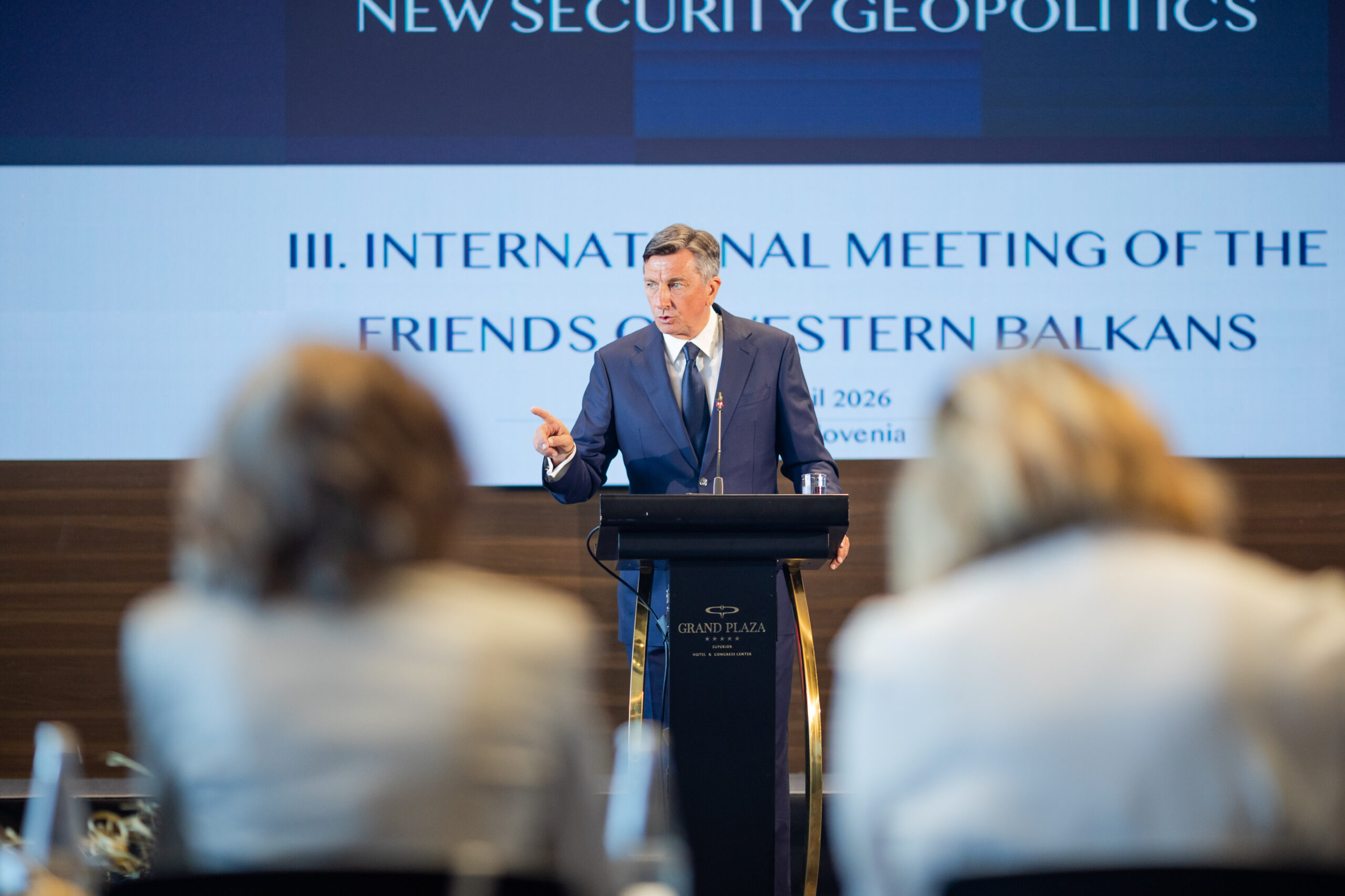
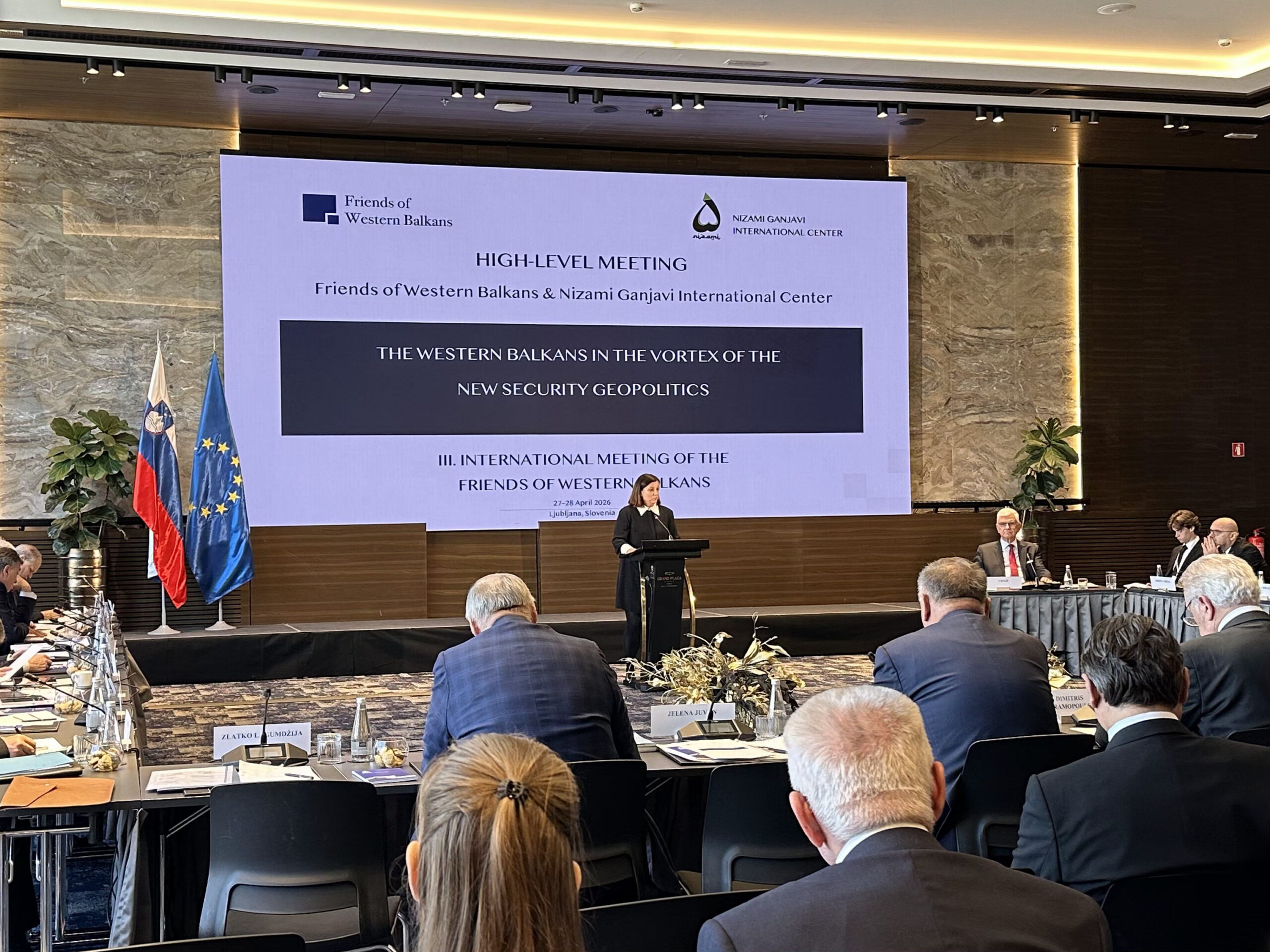
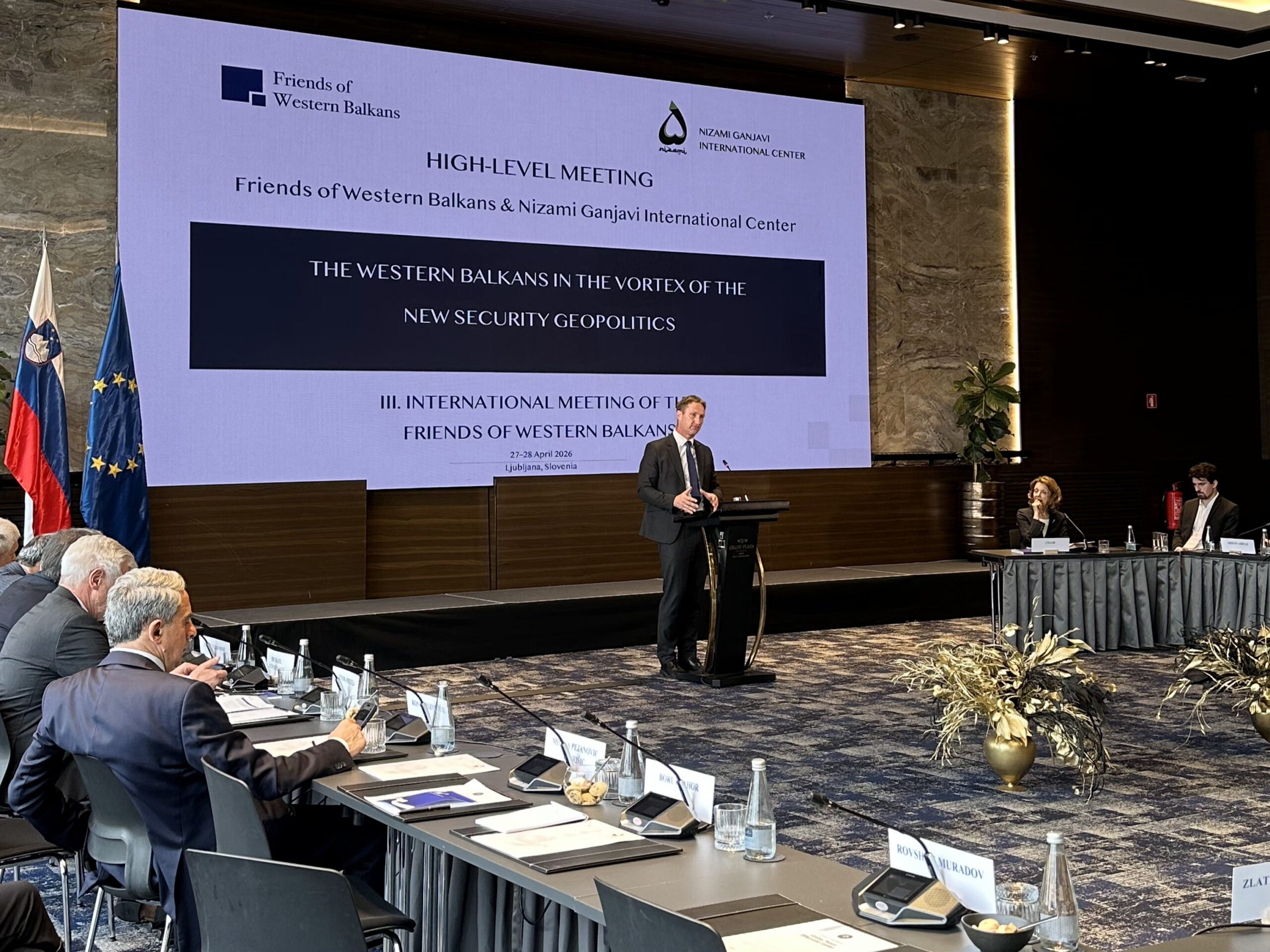
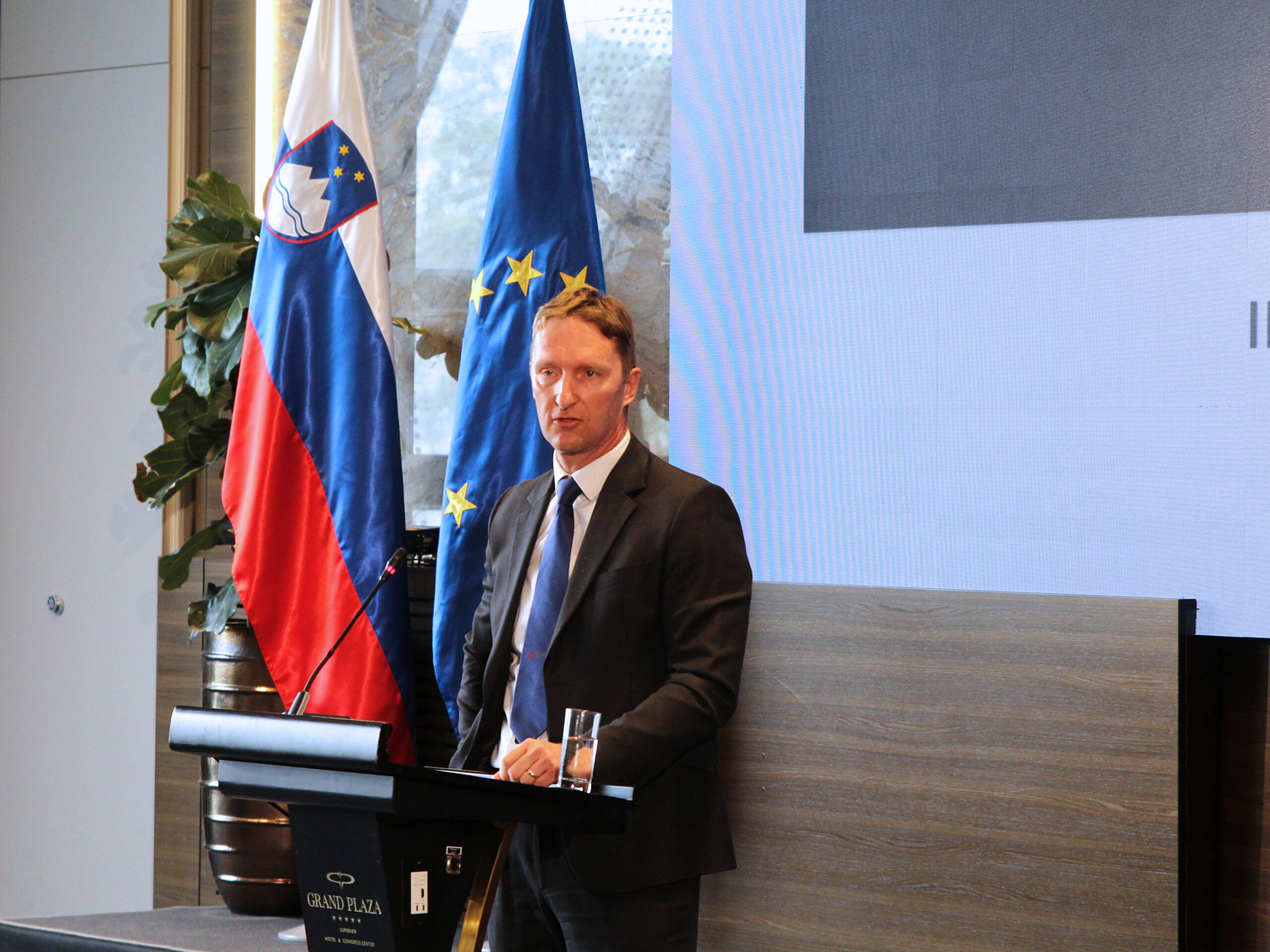
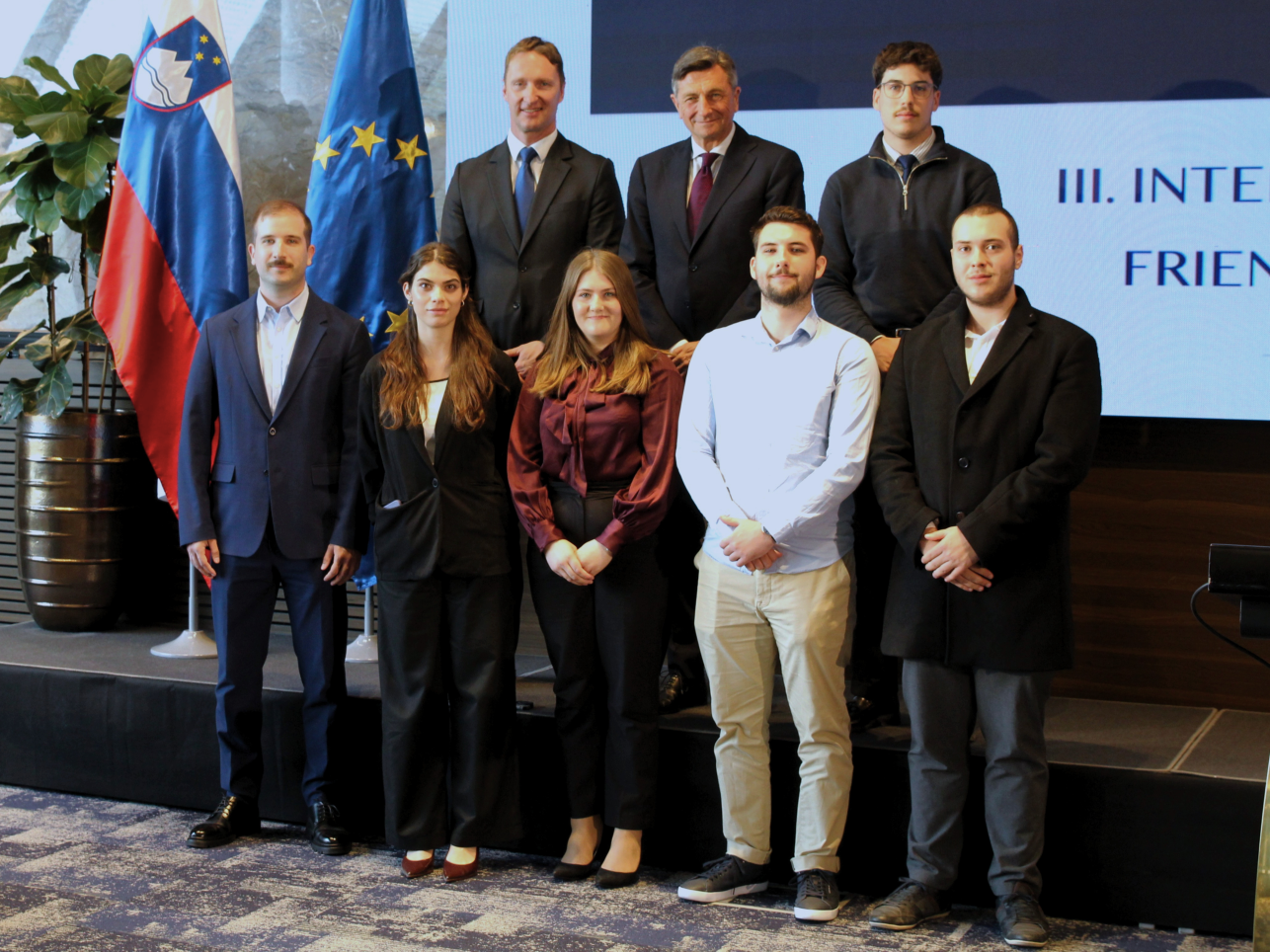
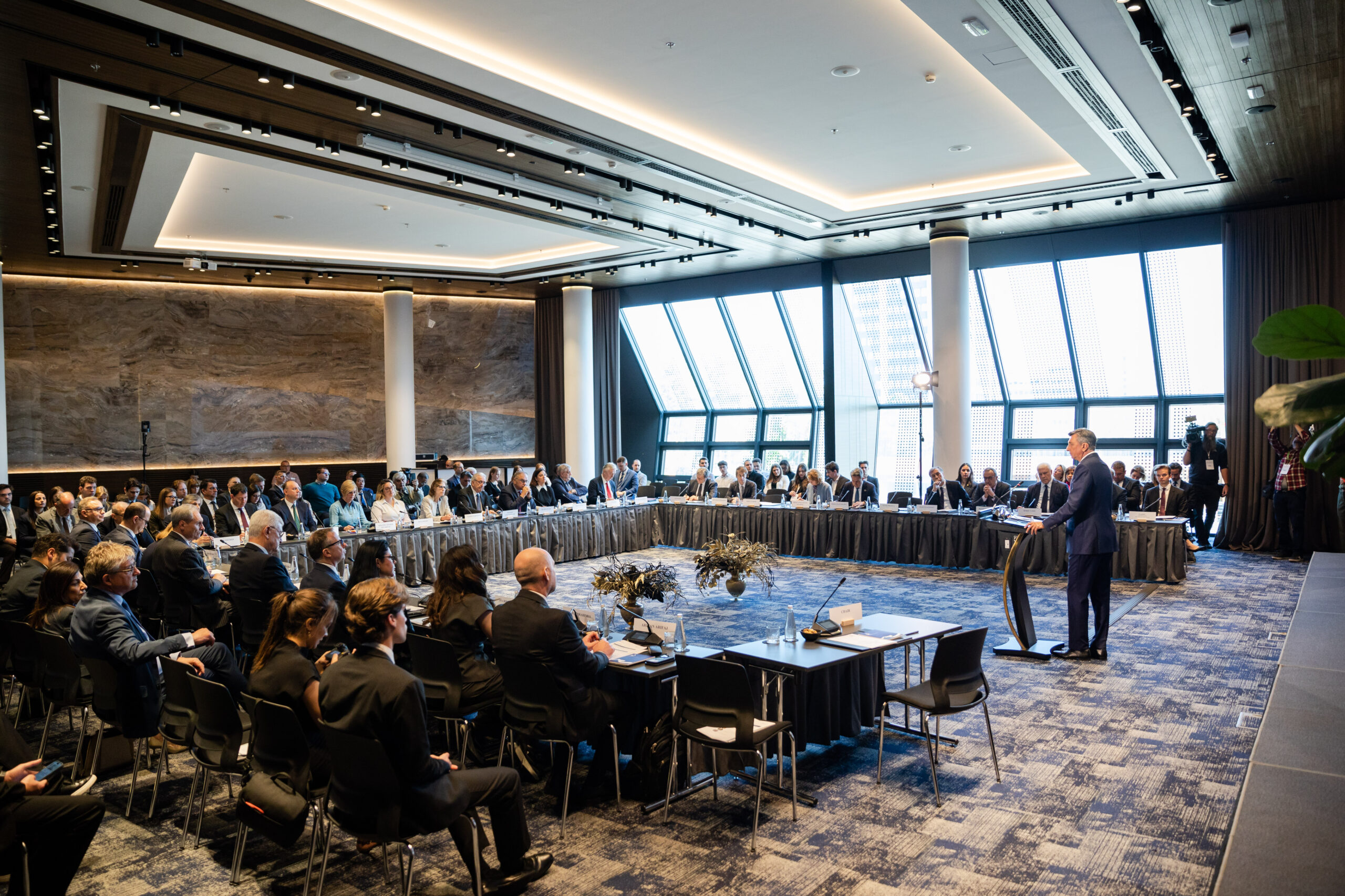
Photo: Andraž Strmčnik and the Euro-Atlantic Council of Slovenia