
The Western Balkans
February 2026 in the Western Balkans was marked by high-profile arrests in North Macedonia and corrupt resignations in Albania. Despite internal political frictions, Bosnia and Herzegovina and Kosovo have taken positive steps towards Euro-Atlantic integration. In the field of defence, a key topic is NATO Corridor 8, which would strengthen strategic links between the Adriatic and Black Seas. The European Commission has launched an initiative to integrate the Western Balkan countries into the European mobile roaming system. This measure would not only strengthen economic competitiveness but could also contribute to regional information defence against external propaganda.
1. Political Dynamics: Institutional Integrity and Paradigms of the Rule of Law
On 23 February, after a 14-month run, the former First Deputy Prime Minister of North Macedonia, Artan Grubi, surrendered to the authorities at the Blace border crossing. The investigation against him is focused on serious allegations of abuse of office in strategic infrastructure projects for Corridors 8 and 10d and fraud in the state lottery. Based on the official assessment of the National Security Agency (ANB) that his life in the prisons would be in direct danger, the court ordered him to be held under house arrest. The decision further fuelled political analysis of a possible legal deal where, in exchange for security and a lighter sentence, Grubi would offer incriminating information about former high-ranking officials and underworld influencers.[1] These developments followed a critical meeting of the Stabilisation and Association Committee held in Skopje on 10 February 2026, where EU representatives made it clear that June 2026 was the deadline for tangible results on judicial reforms.[2]
On 27 February, Albanian Prime Minister Edi Rama dismissed his deputy on serious charges of involvement in corrupt acts. Commentators have interpreted the move as a direct response to intensified international pressure for Tirana to show “clean hands” before starting a new phase of negotiations with the EU. With this act, Rama is trying to maintain Albania’s position as a regional leader in reforms while mitigating attacks from the opposition, which accuses him of systemic corruption in his government.[3]
A tragic tram accident occurred on 12 February in Sarajevo in which student Erdoan Morankić lost his life. This sparked several days of youth protests under the slogan “You have bloody hands”, which led to the resignation of the Prime Minister of Sarajevo Canton, Nihad Uko, on 15 February.[4]
Meanwhile, tense political developments continue in the entity of Republika Srpska (RS). At the beginning of February, the newly elected Siniša Karan assumed the post of President. Nevertheless, political analyses suggest that power remains firmly in the hands of his predecessor Milorad Dodik. Dodik’s influence remains a major obstacle to the federal functionality of the state.[5]
The election of Albin Kurti as prime minister of Kosovo on 12 February ended months of political deadlock, and the new government immediately approved legislation for the EU’s growth plan as a matter of priority. This plan is closely linked to progress towards the establishment of the Community of Serb Municipalities (CSM), which remains a focal point of tension as Pristina sees minority self-government in the areas of health and education as a risk to state sovereignty. Upon his election, Kurti stressed that he would seek the normalisation of relations with Serbia through constructive dialogue on the basis of the Brussels agreement and Implementation Annex, agreed in Ohrid in 2023, but exclusively as an external relationship between the two countries without interference in internal affairs. At the same time, he announced a billion euros worth of defence investment to consolidate sovereignty, which was at the forefront of the celebration of the 18th anniversary of independence on 17 February.[6] His statements on the establishment of a military industry and the production of combat drones “Made in Kosovo” are crucial, as they signal determination to strengthen the security architecture despite constant international pressure on the issue of Serbian municipalities.[7]
The investigations into the properties of Aco Djukanovic, which began on 27 February, mark a key step in the reform of Montenegro’s judiciary. Aco Djukanović, brother of the former President of the country and Prime Minister of Montenegro, Milo Djukanović, and the owner of Prva Banka, was for many years a symbol of political inviolability in Montenegro.[8] His influence was so extensive that he even publicly questioned his influence on the composition of state governments, reflecting the deep intertwining of family capital with politics. Searches of his properties in Podgorica and Niksic on 27 February, and his subsequent detention on suspicion of illegal weapons possession, represent a landmark test for the independence of the Special State Prosecutor’s Office.[9] These actions not only mark the symbolic end of the era of privileged elites, but are also crucial for meeting the strict conditions for joining the EU, specifically in closing the chapters on justice. By moving from inviolability to de facto law enforcement, Montenegro confirmed its commitment to establishing a genuine rule of law and put an end to decades of imprisoned institutions.
2. Security and Defence: NATO’s Geostrategic Interests and Hybrid Risks
2.1 Large-scale confiscation in Skopje and narco-infrastructure
In the area of security, February was marked by one of the largest actions against organised crime in North Macedonia. On 5 February, police seized more than 40 tons of marijuana from the warehouses of the former industrial giant OHIS in Skopje and at locations in Strumica.[10] This confiscation reveals that the Balkans act as a key transit hub, where illicit substances spill through institutional loopholes under the guise of legal activity. Criminal networks from North Macedonia are cooperating with Albanian and Turkish groups on a new trend of exchanging marijuana for heroin, which is then transported back to Albania and on to Western Europe. These hierarchically organised and ethnically mixed groups, linked by family and friendship ties, operate internationally, working with Serbian partners to set up closed cannabis plantations in Austria and Germany.[11] Such operations, which serve not only for production but as a central route for heroin and cocaine, directly finance organised crime, which undermines the rule of law and the security stability of the entire region.
2.2 Corridor 8: Connecting the Adriatic Sea with the Black Sea
On 18 February, the Joint Declaration on Corridor VIII was signed in Tirana,[12] which treats this project not only as an infrastructure build-up, but as a multidimensional instrument for regional stability, economic convergence and collective security in South-East Europe. From a defence point of view, it has been officially confirmed as a key strategic interest of NATO. Corridor VIII is a strategic infrastructure that runs in a west-east direction and connects the Adriatic Sea from Albania through North Macedonia to Bulgaria’s Black Sea ports. Although in the past it was understood primarily as an economic project for the development of Southeast Europe, the war in Ukraine has made it a key military priority for NATO. The new security situation requires rapid military mobility, and the corridor would allow forces and equipment to be moved from Italy to the Alliance’s eastern flank in an extremely short time.[13] This reduces dependence on lengthy routes around the Balkans and strengthens the southern flank’s defensive posture against possible destabilisation in the Black Sea region, which was not previously the primary function of this route.
3. Energy-Economic Flows: Digital Protection and Energy Autonomy
3.1 Limiting external information influences
On 25 February, the European Commission formally proposed the inclusion of the Western Balkans in the “Roam Like at Home” area. The “Roam Like at Home” initiative allows citizens to use calls, SMS and data at the same prices as on their home network, completely eliminating the high costs and additional financial surcharges for mobile services.[14] In practice, this digital integration acts as a strategic “digital shield”, as it removes financial barriers to access to credible European information by making data transfer cheaper and directly prevents the creation of a dangerous information vacuum. Such loopholes are often exploited by foreign hostile actors to spread propaganda, which is particularly critical in the Balkans due to its history of ethnic tensions and high exposure to hybrid warfare. The initiative is closely linked to the “European Shield for Democracy”, an initiative by the EU Commission which provides regulatory protection and establishes regional fact-checking hubs, while free hosting ensures that these tools are practically accessible to citizens anywhere and at any time.[15] In this way, the systemic protection of information integrity is combined with unhindered access into a type of defence system that strengthens the resilience of society and prevents destabilisation of the entire region.
3.2 Energy separation from Moscow
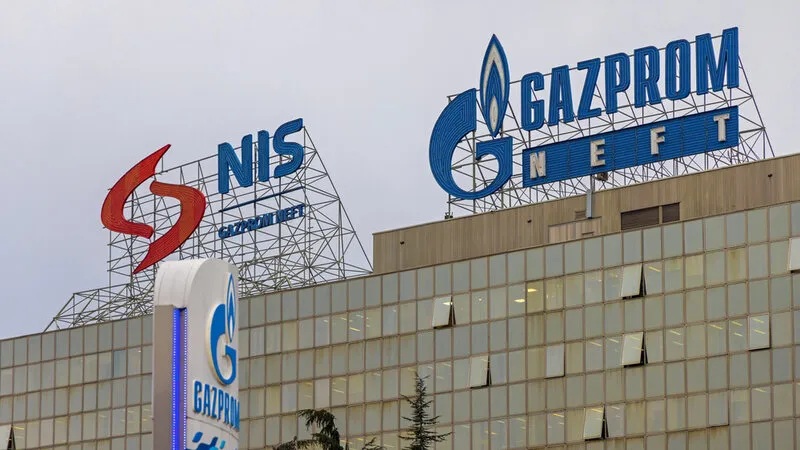
On February 24, the Serbian energy sector experienced a decisive turnaround, the US office OFAC extended the license to operate the Oil Industry of Serbia (NIS) until March 20. OFAC is a part of the US Treasury Department that administers and enforces economic and trade sanctions. The move allowed negotiations on the Russian shareholder’s exit to continue, with Hungary’s MOL Group having already reached an agreement with Gazprom Neft to buy a 56.15% stake in NIS.[16] The sale became necessary due to strict sanctions, which required the complete withdrawal of Russian capital for the stability of supply and the operation of the Panchevo refinery.
Countries in the Balkans have traditionally imported huge amounts of energy from Russia, with Serbia and Bosnia and Herzegovina being almost entirely dependent on Russian gas. In response to this dependency, Serbia has activated a number of safeguards in the period 2024-2025, including the expansion of energy interconnections with Bulgaria and North Macedonia and enhanced cooperation with Azerbaijan and the United Arab Emirates.[17] The country plans to increase its stake in the company by a further 5%, while Abu Dhabi National Oil Company ADNOC could later enter as a minority partner.[18] The entire sale process, which is expected to be completed by 31 March 2026, symbolises the end of Russia’s energy dominance and the radical transformation of Serbia’s geopolitical position, which is accelerating its integration into European energy flows with the help of new alliances.
* Views and opinions of the authors of this paper do not necessarily correspond to the views of the Euro-Atlantic Council of Slovenia.
Sources
[1] European Western Balkans. (23.2.2026). Former Macedonian Deputy PM Artan Grubi arrested. https://europeanwesternbalkans.com/2026/02/23/former-macedonian-deputy-pm-artan-grubi-arrested/
[2] Ministry of European Affairs (North Macedonia). (19.2.2026). 19th meeting of the Stabilization and Association Committee. https://mep.gov.mk/mk-MK/transparentnost/novosti/19-ti-sostanok-na-komitetot-za-stabilizacija-i-asocijacija-megju-evropskata-unija-i-republika-severna-makedonija
[3] Balkan Insight. (20.2.2026). Rama turning deputy’s suspension into personal battle. https://balkaninsight.com/2026/02/20/rama-is-turning-deputys-suspension-into-personal-battle-against-albanian-judiciary/
[4] N1 Info. (15.2.2026). Sarajevo Canton PM: I resigned for moral reasons. https://n1info.ba/english/news/sarajevo-canton-pm-i-resigned-for-moral-reasons-major-reform-needed-at-gras/
[5] Balkan Insight. (24.2.2026). Republika Srpska has a new president. https://balkaninsight.com/2026/02/24/republika-srpska-has-a-new-president-but-the-old-ones-still-in-control/
[6] European Western Balkans. (12.2.2026). Kurti re-elected as PM. https://europeanwesternbalkans.com/2026/02/12/kurti-re-elected-as-pm-government- approves-draft-law-on-eu-growth-plan/
[7] Prishtina Insight. (17.2.2026). Kosovo celebrates 18 years of independence. https://prishtinainsight.com/kosovo-celebrates-18-years-of-independence-as-international-allies-send-congratulations-mag/
[8] News. (27.2.2026). PHOTO/VIDEO Search of Aca Djukanovic’s apartment in Podgorica and his house in Nikšić. https://www.vijesti.me/vijesti/crna-hronika/797848/foto-video-pretres-stana-aca-djukanovica-u-podgorici-i-kuce-u-niksicu
[9] Balkan Insight. (2.3.2026). Former Montenegrin President’s brother in custody over illegal arms Stash. https://balkaninsight.com/2026/03/02/former-montenegrin-presidents-brother-in-custody-over-illegal-arms-stash/
[10] A free seal. (09/02/2026). 40 tons of marijuana are seized. https://www.slobodenpecat.mk/neoficijalno-zapleneti-se-neverojatni-40-toni-marihuana-mvr-i-ojo-gokk-i-natamu-molchat/
[11] EUDA. (December 2022). Cannabis cultivation and trafficking in Western Balkans. https://www.euda.europa.eu/system/files/media/attachments/documents/15024/Cannabis%20cultivation%20and%20trafficking%20in%20Western%20Balkans%20Dec22.pdf
[12] Ministry of Foreign Affairs of the Republic of Italy. (18.2.2026). Joint Declaration of Tirana on Corridor VIII. https://www.esteri.it/en/sala_stampa/archivionotizie/comunicati/2026/02/dichiarazione-congiunta-di-tirana-sul-corridoio-viii-18-febbraio-2026/
[13] Balkan Policy Review. (18.2.2026). Corridor VIII: Strategic Connectivity, Security, and European Integration. https://medium.com/balkan-policy-review/corridor-viii-strategic-connectivity-security-and-european-integration-78a52975facb
[14] European Commission. (25.2.2026). ‘Roam Like at Home’: Commission proposes to open negotiations to extend EU Roaming to the Western Balkans. https://ec.europa.eu/commission/presscorner/detail/en/ip_26_474
[15] Why not. (13.2.2026). Awaiting the European Democracy Shield: What does this EU initiative mean for the region? https://zastone.ba/en/awaiting-the-european-democracy-shield-what-does-this-eu-initiative-mean-for-the-region/
[16] Interfax. (24.2.2026). OFAC extends NIS’s license for operational activities until March 20. https://interfax.com/newsroom/top-stories/116277/
[17] CE Energy News. (12/14/2025). Serbia 2025: Energy Security and Diversification. https://ceenergynews.com/voices/serbia-2025-energy-security/
[18] bne IntelliNews. (8.2.2026). Serbia says ADNOC to take significant stake in NIS as Russian owners exit. https://www.intellinews.com/serbia-says-adnoc-to-take-significant-stake-in-nis-as-russian-owners-exit-424720/