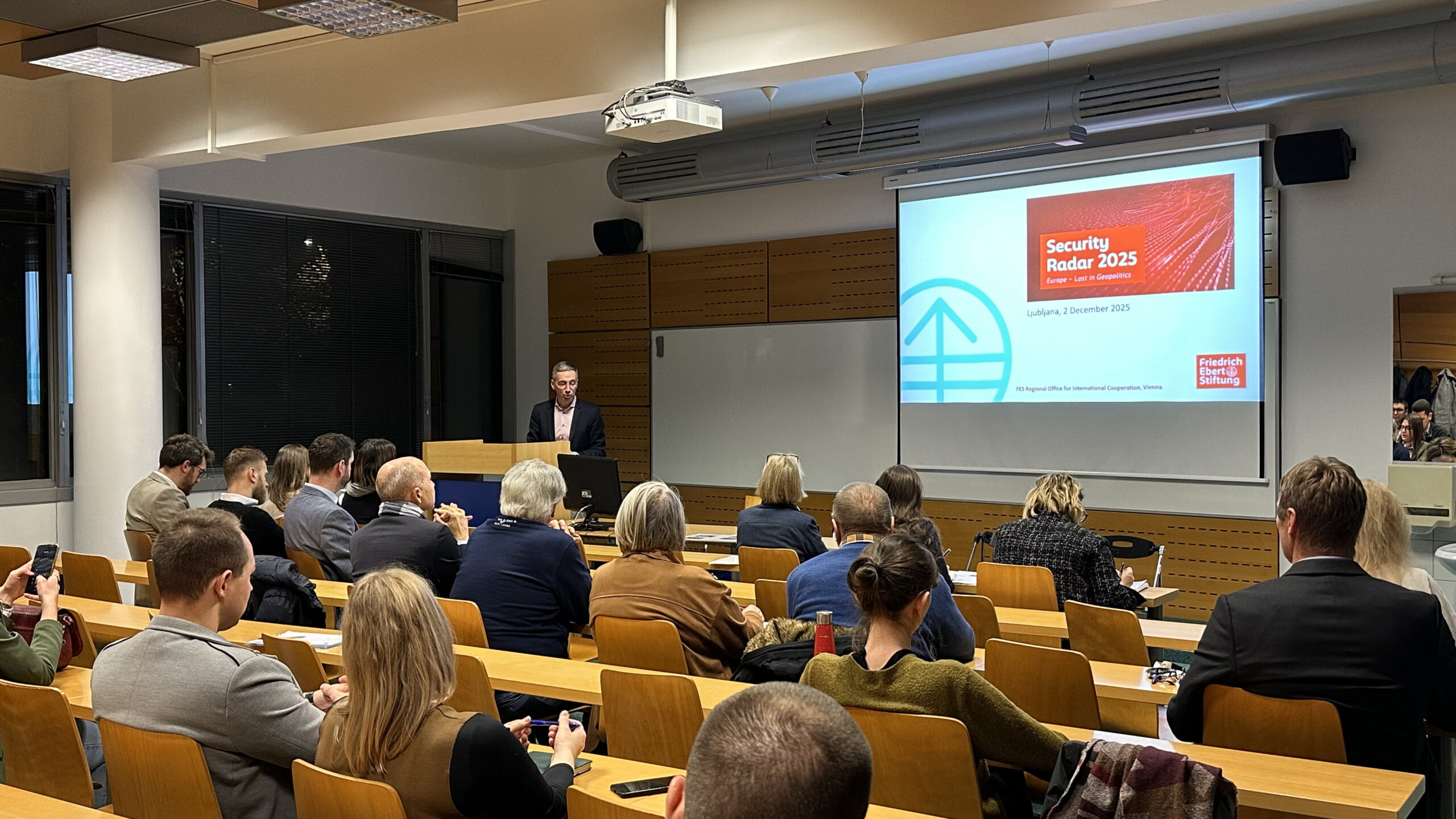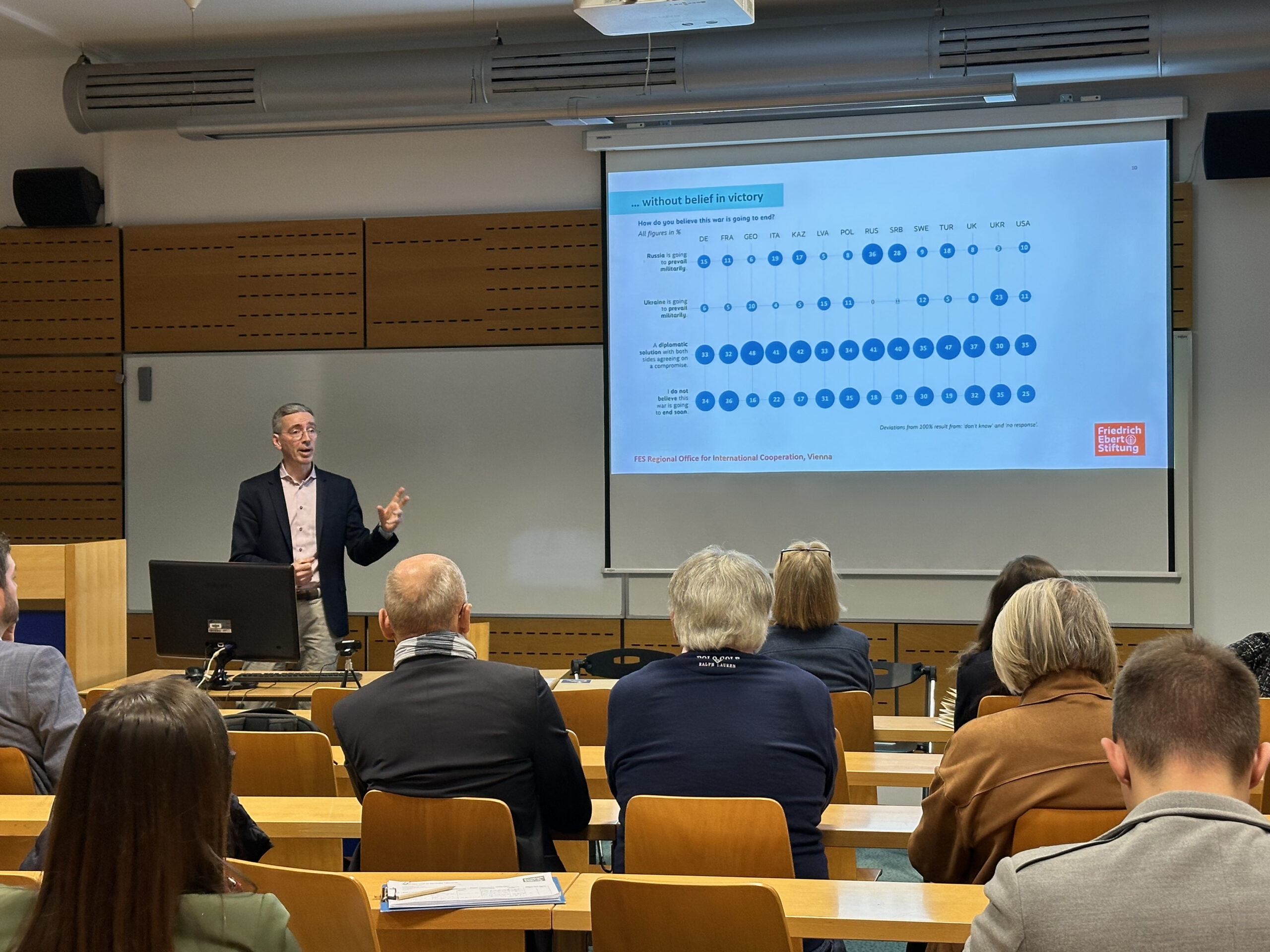


Members of the Euro-Atlantic Council of Slovenia co-organised and attended the presentation of the latest edition of Security Radar 2025 on 2 December 2025. The event, jointly organized by the Friedrich Ebert Stiftung, the Centre for European Perspective (CEP), the Faculty of Social Sciences of the University of Ljubljana, and the Euro-Atlantic Council of Slovenia, took place at the Faculty of Social Sciences. It focused on key public opinion trends shaping European security and their specific relevance for the Slovenian context.
Security Radar is a long-standing research project of the Friedrich Ebert Stiftung (FES), regularly presented at the Munich Security Conference. It examines how citizens in NATO and non-NATO countries perceive security threats, the war in Ukraine, and broader geopolitical developments. The analysis also explores public support for defence policies, attitudes toward NATO, and expectations regarding political responses to Europe’s most pressing security challenges.
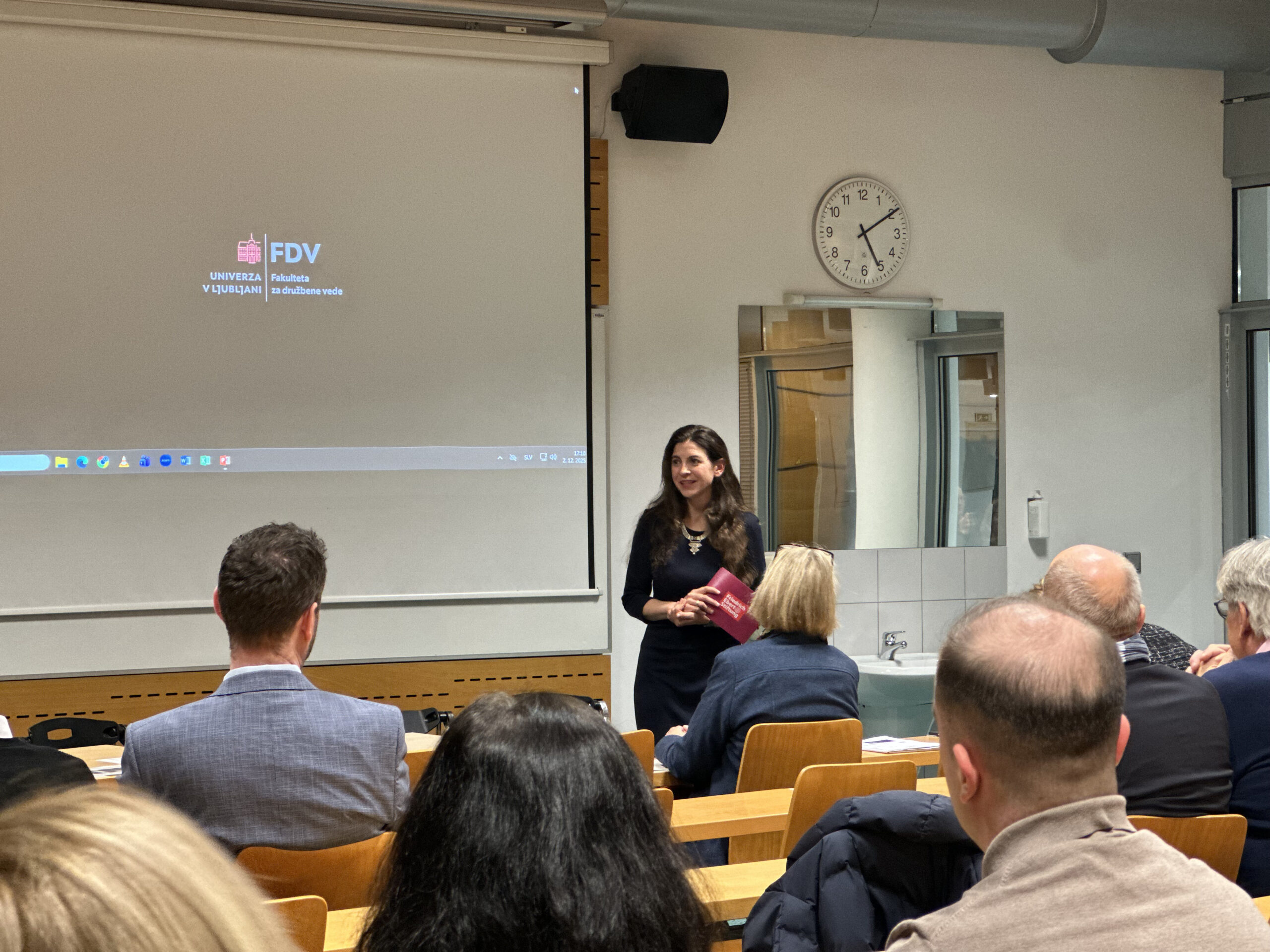
The event opened with remarks by Sonja Schirmbeck, Director of the Friedrich Ebert Stiftung for Croatia and Slovenia, and Prof. Dr. Iztok Prezelj, President of the Euro-Atlantic Council of Slovenia and Head of the Defence Research Centre at the University of Ljubljana. Both speakers underscored the growing importance of understanding public-opinion dynamics in shaping modern security policy.
The presentation of Security Radar 2025 was delivered by Christos Katsioulis, Director of the FES Regional Office for International Cooperation and Peace. He highlighted key shifts in security perceptions across NATO and partner countries, including evolving public views on defence, the war in Ukraine, and societal preparedness to confront emerging threats.
Slovenia in the Context of European Security Perceptions
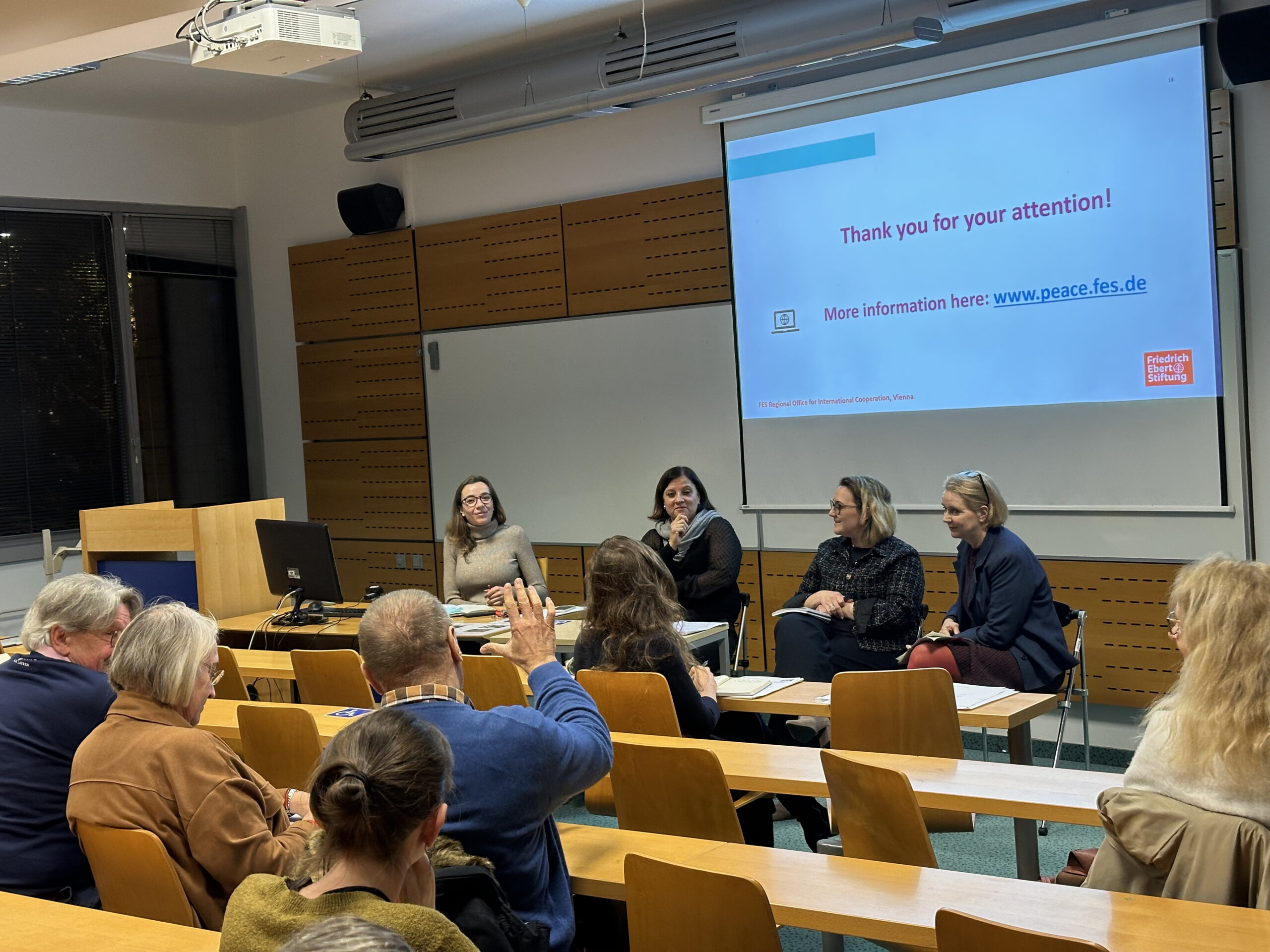
The second part of the event featured an in-depth panel discussion with Neva Grašič, State Secretary at the Ministry of Foreign and European Affairs; H.E. Sylvia Groneick, Ambassador of Germany to Slovenia; and Assoc. Prof. Dr. Jelena Juvan, Head of the Chair of Defence Studies at the Faculty of Social Sciences and Vice-President of the Euro-Atlantic Council of Slovenia. The discussion was moderated by Magdalena Rakovec from CEP.
The panel explored how Slovenian public opinion aligns with broader European trends, addressing questions such as:
-
- Has readiness to defend NATO territory increased since 2022?
- How do Slovenians view the need for higher defence spending?
- Is Slovenia’s population more reluctant than that of other NATO states, or is it moving closer to the mainstream of NATO member states’ citizens?
Against the backdrop of an emerging defence architecture within NATO, the discussion highlighted that Slovenia must consider its future role, responsibilities, and strategic expectations within the Alliance.
The event provided valuable insight into how European public opinion and perceptions of security directly shape defence policy development. It also created an opportunity for reflection on how Slovenia, as a member of both NATO and the EU, can further strengthen its security culture, societal resilience, and strategic maturity in a rapidly shifting geopolitical environment. Participants agreed that public opinion is becoming an increasingly influential factor in national security, and that sustained dialogue between policymakers, experts, and citizens is essential for Slovenia to enhance its resilience, reliability, and contribution to collective European security in the years ahead.