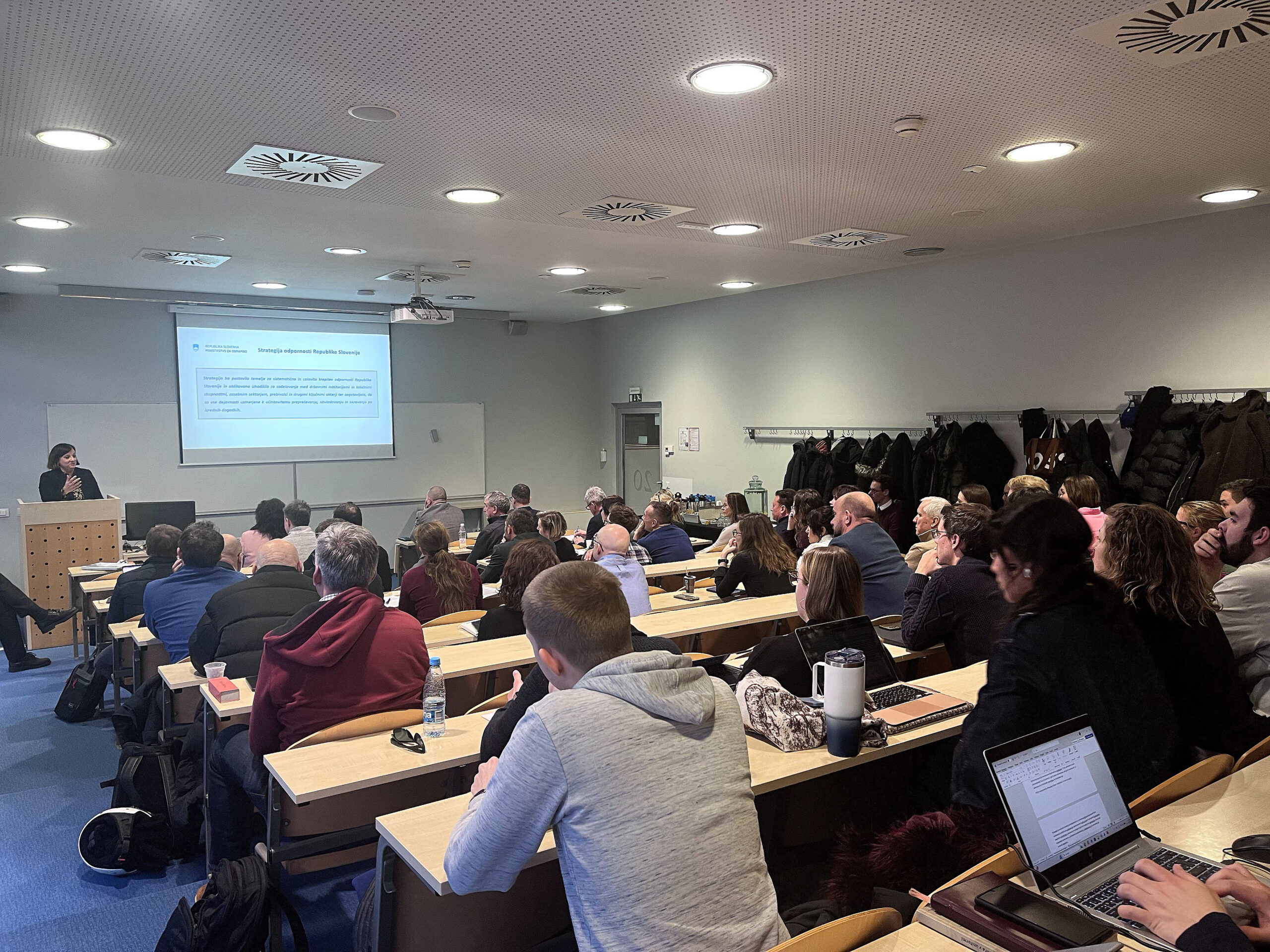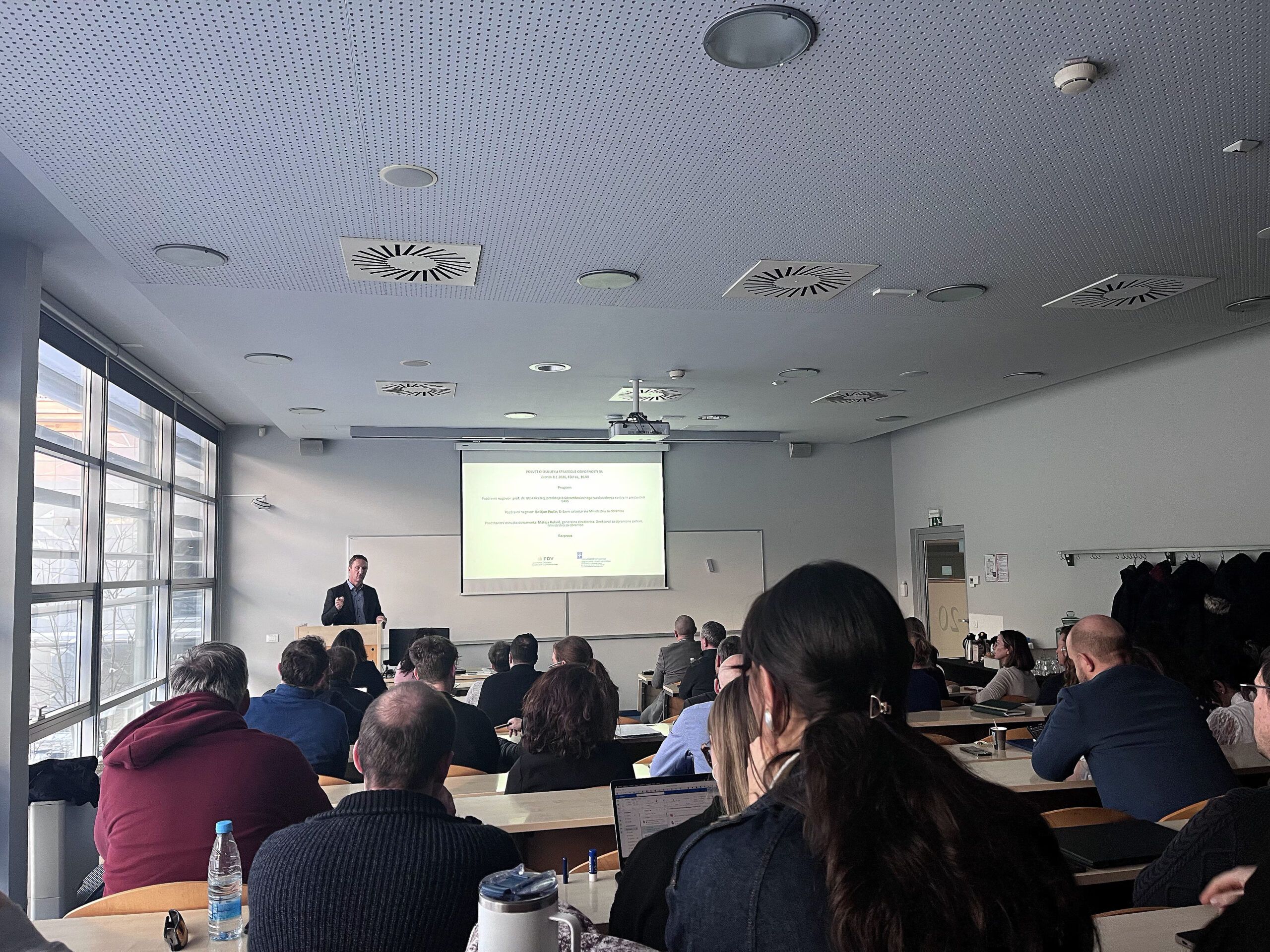

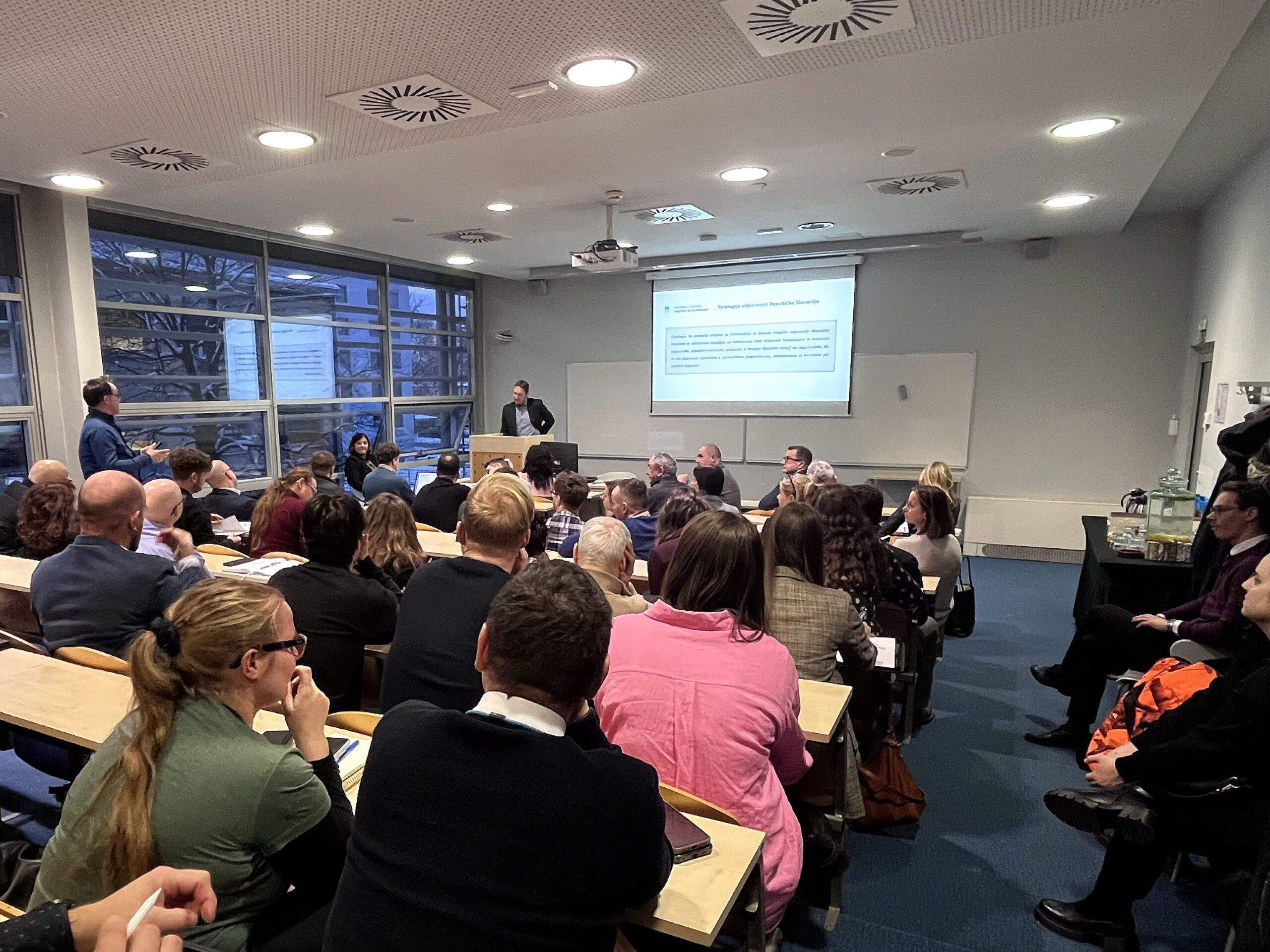
On 8 January 2026, the Euro-Atlantic Council of Slovenia, in cooperation with the Chair of Defence Studies at the Faculty of Social Sciences, University of Ljubljana, organised a consultation dedicated to discussing the draft Resilience Strategy of the Republic of Slovenia. The event took place at the Faculty of Social Sciences in Ljubljana.
Introductory remarks were delivered by Prof. Dr Iztok Prezelj, President of the Euro-Atlantic Council of Slovenia and Head of the Defence Studies Research Centre, and Boštjan Pavlin, State Secretary at the Ministry of Defence of the Republic of Slovenia. Mateja Rokvič, Director-General of the Defence Affairs Directorate at the Ministry of Defence, presented the draft strategy. The consultation represented an important step towards a comprehensive understanding and further strengthening of national resilience.
Public Engagement in Strategy Development
The primary objective of the consultation was to actively engage the public and the broader expert community in developing the strategy. Participants were invited to contribute their views, proposals, and comments to the formulation of a document that will provide long-term guidance for strengthening the resilience of the state, society, and individuals.
Slovenia already demonstrates high levels of resilience, ranking among the highest in the Western world. For this reason, the discussion focused primarily on how existing strengths can be further enhanced, sustained over the long term, and adapted to a changing security environment.
Resilience Between Development and Optimisation
The discussion highlighted that since 1991, Slovenia has managed to preserve a number of well-established systems, which is particularly important in today’s highly technological and interdependent environment. Special attention was devoted to finding a balance between economic development and optimisation, as excessive optimisation can increase societal vulnerabilities in the long run.
Using the example of supply chains and warehousing systems, it was noted that modern just-in-time delivery models increase efficiency but can rapidly lead to systemic disruptions when supply chains are interrupted. A similar logic must therefore be taken into account when planning national resilience.
The Societal Dimension of Resilience
Particular emphasis was placed on Slovenian society as a key pillar of resilience. The discussion underlined the need to strengthen confidence in domestic knowledge, capabilities, and products, which contribute to greater self-confidence, social cohesion, and overall community resilience.
The debate also drew attention to the importance of public responsiveness and active participation in addressing complex contemporary threats, as well as to shortcomings in information and reading literacy, both of which significantly affect the overall level of societal resilience.
What Is Resilience?
The Resilience Strategy of the Republic of Slovenia defines resilience as the ability of the state, society, and individuals to:
-
- prepare for extraordinary events,
- withstand them,
- respond to them effectively, and
- recover from them swiftly and successfully.
The strategy is based on a comprehensive interministerial approach, a whole-of-society approach, and an integrated approach to addressing security risks and threats.
Areas of National Resilience
The areas of national resilience are aligned with NATO’s seven baseline requirements for civil preparedness and are structured into 13 key areas, encompassing the responsibilities of individual ministries and defining strategic objectives:
-
- national security system and continuity of government,
- energy,
- drinking water,
- food supply,
- financial system and banking,
- economy,
- health,
- information and communication systems and networks,
- transport,
- societal resilience,
- environment, spatial planning, and natural resources,
- strategic communication,
- space and emerging technologies.
Ensuring adequate human and financial resources will be essential for the successful implementation of strategic objectives across all 13 areas.
Challenges and Open Issues
The discussion also identified several key challenges related to the implementation of the strategy:
-
- insufficient consideration of the role of local communities,
- an underdeveloped financial framework for implementation,
- the need for clearer allocation of resources across individual resilience areas,
- the need for systematic monitoring of goal achievement and evaluation of the effectiveness of measures,
- potential conflicts between individual resilience areas, which will require coordination.
Conclusion
Participants in the consultation recognised the draft Resilience Strategy of the Republic of Slovenia as a key and necessary document for a comprehensive understanding of national security, as well as a central strategic framework for the systematic management of contemporary security challenges and threats facing the state, society, and individuals. The strategy provides the foundation for long-term, systematic, and inclusive cooperation among all key stakeholders in the prevention of, response to, and recovery from extraordinary events.