
Eastern Europe
In September, the security situation in Eastern Europe was marked by Russian attacks on Ukrainian cities and infrastructure, Ukrainian strikes on Russian energy facilities, and drone incidents in neighbouring countries. Attacks on Ukraine caused civilian casualties and disruptions to electricity supplies, while the Zaporizhzhia Nuclear Power Plant remained vulnerable despite the restoration of external power. Moldova and Romania dealt with further drone incursions, while Poland warned of the risk of hybrid attacks. The European Union continued to finance Ukraine’s defence and adopted additional sanctions. According to official results, United Russia won the elections to the Russian State Duma. The EU condemned restrictions on political competition and voting held in occupied Ukrainian territories. Regional tensions were also marked by Russian nuclear threats concerning Kaliningrad and differing positions among European leaders on Allied commitments.
1. Russia – Ukraine
1.1 Military Developments and Attacks on Ukraine
On the ground, Ukrainian operations in the Lyman area disrupted Russian preparations for further advances towards Sloviansk, according to the Institute for the Study of War (ISW).[1] A Russian attack on Kyiv and the surrounding area on 1 September killed 12 people, according to Ukrainian authorities. Eight people were killed in Kyiv, most of them railway workers, while four were killed in Boryspil.[2]
On 24 September, the Ukrainian Air Force reported a Russian attack involving 282 drones and several types of missiles. The Kyiv and Odesa regions were the main targets; the reported number of drones also included various types of decoys.[3] According to President Volodymyr Zelenskyy, attacks on 28 September killed nine people and injured around 80 across Ukraine. Two people were killed when a facility belonging to the National Academy of Sciences was hit in Kyiv, while authorities in Dnipro reported three deaths.[4]
Russian attacks on 30 September killed seven people, according to Ukrainian authorities. Power grid operator Ukrenergo introduced emergency power cuts in Kyiv and three regions, while some public transport and water supply services were also disrupted in the capital.[5]
1.2 Attacks on Russian Energy Infrastructure
The Ukrainian General Staff reported that Ukrainian forces struck the Novatek–Ust-Luga complex in Russia’s Leningrad region on 1 September. According to the General Staff, a fire broke out at the facility, and an assessment of the extent of the damage was still under way when the report was published on 3 September.[6]
Following a drone attack on 20 September, the Moscow oil refinery halted production, according to three industry sources. The sources reported fires at both of the refinery’s main processing units.[7] On 25 September, Rostov regional governor Yuri Slyusar said that the Novoshakhtinsk oil refinery had temporarily suspended operations because of damage caused by a drone attack.[8] On 30 September, the Russian government extended restrictions on diesel exports by producers until 31 October, citing the need to stabilise the domestic market and meet seasonal demand.[9]
1.3 European Support and Sanctions
On 18 September, the European Commission disbursed €3.3 billion to Ukraine for defence needs, primarily for drones and missiles. This was the fourth defence-related disbursement in 2026, bringing the total amount disbursed for these purposes to almost €15 billion.[10]
On 22 September, the Council of the EU extended for three years the individual sanctions listings related to actions undermining the territorial integrity, sovereignty and independence of Ukraine.[11] On 28 September, it imposed sanctions on a further ten individuals and 17 entities for their role in the unlawful deportation and forced transfer of Ukrainian children to Russia.[12]
1.4 Regional Cooperation
On 18 September, Ukraine hosted a meeting of the new Carpathian Initiative – C8 format, bringing together Ukraine, Austria, Czechia, Hungary, Poland, Romania, Slovakia and Serbia. Participants discussed security, energy connectivity, transport infrastructure and cross-border cooperation and, in a joint statement, supported the development of a European macro-regional strategy for the Carpathian region.[13]
1.5 Elections in Russia
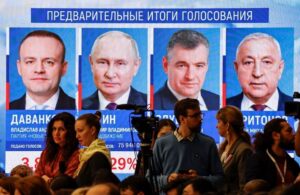
Elections to the Russian State Duma were held from 18 to 20 September. According to the final official results published on 25 September, the ruling United Russia party won 349 of the 450 seats. Forty-six participants in the war against Ukraine were also elected to parliament.[14]
In a statement on 21 September, the European Union pointed to continued restrictions on political competition and repression of the opposition, including the exclusion of Yabloko party candidates from the federal list. The EU also regretted Russia’s decision not to invite observers from the Organization for Security and Co-operation in Europe to monitor the elections. Voting also took place in occupied Crimea and Sevastopol and in the occupied parts of the Donetsk, Luhansk, Zaporizhzhia and Kherson regions. The EU condemned the holding of the vote in these territories as a violation of international law and Ukrainian sovereignty and stressed that it recognised neither the holding of these elections on Ukrainian territory nor their results.[15]
1.6 Nuclear Safety in Ukraine
On 5 September, a local ceasefire brokered by the International Atomic Energy Agency (IAEA) came into effect, allowing repairs to be carried out on a power line supplying the Zaporizhzhia Nuclear Power Plant. The plant had been without external power since 20 August and had been relying on emergency diesel generators.[16]
According to Ukrainian nuclear operator Energoatom, external power via the Ferosplavna-1 line was restored on 7 September.[17] On 25 September, the IAEA warned that the plant remained dependent on a single external power line and that diesel fuel stocks were declining, prompting a change in the strategy for the use of backup generators.[18]
2. Eastern Europe
2.1 Moldova and Romania
Moldovan authorities reported on 24 September that four Russian drones had entered Moldovan airspace, two of which exploded on Moldovan territory. Part of the country’s northern airspace was temporarily closed, while police identified a Gerbera-type drone in one of the incidents.[19]
On 9 September, a Russian drone attack struck the Starokozache border crossing on the Ukrainian side of the border with Moldova. According to the governor of the Odesa region, two civilians were killed and three injured, while Moldovan authorities suspended passenger and vehicle traffic through the crossing following the attack.[20] The Eastern Flank Institute also reported that on 9 September a drone penetrated deeper into Romanian airspace before turning back towards Moldova and crashing there. Romania scrambled two Spanish F-18 fighter jets deployed as part of NATO’s air policing mission. According to the same report, the incident delayed the departure of an aircraft carrying Ukrainian President Volodymyr Zelenskyy from Chișinău.[21]
On 22 September, the Moldovan parliament approved a 60-day state of emergency concerning energy and water supplies, which entered into force on 26 September. The measure allowed authorities to build up reserves and take other emergency measures amid uncertainty over electricity supplies ahead of winter and low water levels in the Dniester and Prut rivers.[22]
Romania’s Ministry of National Defence confirmed that on 24 September a drone spent approximately four minutes in Romanian airspace before crashing near Solca in Suceava County. According to the ministry, there were no casualties or material damage. On 7 September, Romania’s Supreme Council of National Defence approved the military equipment plan for 2027–2036. The Ministry of National Defence linked the plan to the development of military capabilities, lessons learned from the war in Ukraine and the EU’s SAFE financing instrument.[23]
2.2 Poland and Critical Infrastructure Security
According to Ukrainian railway operator Ukrzaliznytsia, a Russian drone struck a train near Yahodyn station, close to the Polish border, on 13 September. Shortly before the attack, a train carrying former British and Swedish prime ministers Boris Johnson and Carl Bildt, along with security advisers from several EU countries, had left the area.[24]
On 17 September, Polish Prime Minister Donald Tusk warned parliament of the possibility of Russian hybrid attacks involving drones or missiles against European countries supporting Ukraine. In his assessment, Russia could present such incidents as accidents in an attempt to weaken Allied willingness to mount a collective response.[25]
On the evening of 23 September, a fire broke out at a satellite communications station in Wola Krobowska that is also used by Starlink systems. The following day, Digital Affairs Minister Krzysztof Gawkowski described the incident as an act of sabotage intended to disrupt internet connectivity, including communications used by the Ukrainian military, and said the station had remained operational. Jacek Dobrzyński, spokesperson for the minister responsible for coordinating Poland’s special services, cautioned that it was too early to conclude that sabotage had taken place. Investigators were examining several possibilities, ranging from deliberate arson to an electrical short circuit, and responsibility for the incident had therefore not been established at the time of reporting.[26]
On 28 September, Supreme Allied Commander Europe Alexus Grynkewich called on European countries to publicly attribute acts of sabotage and other destabilising activities to Russia where Russian responsibility had been established, and to step up support for Ukraine. In his assessment, the purpose of Russian activities was to weaken Allied willingness to continue supporting Kyiv.[27]
2.3 Baltic States and Kaliningrad
In mid-September, Lithuania dealt with a drone arriving from the direction of Belarus. According to an iSANS report citing Lithuanian authorities, the incident prompted a response by NATO air policing assets and a diplomatic protest from Lithuania.[28]
The Latvian Armed Forces scheduled the comprehensive Namejs 2026 defence exercise for the period from 2 September to 8 October, involving around 12,000 Latvian and Allied troops. The exercise was set to include the use of unmanned systems, counter-drone operations and cooperation between the armed forces and state and civilian institutions.[29]
Reuters reported in late September on a document in which Russia warned NATO that it would be prepared to use nuclear weapons if the Alliance attempted to cut off Kaliningrad. NATO Secretary General Mark Rutte responded on 30 September that Russia did not pose an immediate threat to Alliance territory and that the threat assessment had not changed.[30]
2.4 Belarus
On 7 September, the head of Ukraine’s military intelligence service, Oleh Ivashchenko, said that units of Russia’s 101st Missile Brigade equipped with the Oreshnik system were present in Belarus. At the same time, he said that Ukrainian intelligence had detected no preparations by the Belarusian military to enter the war against Ukraine directly. His statement did not indicate that the deployment itself had taken place in September.[31]
On 11 September, Alexander Lukashenko visited the Obuz-Lesnovsky training ground and observed an operational-special exercise involving communications units. The exercise covered the functioning of the military command-and-control system, communications equipment and automation. Lukashenko also announced that inspections of the readiness of the armed forces, including mobilisation procedures, would continue.[32]
Belarusian forces conducted exercises of the Western Operational Command between 15 and 18 September. Defence Minister Viktor Khrenin attended a security forum in Beijing from 15 to 17 September, where he also held bilateral meetings.[33]
Following talks with US envoy John Coale, Belarus released 25 prisoners on 16 September in exchange for further easing of US sanctions. Coale said that the United States was lifting sanctions on the companies Lakokraska and Bellesbumprom; human rights organisations and opposition representatives, however, warned that arrests in Belarus were continuing.[34]
2.5 Political and Diplomatic Responses
On 8 September, Hungary ordered the expulsion of ten Russian diplomats over activities that Hungarian authorities described as incompatible with their diplomatic status. Foreign Minister Anita Orbán stressed that Hungary was not severing diplomatic relations with Russia.[35]
Czech Prime Minister Andrej Babiš said on 29 September that Czechia would be prepared to respond in the event of a Russian attack on the Baltic states. He made the statement following talks with President Petr Pavel on security issues and Czechia’s commitments within NATO.[36]
On 17 September, Slovak Prime Minister Robert Fico said that he did not want Slovakia to become involved in an armed conflict as a result of Article 5 of the North Atlantic Treaty. Czech President Petr Pavel criticised his remarks on 21 September, stressing that the provision represents Allied solidarity and mutual responsibility. Bulgaria backed an Italian proposal to establish a European centre for countering hybrid threats on 14 September. On 18 September, it also announced plans to gradually equip critical infrastructure with counter-drone systems; according to the Eastern Flank Institute, procurement preparations were under way at the time, with deliveries expected the following year.[37]
On 24 September, the Council of the EU added Xenia Fedorova to its sanctions list over information manipulation activities.[38] On 28 September, it sanctioned a further ten individuals for their role in preventing the Yabloko party from participating in the elections to the Russian State Duma.[39]
* Views and opinions of the authors of this paper do not necessarily correspond to the views of the Euro-Atlantic Council of Slovenia.
Sources
[1]Shymkic, K., Sundstrom, N., Sher, A., Harward, C. and Kagan, F. W. (01. 10. 2026). Russian Offensive Campaign Assessment, October 1, 2026. Critical threats. https://www.criticalthreats.org/analysis/russian-offensive-campaign-assessment-october-1-2026
[2] Ogirenko, V. and Pruchnicka, A. (01. 09. 2026). Russian air attacks kill 12 in Kyiv region on sixth day of strikes. Reuters. https://www.reuters.com/world/europe/explosions-heard-ukraines-kyiv-four-people-injured-2026-09-01/
[3] Poveljstvo Letalskih sil Ukrajine. (24. 09. 2026). Air defense downs 219 UAVs, 8 missiles; hits at 13 locations. Interfax-Ukraine. https://en.interfax.com.ua/news/general/1209321.html
[4] Pruchnicka, A, Polityuk, P., Dysa. J. in Flynn, D. (28. 09. 2026). Kyiv Science Academy hit, 10 dead as Russian jet-drones strike across Ukraine. MarketScreener. https://www.marketscreener.com/news/kyiv-science-academy-hit-as-russian-jet-drones-strike-across-ukraine-ce785adcde89f727
[5] Peleschuk, D. and Pruchnicka, A. (30. 09. 2026). Russia attacks Ukrainian energy grid, forcing power cuts as winter looms. Reuters. https://www.reuters.com/world/europe/russian-air-strikes-kill-one-injure-five-around-kyiv-officials-say-2026-09-30/
[6] General Staff of the Armed Forces of Ukraine. (03. 09. 2026). General Staff Reveals Details of Strike on NOVATEK-Ust-Luga: Fire Breaks Out at the Facility. Defence Forces of Ukraine – Army Inform. https://armyinform.com.ua/en/2026/09/03/general-staff-reveals-details-of-strike-on-novatek-ust-luga-fire-breaks-out-at-the-facility/
[7] Reuters. (21. 09. 2026). Moscow oil refinery output halted after Sunday drone attack, sources say. Reuters. https://www.reuters.com/business/energy/moscow-oil-refinery-output-halted-after-sunday-drone-attack-sources-say-2026-09-21/
[8] Reuters. (25. 09. 2026). Russia’s Novoshakhtinsk oil refinery suspends operations after drone attack, governor says. Reuters. https://www.reuters.com/world/europe/russias-novoshakhtinsk-oil-refinery-suspends-operations-after-drone-attack-2026-09-25/
[9] InterFax. (30. 09. 2026). Russia extends diesel export ban for producers to Oct 31. InterFax – International information group. https://www.interfax.com/newsroom/top-stories/119335/
[10] European Commission. (18. 09. 2026). Commission disburses €3.3 billion in defence funding to Ukraine. European Commission. https://defence-industry-space.ec.europa.eu/commission-disburses-eur33-billion-defence-funding-ukraine-2026-09-18_en
[11] European Council. (22. 09. 2026). Ukraine’s territorial integrity: EU extends individual listings for three years. European Council. https://www.consilium.europa.eu/en/press/press-releases/2026/09/22/ukraine-s-territorial-integrity-eu-extends-individual-listings-for-further-three-years/
[12] European Council. (28. 09. 2026). EU sanctions 10 individuals and 17 entities over unlawful deportation of Ukrainian children to Russia. European Council. https://www.consilium.europa.eu/en/press/press-releases/2026/09/28/eu-sanctions-10-individuals-and-17-entities-over-unlawful-deportation-of-ukrainian-children-to-russia/
[13] President of Ukraine. (18. 09. 2026). Ukraine Launched a New Cooperation Format – The Carpathian Integration Initiative – And Brought Its Participants Together for the First Summit in the Ivano-Frankivsk Region. President of Ukraine. https://www.president.gov.ua/en/news/ukrayina-zapochatkuvala-novij-format-spivpraci-karpatsku-int-106449
[14] G. V. and Ž. N. (21. 09. 2026). Enotna Rusija osvojila dvotretjinsko večino v parlamentu. RTV SLO. https://www.rtvslo.si/svet/evropa/enotna-rusija-osvojila-dvotretjinsko-vecino-v-parlamentu/794361
[15] Delegation of the European Union to Ukraine. (21. 09. 2026). Russia/Ukraine: Statement by the High Representative on behalf of the EU on Russian State Duma elections held on 18-20 September 2026 and their non-applicability on Ukrainian territory. EU. https://www.eeas.europa.eu/delegations/ukraine/russiaukraine-statement-high-representative-behalf-eu-russian-state-duma-elections-held-18-20_en
[16] Reuters. (05. 09. 2026). Brokered ceasefire takes effect for repairs at Zaporizhzhia nuclear plant. Reuters. https://www.reuters.com/business/energy/brokered-ceasefire-takes-effect-repairs-zaporizhzhia-nuclear-plant-2026-09-05/
[17] Ukrinform. (08. N09. 2026). Ukraine restores external power supply to Zaporizhzhia NPP. UkrinForm. https://www.ukrinform.net/rubric-economy/4161836-ukraine-restores-external-power-supply-to-zaporizhzhia-npp.html
[18] IAEA. (25. 09. 2026). Update 368 – IAEA Director General Statement on Situation in Ukraine. IAEA. https://www.iaea.org/newscenter/pressreleases/update-368-iaea-director-general-statement-on-situation-in-ukraine
[19] Mazur, R. (24. 09. 2026). Russian drones breach Moldovan skies as Gerbera craft detonates. Moldova 1. https://www.moldova1.md/p/86072/russian-drones-breach-moldovan-skies-as-gerbera-craft-detonates
[20] Harmash, O., Pruchnicka, A., Golubkova, J. and Tanas, A. (09. 09. 2026). Russian drones kill two at Ukraine-Moldova border crossing, one dead in Kyiv attacks. Reuters. https://www.reuters.com/world/europe/russian-drones-kill-injure-people-ukraine-moldova-border-crossing-2026-09-09/
[21] Eastern Flank Institut. (15. 09. 2026). EFI review of the past week in Central and Eastern Europe. Eastern Flank Institut. https://easternflank.org/eastern-flank-review-08-09-15-09-2026/
[22] Tanas, A. (22. 09. 2026). Moldova’s parliament approves 60-day state of emergency for energy, water supply. Reuters. https://www.reuters.com/world/moldovas-parliament-approves-60-day-state-emergency-energy-water-supply-2026-09-22/
[23] Ministry of National Defence of Romunia. (24. 09. 2026). Press Release. Ministry of National Defence of Romunia. https://english.mapn.ro/cpresa/6871_update-%E2%80%93-press-release
[24] Associated Press. (14. 09. 2026). Russian drone hits train near Ukraine-Poland border soon after visiting dignitaries passed through. AP news. https://apnews.com/article/ukraine-train-drone-strike-border-diplomats-43e00d1e6f069230f4f2e58520349264
[25] Ciobanu, C. (18. 09. 2026). Poland warns Russia is planning drone or rocket strikes on NATO territory. AP news. https://apnews.com/article/poland-russia-ukraine-nato-baltics-drones-rockets-818fe48227ee28d60fe86d8fe6485f5c
[26] Reczko, A. G. and Blackburn, G. (24. 09. 2026). Fire at Starlink station in central Poland was ‘sabotage,’ digital affairs minister says. Euro News. https://www.euronews.com/2026/09/24/fire-at-starlink-station-in-central-poland-was-sabotage-digital-affairs-minister-says
[27] Landauro, I., Gray, A., Siebold, S. and Brice, M. (28. 09. 2026). Top NATO commander urges states to condemn Russian acts of sabotage. Reuters. https://www.reuters.com/world/top-nato-commander-says-russias-goal-is-break-will-ukraines-allies-2026-09-28/
[28] The International Strategic Action Network for Secuirty. (21. 09. 2026). Belarus Review by iSANS. iSANS. https://isans.org/analysis/belarus-review/belarus-review-by-isans-%E2%80%94-september-21-2026.html
[29]Ministry of Defence of Republic of Latvia. (25. 08. 2026). From 2 September to 8 October Comprehensive National Defence Exercise Namejs 2026 Will Take Place Across Latvia. Ministry of Defence of Republic of Latvia. https://www.mod.gov.lv/en/news/2-september-8-october-comprehensive-national-defence-exercise-namejs-2026-will-take-place
[30] NATO. (30. 09. 2026). Remarks by NATO Secretary General Mark Rutte in conversation with Maria Tadeo at the Euronews Defence & Space Summit. NATO. https://www.nato.int/en/news-and-events/events/transcripts/2026/09/30/remarks-by-nato-secretary-general-at-euronews-defence–space-summit
[31] АрміяInform. (7. 09. 2026). “Oreshnik” already in Belarus: GUR chief says Russia has deployed the missile system near Ukraine’s borders. АрміяInform. https://armyinform.com.ua/2026/09/07/oryeshnik-uzhe-v-bilorusi-ochilnyk-gur-rozpoviv-shho-rosiya-rozmistyla-raketnyj-kompleks-bilya-kordoniv-ukrayiny/
[32] Eastern Flank Institut. (15. 09. 2026). EFI review of the past week in Central and Eastern Europe. Eastern Flank Institut. https://easternflank.org/eastern-flank-review-08-09-15-09-2026/
[33] The International Strategic Action Network for Secuirty. (21. 09. 2026). Belarus Review by iSANS. iSANS. https://isans.org/analysis/belarus-review/belarus-review-by-isans-%E2%80%94-september-21-2026.html
[34] Sytas, A. and Trevelyan, M. (16. 09. 2026). Trump’s envoy wins release of 25 Belarus prisoners, expects hundreds more soon. Reuters. https://www.reuters.com/world/belarus-frees-more-prisoners-after-us-envoys-visit-2026-09-16/
[35] Meduza. (08. 09. 2026). Hungary expels 10 Russian diplomats. Meduza. https://meduza.io/en/news/2026/09/08/hungary-expels-10-russian-diplomats
[36] Lopatka, J. (29. 09. 2026). Czechs would be ready to respond to attack on Baltics, prime minister Babis says. Reuters. https://www.reuters.com/world/czechs-would-be-ready-respond-attack-baltics-prime-minister-babis-says-2026-09-29/
[37] Eastern Flank Institut. (15. 09. 2026). EFI review of the past week in Central and Eastern Europe. Eastern Flank Institut. https://easternflank.org/eastern-flank-review-08-09-15-09-2026/
[38] European Council. (24. 09. 2026). Russian hybrid threats: EU lists Xenia Fedorova over information manipulation activities. European Council. https://www.consilium.europa.eu/en/press/press-releases/2026/09/24/russian-hybrid-threats-eu-lists-xenia-fedorova-over-information-manipulation-activities/
[39] European Council. (28. 09. 2026). Human rights violations in Russia: Council lists ten individuals over the barring of Yabloko from the State Duma elections. European Council. https://www.consilium.europa.eu/en/press/press-releases/2026/09/28/human-rights-violations-in-russia-council-lists-ten-individuals-over-the-barring-of-yabloko-from-the-state-duma-elections/