

Wars without borders: Ethiopia, Sudan and the Sahel
In Ethiopia, a new alliance of seven armed groups announced on 20 September that it aims to overthrow the federal government; three days later, Tigrayan forces seized the region’s three main airports and opened fronts in Afar and Amhara, effectively burying the 2022 Pretoria Agreement. In Sudan, the army pressed its offensive in North Kordofan and was strengthened by a wave of RSF defections, while the RSF opened a second front in Blue Nile and struck fuel infrastructure with drones; the first joint meeting of the Quad and the Quintet in New York produced no truce. In the Sahel, JNIM carried out the deadliest attack in Mali’s history at Dioura and systematically targeted the drone fleet on which the junta’s strategy rests, while Niger, shaken by a soldiers’ mutiny at the end of August, lost more than 50 members of its security forces in two attacks. The common thread of the month is the regionalisation of conflicts and the erosion of advantages that governments believed they held.
After a July marked by counter-offensives, September 2026 brought escalation on a wider scale. The most significant development took place in the Horn of Africa, where a renewed war in northern Ethiopia threatens to merge with Sudan’s conflict into a single regional theatre. In the Sahel, meanwhile, armed groups showed that they can strike precisely at the capabilities – drones and air bases – on which the military governments have built their security strategy.
1. Ethiopia: the collapse of the Pretoria Agreement
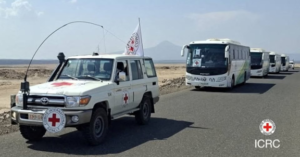
On 20 September, seven armed and political organisations, among them the Tigray People’s Liberation Front (TPLF), the Amhara Fano National Movement and the Oromo Liberation Army (OLA), announced the formation of the Ethiopian Peoples’ Forces Alliance for Survival, with the declared aim of removing Prime Minister Abiy Ahmed’s government and establishing a transitional administration.1 On the night of 22–23 September, Tigrayan forces took control of the airports in Mekele, Axum and Shire, effectively the last federally held positions in Tigray outside the disputed zones. In the following days the fighting spread into the Afar and Amhara regions, where the Afar rebels of ARDUF captured the town of Abala, and the federal army responded with air and drone strikes.2
The army, which claims to have killed 272 Tigrayan fighters in a counter-offensive in North Wollo, has promised restraint,3 while on 28 September the pro-government Tigray Peace Force militia announced that the army and allied militias had captured the strategic town of Alamata, some 120 km south of Mekele – a gain that would open the way for a federal push on the regional capital.4 The coalition’s weakness lies in its composition: Fano fought alongside the federal army against the TPLF in the 2020–2022 war, and the groups are divided by territorial disputes, above all over western Tigray, as well as by opposing visions of the Ethiopian state.5 The alliance is therefore held together mainly by a shared adversary rather than a shared programme.
The regional dimension is more worrying. Western Tigray is key to the TPLF’s supply lines to Eritrea and eastern Sudan, where some Tigrayan units fight on the side of the Sudanese army.2 Ethiopia’s top military commander, Berhanu Jula, accuses Eritrea, the Sudanese army and Egypt of backing the opposition forces, which Eritrea and the Sudanese army deny.4 6 The renewed fighting also threatens the A1 and A2 highways, including the corridor to Djibouti through which more than 90 per cent of Ethiopia’s foreign trade passes.2 A new war in Africa’s second most populous country would therefore not remain an internal matter.
2. Sudan: army gains, a second front and diplomacy without results
In Sudan, the army (SAF) built on its July success on the Omdurman–El Obeid road. On 17 September it announced that it had retaken 11 areas in North Kordofan after heavy fighting, following weeks of drone strikes on RSF supply routes along the “Forty Days Road” linking Kordofan and Darfur.7 On 22 September, after months of relative calm, the army also resumed heavy air strikes on Nyala, the RSF’s administrative and logistics hub in South Darfur.8
The RSF responded asymmetrically. Since mid-August it has opened a second front in Blue Nile state, advancing towards the state capital, Ad Damazin, and forcing the army to divert units, including special forces, from the main axis in Kordofan.2 Drones remain its key weapon: on 27 September the RSF struck the strategic Um Aleila fuel depot near Wad Madani.9 At the same time, the paramilitary force is losing cohesion. On 25 September another commander defected to the army in Omdurman with 50 fighters, adding to a series of defections since August, including a group of around 200 fighters led by the RSF’s former intelligence chief in North Kordofan.10
Diplomacy moved, but without effect on the ground. On 23 September, on the margins of the UN General Assembly, the African Union and the United States co-chaired the first joint meeting of the Quad and the Quintet, which called for a humanitarian truce, a cessation of hostilities and the protection of civilians.11 The statement, however, set no date for talks between the warring parties and announced no agreement with either of them.12 As long as both sides believe in military gains – and the army’s progress reinforces that belief – the diplomatic track will remain a step behind the battlefield.
3. The Sahel: an assault on the juntas’ air power
In Mali, JNIM overran a joint Malian–Russian base at Dioura in the Mopti region on 10 September. The group later released videos of dozens of captured soldiers,13 while diplomatic and security sources cited by Reuters put the death toll at between 120 and 130 soldiers, with around 100 taken captive – the deadliest single attack in the country’s history.2
What followed was even more telling. Between 14 and 19 September, JNIM shelled Air Base 200 in Sévaré – the main hub for Malian drones and aircraft in central Mali – for at least six consecutive nights, reportedly damaging air defence systems and part of the fleet of Turkish Bayraktar TB2 and Akinci drones. The attacks on Sévaré and Konna target the roads linking the south with Gao, the staging base for any counter-offensive in the north.2 The government is trying to show that it remains in control: on 14 September more than 900 fuel tankers reached Bamako under military escort, but the blockade JNIM has imposed since September 2025 continues to cripple the economy.14
Niger is in a similar position. At the end of August, a soldiers’ mutiny in Niamey was put down only with the help of Russia’s Africa Corps, while Algeria sent fighter jets in support of the regime.15 Frustration among frontline units has been growing since: in late September more than 50 members of the security forces were killed in two attacks in western Niger, claimed by Islamic State Sahel Province.16 The Sahel experience shows that the military governments’ technological edge is neither permanent nor sufficient to make up for a loss of control in rural areas.
Conclusion
September confirmed that Africa’s main crises increasingly feed off one another. The renewed war in Ethiopia is linked to Sudan’s conflict through supply lines, armed units and regional patrons, raising the prospect of a single theatre stretching from the Red Sea to Darfur. In the Sahel, armed groups are systematically eroding the advantages on which the juntas and their Russian partners relied. For Europe this means two things: the stability of the Horn of Africa – and with it the security of the routes towards the Red Sea and the Suez Canal – is under growing threat, and crisis diplomacy that ignores the regional dimension of these conflicts will continue to lag behind events.
* Views and opinions of the authors of this paper do not necessarily correspond to the views of the Euro-Atlantic Council of Slovenia.
Sources
- “Seven Ethiopian armed groups announce anti-government alliance.” Reuters. (21 September 2026) https://www.reuters.com/world/africa/seven-ethiopian-armed-groups-announce-anti-government-alliance-2026-09-21
- Critical Threats Project. “Ethiopian Rebels Launch Major Offensive; China Expands Djibouti Base; Deadly JNIM Attacks in Central Mali: Africa File, September 24, 2026.” American Enterprise Institute. (24 September 2026) https://www.criticalthreats.org/analysis/ethiopia-tigray-tplf-fano-china-prc-djibouti-jnim-mali-sudan-saf-rsf-somalia-aussom
- Al Jazeera. “Ethiopia’s army promises restraint amid fears of new civil war.” Al Jazeera. (27 September 2026) https://www.aljazeera.com/news/2026/9/27/ethiopias-army-promises-restraint-amid-fears-of-new-civil-war
- “Ethiopian pro-government forces claim capture of strategic Tigray town.” Reuters. (28 September 2026) https://www.reuters.com/world/africa/ethiopian-pro-government-forces-claim-capture-of-strategic-tigray-town-2026-09-28/
- Al Jazeera. “Ethiopia’s new rebel alliance faces an old problem.” Al Jazeera. (25 September 2026) https://www.aljazeera.com/opinions/2026/9/25/ethiopias-new-rebel-alliance-faces-an-old-problem
- The Conversation. “Ethiopia is sliding back toward war – a look at what is driving the fighting and why it matters.” The Conversation. (29 September 2026) https://theconversation.com/ethiopia-is-sliding-back-toward-war-a-look-at-what-is-driving-the-fighting-and-why-it-matters-293073
- Sudan Tribune. “Sudan army says it recaptured 11 areas in North Kordofan advance.” Sudan Tribune. (17 September 2026) https://sudantribune.com/article/318891
- Sudan Tribune. “Sudanese army resumes air strikes on paramilitary-held South Darfur capital.” Sudan Tribune. (22 September 2026) https://sudantribune.com/article/319114
- Sudan Tribune. “RSF drone strike hits strategic fuel depot in central Sudan.” Sudan Tribune. (27 September 2026) https://sudantribune.com/article/319309
- Sudan Tribune. “RSF commander defects with fighters to Sudanese army in Omdurman.” Sudan Tribune. (26 September 2026) https://sudantribune.com/article/319265
- Sudan Tribune. “AU, US lead first joint Quad-Quintet talks on Sudan war.” Sudan Tribune. (24 September 2026) https://sudantribune.com/article/319224
- Asharq Al-Awsat. “From Jeddah to New York: Why Do Sudan’s Truces Fail?” Asharq Al-Awsat. (25 September 2026) https://english.aawsat.com/features/5322646-jeddah-new-york-why-do-sudans-truces-fail
- Associated Press. “Al-Qaida-linked JNIM claims a deadly Mali army camp attack and releases video of captured soldiers.” The Washington Post. (19 September 2026) https://www.washingtonpost.com/world/2026/09/19/mali-violence-jnim-army/35765c1a-b463-11f1-92c2-5c918f4a6127_story.html
- Al Jazeera. “Mali marks independence amid a worsening security crisis.” Al Jazeera. (22 September 2026) https://www.aljazeera.com/news/2026/9/22/mali-marks-independence-amid-a-worsening-security-crisis
- “Niger’s capital rocked by failed mutiny attempt: Could jihadist groups benefit?” ACLED. (1 September 2026) https://acleddata.com/expert-comment/nigers-capital-rocked-failed-mutiny-attempt-could-jihadist-groups-benefit
- “More than 50 members of Niger’s security forces killed in attacks, sources say.” Reuters (via Yahoo News). (28 September 2026) https://www.yahoo.com/news/articles/more-50-members-nigers-security-182017202.html